
North Korea Asserts Nuclear Status is Non-Negotiable, Urges World to Forget Denuclearisation
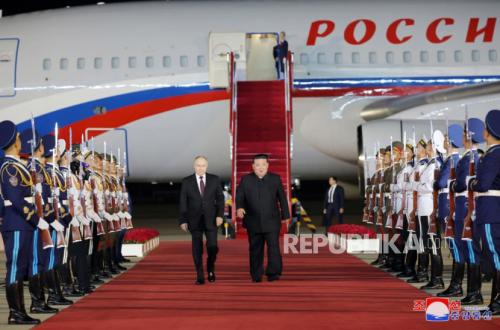
North Korea has once again closed the door on denuclearisation demands. North Korean Vice Minister of Defence Kim Kang Il emphasised that his country’s status as a nuclear-armed power is unalterable, and that Pyongyang will instead continue to expand its nuclear deterrent capabilities.
These statements were made by Kim at the Beijing Xiangshan Forum in Beijing, China, on Thursday, 17 September 2026. The forum is one of the largest international security conferences organised by China, attended this year by over 2,000 participants from approximately 100 countries.
“Our status as a nuclear-weapon state, which has been established through the constitution as the highest law of the state, is entirely irrevocable,” Kim stated on Thursday, 17 September 2026.
Kim requested that countries deemed hostile by Pyongyang cease condemning North Korea’s defence policies. He also called for the abandonment of demands to bring North Korea back towards denuclearisation.
Kim described such demands as an unrealistic “fantasy”. According to him, the increase in weaponry and military cooperation among countries considered enemies provides justification for North Korea to strengthen its nuclear arsenal.
“The continuous accumulation of nuclear weapons by enemy states fully justifies the development of a robust nuclear shield for the DPRK,” said Kim, using the abbreviation for the official name of North Korea, the Democratic People’s Republic of Korea.
Nuclear Status Described as a Line of No Retreat
Kim’s statement is more than just a repetition of old rhetoric regarding North Korea’s right to self-defence. Pyongyang has incorporated its policy of strengthening nuclear forces into its constitution. In September 2023, North Korea’s Supreme People’s Assembly amended the constitution to make the policy of nuclear force development a fundamental law of the state.
At that time, Kim Jong Un stated that North Korea’s nuclear policy had been made permanent so that it could not be ignored or interfered with by any party. The amendment followed a 2022 law that expanded the conditions under which Pyongyang claims it can use nuclear weapons, including under certain conditions as a preemptive strike.
Speaking at the forum in Beijing, Kim Kang Il described this constitutional position as a “line of no retreat”. He stated that the higher the nuclear threat perceived by North Korea, the greater the need for Pyongyang to expand its deterrent capabilities.
“As the enemy states’ nuclear threat reaches the extreme level,” Kim said, as quoted by Reuters, North Korea will continue to expand and strengthen its nuclear deterrent to maintain peace and stability on the Korean Peninsula and the region.
However, North Korea’s claim as a nuclear-weapon state must be distinguished from its legal status under the Treaty on the Non-Proliferation of Nuclear Weapons (NPT). While North Korea’s national constitution can establish its country as a nuclear power, the NPT defines a nuclear-weapon state as a country that has manufactured and exploded nuclear weapons before 1 January 1967. Based on that definition, the five countries in that category are the United States, Russia (as the successor to the Soviet Union), the United Kingdom, France, and China. North Korea is not included in this group.
US, Japan, and South Korea Targeted in Criticism
Kim positioned the United States as the centre of North Korea’s argument for maintaining its nuclear weapons. He accused Washington of maintaining policies that are continuously hostile towards Pyongyang and expanding military cooperation with South Korea and Japan. According to Kim, this trilateral cooperation is increasingly evolving towards what he termed a “nuclear alliance”.
Kim also highlighted military exercises involving the United States and its allies. Pyongyang has long regarded these joint exercises as war preparations, while Washington and Seoul state that the exercises are necessary to maintain readiness against threats from North Korea.
Kim’s statements emerged as tensions regarding military exercises increased once again. On the same day, Kim Yo Jong, the sister of Kim Jong Un, condemned the Pacific Vanguard 2026 exercises involving the United States, South Korea, Japan, Australia, Canada, and New Zealand in the region around Guam.