
North Korea Alters Constitution: Removes Reunification Target, Labels South Korea 'Enemy State'
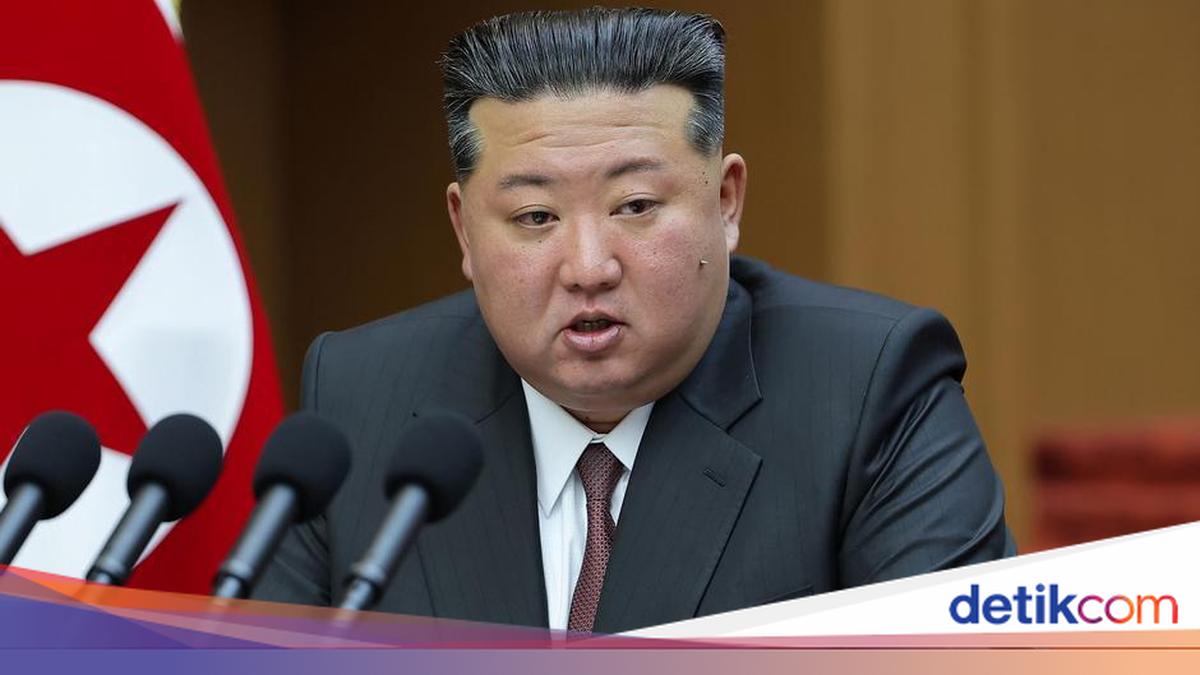
These changes, which were previously signalled by leader Kim Jong Un during the Supreme People’s Assembly session last March, represent a major policy shift for North Korea. The nation has technically remained in a state of war with its southern neighbour since the 1953 armistice ended the fighting in the Korean War.
The new constitution, distributed by South Korea’s Ministry of Unification on 6 May, contains four primary changes:
• The goal of unifying the Korean Peninsula has been abandoned, and South Korea is no longer considered part of the same national community.
• A new territorial clause has been introduced, defining North Korea as a state bordering China and Russia to the north, and the Republic of Korea (South Korea) to the south.
• Kim Jong Un has been granted exclusive authority over the use of nuclear weapons.
• Clauses regarding the achievements of his predecessors, Kim Il Sung and Kim Jong Il, have been removed.
These amendments contrast sharply with the South Korean constitution, which claims the entire Korean Peninsula and its islands as its territory. Article 9 of the previous constitution stated that North Korea would “strengthen the people’s government in the north” and “strive to achieve national reunification.” References to the “Three Principles of National Reunification”—independence, peaceful reunification, and national unity—have also been deleted.
Kim began shifting policy direction in late 2023, when he referred to Seoul as the “principal enemy,” subsequently ordering the removal of large reunification monuments in Pyongyang. During the Supreme People’s Assembly in January 2024, Kim called for amendments defining South Korea as the “principal enemy and the constant main foe,” asserting that North Korean territory is separate from the South.
South Korean researcher Hong Min of the Korea Institute for National Unification views these changes as a formalisation of the “struggle against the enemy” doctrine and the “two hostile states” concept promoted by Pyongyang since the failure of the 2019 Hanoi summit. According to Hong, North Korea no longer views South Korea as a reunification partner or part of the same ethnic community, but as a separate and hostile foreign power. He noted that the removal of the reunification narrative signals a shift towards interstate relations characterised by hostility, territorial separation, and nuclear threats.
Cha Du Hyeon, Vice President of the Asan Institute for Policy Studies, stated that the “two hostile states” doctrine is not merely diplomatic rhetoric but a structural choice linked to the internal governance of Kim’s regime, power preservation, and strategy against the South. By framing South Korea as an external enemy, Pyongyang seeks to suppress internal dissent and strengthen the security logic of the regime.
Regarding maritime boundaries, Hong noted that the new territorial clause could be seen as a de facto acceptance of the Military Demarcation Line (MDL) as the land border. However, he emphasised that this does not constitute a clear recognition of the Northern Limit Line (NLL), the disputed maritime boundary in the Yellow Sea. This ambiguity may allow Pyongyang to act more aggressively in future maritime disputes.
Han Ki Bum, former Deputy Director of South Korea’s National Intelligence Service, expressed concerns regarding potential provocations near the NLL, particularly following the deployment of North Korean destroyer ships to the Yellow Sea in early May.
Furthermore, the amendments institutionalise Kim Jong Un’s personal power. By enshrining his exclusive right to use nuclear weapons, the constitution consolidates his dictatorship. The removal of references to Kim Il Sung and Kim Jong Il also marks a shift in the national narrative, moving away from the cult of personality surrounding his predecessors towards a focus on territory, sovereignty, and nuclear capability.