
North Kalimantan Rich in Forests and Mines, Why Do Agrarian Conflicts Persist?
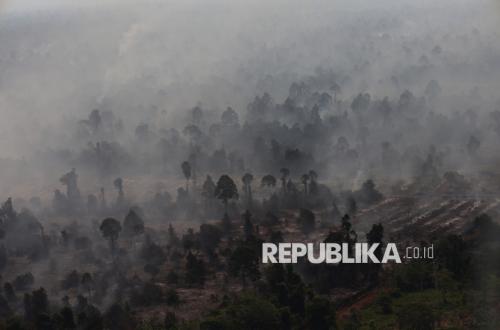
North Kalimantan (Kaltara) possesses vast natural wealth. Forests, lands, plantations, and mineral resources are vital components of the economy in Indonesia’s youngest province.
However, behind this potential lies an unresolved issue: who controls the land, who benefits from the utilisation of these areas, and how does the state ensure that communities are not marginalised when investments and development projects arrive?
These questions were raised during the National Seminar of the Society for Agrarian Concern (MASPERA) at the North Kalimantan Governor’s Office on Saturday (26/9/2026). Under the theme “Problems of Forest Areas and the Integrated Enforcement of Forestry and Agrarian Law in North Kalimantan”, the forum moved beyond mere land administration. MASPERA addressed a more fundamental issue: agrarian and forestry law enforcement must be able to bridge the interests of investment, the state, the community, and the environment.
The General Chairman of DPP MASPERA, Agustianto Mingka, stated that agrarian issues are not limited to boundary disputes or land ownership. They encompass land ownership inequality, overlapping permits, conflicts between communities and business actors, indigenous land disputes, and allegations of land mafia practices.
These issues become increasingly complex when disputed areas overlap with forest zones or territories that already hold business licences. In such situations, legal certainty is crucial. However, legal certainty must not be interpreted solely as certainty for licence holders; it must also provide protection for communities that have long relied on the land and forests for their livelihoods.
One issue highlighted by MASPERA is the overlapping of interests in spatial utilisation. An area may fall under the jurisdiction of forestry, land, plantation, or mining regimes, or be claimed by local communities. When each regime operates without adequate coordination, conflicts easily arise. At this juncture, the enforcement of agrarian and forestry laws cannot function in isolation. MASPERA is pushing for the involvement of the government, law enforcement agencies, academics, the business world, and the community in resolving these issues.
Agustianto positioned agrarian reform as a vital part of the organisation’s agenda. According to the presented material, agrarian reform involves more than just land distribution; it entails the restructuring of ownership, control, use, and utilisation of land to ensure it is more equitable, productive, and sustainable.
Another key agenda is the prevention and eradication of land and judicial mafias. For MASPERA, such practices do not only harm individuals losing their land rights; if left unchecked, they can undermine legal certainty, create new conflicts, and disrupt a healthy business climate.
Agrarian issues also directly intersect with policies regarding the regulation of forest areas. During the seminar, MASPERA urged strengthened coordination with law enforcement and the Forest Area Regulation Task Force (Satgas PKH). Regulation, according to the organisation’s material, should not stop at reclaiming areas or seizing assets. Consequently, MASPERA expressed support for collaborative business management following seizures, alongside PT Agrinas Palma Nusantara, encouraging management that is legal, productive, transparent, and beneficial to both the state and the community.
This is where the challenge of forest area law enforcement becomes more complex. The state must ensure that regulated areas are not re-occupied illegally. Simultaneously, communities living around these areas require certainty regarding access and their means of subsistence.
MASPERA also views the community as a vital actor in agrarian governance. Advocacy, dispute resolution assistance, legal education, and improving basic mapping capabilities are part of the organisation’s promoted agenda. The development of social forestry and productive endowment forests was also mentioned as a way to link community economic agendas with conservation. The idea is simple: forest areas should not merely be viewed as expanses of resources to be exploited, but as living spaces for the community.
Therefore, the measure of success in area regulation is not solely based on how much land is reclaimed or how many licences are resolved. The more important question is whether the community gains certainty of rights, whether conflicts decrease, whether the environment is protected, and whether the economic benefits of natural resources are truly felt by the people.
The MASPERA seminar brought together various stakeholders involved in agrarian and forestry issues, including representatives from central and regional governments, the Indonesian Parliament (DPR RI), TNI, Polri, the prosecution service, the judiciary, the Forest Area Regulation Task Force, academics, plantation and mining companies, land deed officials (PPAT), notaries, universities, and community organisations.
Source: jawawa.id (https://jawawa.id/newsitem/north-kalimantan-rich-in-forests-and-mines-why-do-agrarian-conflicts-persist-1790567993)
Originally published by Republika (https://news.republika.co.id/berita/tm1tkr393/kaltara-kaya-hutan-dan-tambang-mengapa-konflik-agraria-tak-kunjung-usai), translated from Indonesian