
North Jakarta Administration Bolsters Preparedness for Extreme Rainfall and Flooding
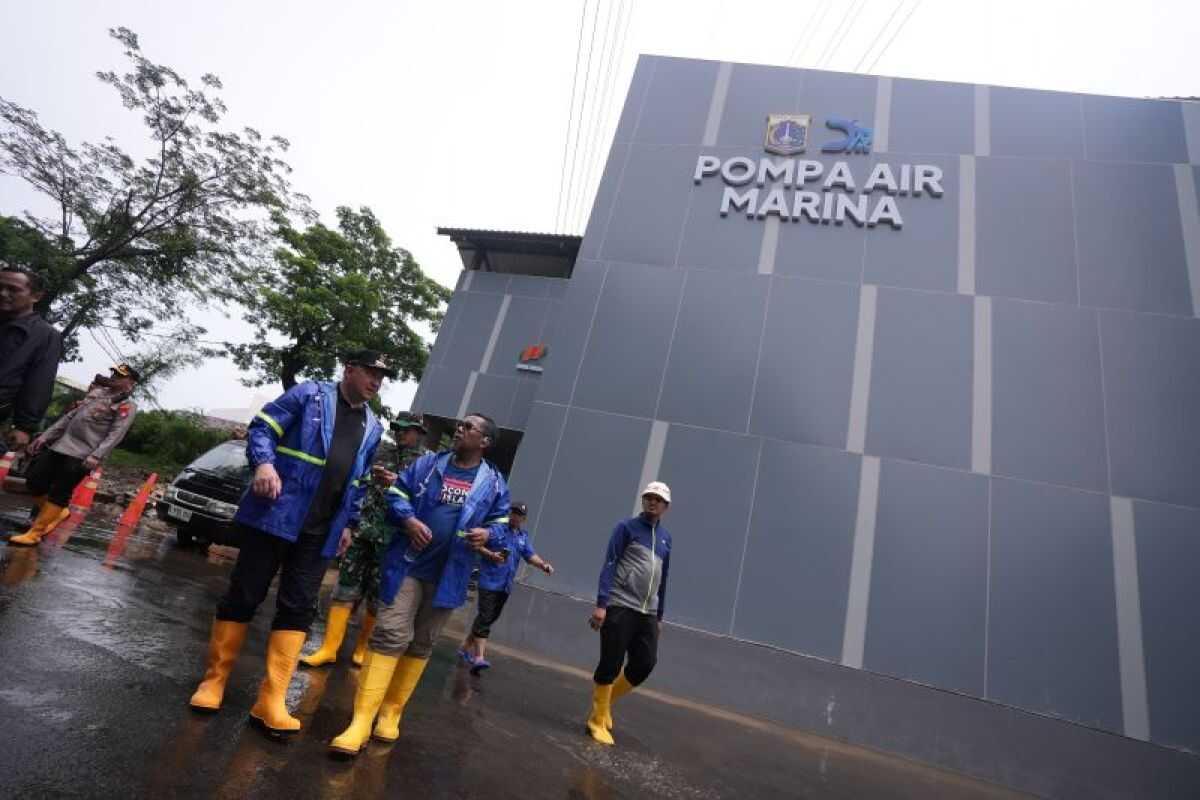
Jakarta (ANTARA) - The North Jakarta Municipal Government is bolstering its preparedness against the potential for heavy and extreme rainfall as well as tidal flooding predicted to occur over the coming days.
“A total of 72 pump stations and 22 mobile pump units have been placed on standby as flood mitigation measures at a number of inundation-prone locations,” said the Head of the North Jakarta Water Resources Sub-agency, Heria Suwandi, in Jakarta on Monday.
According to him, as part of mitigation efforts, the North Jakarta Water Resources Sub-agency has placed both stationary and mobile pumps on standby. Operations at several stationary pump stations are being maintained continuously to empty reservoirs, thereby preserving storage capacity so they can accommodate rainwater optimally.
In addition, mitigation efforts have also included dredging sedimentation from several rivers that have long been neglected. “These conditions have caused changes to the spatial configuration of several rivers, resulting in narrowing and shallowing,” he said.
Previously, the Meteorology, Climatology and Geophysics Agency (BMKG) issued a warning for the potential of heavy to very heavy rainfall in DKI Jakarta from 16 to 19 February 2026.
Based on official BMKG information posted on its Instagram account @infobmkg on Monday, the agency issued an alert-level warning for moderate to heavy rainfall on Monday (16/2), with potential impacts in North Jakarta and the Thousand Islands.
For the potential impacts at the alert level, hydrometeorological hazards including inundation, river overflow and landslides could disrupt community activities.
The BMKG also issued a higher standby-level warning for heavy to very heavy rainfall potentially occurring in Central Jakarta, West Jakarta, East Jakarta, South Jakarta, as well as Bogor Regency and Bogor City.
For potential disaster impacts at the standby level, there is the possibility of hydrometeorological disasters including flooding, flash floods and landslides that could significantly affect communities, public services and infrastructure.