
North Gorontalo Regency educates farmers to increase cattle population
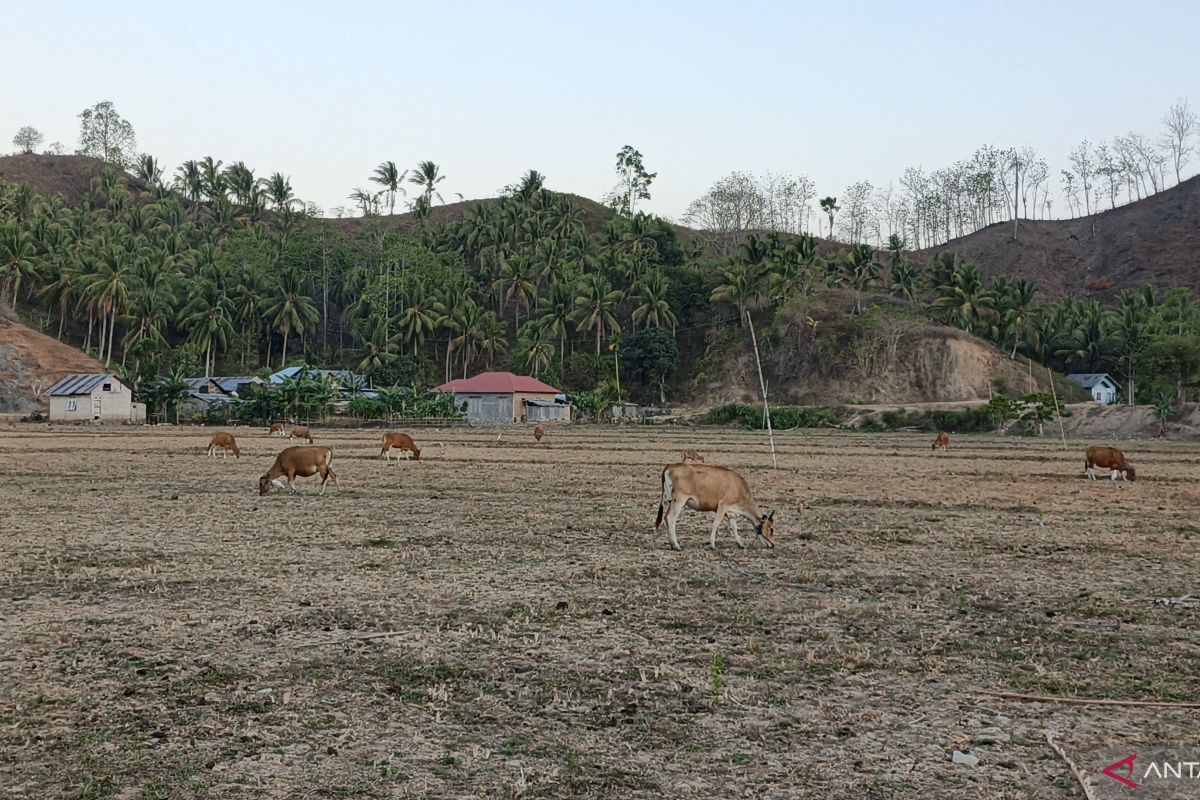
The cattle population in this area is spread across 11 sub-districts, reaching 20,846 head.
Gorontalo (ANTARA) - The North Gorontalo Regency Government, Gorontalo Province, through its local Animal Husbandry and Animal Health Service, continues to work to increase the cattle population in the region.
“The cattle population in this area is spread across 11 sub-districts, reaching 20,846 head,” said Yeni Retno Wati, a Young Expert Veterinary Medic at the North Gorontalo Animal Husbandry and Animal Health Service, in North Gorontalo on Monday.
Education for farmers across the region is continuously carried out as an effort to increase the cattle population, in line with the high demand for beef cattle from Pasar Nusantara.
There are 11 sub-districts: in Atinggola Sub-district the cattle population reaches 1,931 head, Gentuma 777 head, Kwandang 5,365 head, Tomilito 2,068 head.
Ponelo Kepulauan 256 head, Anggrek 4,718 head, Monano 1,769 head, Sumalata 1,181 head, East Sumalata 356 head, Biau 633 head, and Tolinggula 1,791 head.
This number is not yet significant when compared with the potential availability of land, potential feed and a stall-based farming pattern where cattle are kept in pens so that their weight is maintained, which certainly has a very high selling value, potentially reaching at least Rp30 million per head.
In addition, the regional government is encouraging the realisation of a programme of one person owning one head of cattle, which is highly potential to be developed in this area.
Therefore, to continue efforts to increase the cattle population in this area, the most priority condition, according to Yeni, is to maintain the quality of life of the cattle owned.
During this dry season, feed and drinking water for livestock must be a priority, so that cattle remain fat and productive, and are not easily attacked by disease.
“Most importantly, livestock must be protected from exposure to sunlight which can affect their health condition,” she said.
In the dry season, free-grazing cattle are at risk of coriander leaf poisoning or Bali Ziekte disease.
Farmers must know how to identify coriander leaves, so that when looking for feed, cattle do not eat this leaf in large quantities because the impact is dangerous.
“If poisoned by coriander leaves, it can cause the skin of cattle exposed to sunlight to peel off. The local term is called panas dalam,” she said.
If the skin can still dry out, the cattle’s life can certainly be saved, but if it is handled too slowly, it will certainly be very life-threatening.
So far, Yeni said, her office has received many reports from farmers regarding this condition.
“We often provide education, as well as give antibiotic and anti-allergy injections to cattle, because this condition causes itching in cattle,” she added.
Her office continues to provide assistance, counselling and education to farmers in running their livestock businesses even though the dry season is hitting.