
Non-Subsidised Fuel Prices Rise: Pertamina Balongan Workers' Union Responds
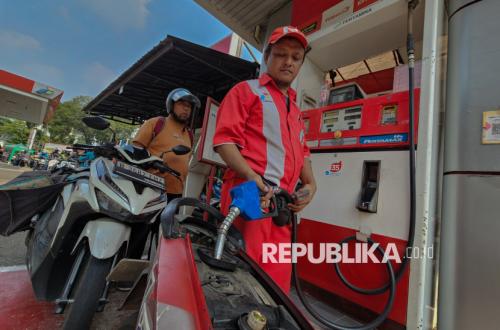
The policy adjustment of non-subsidised fuel prices as of 10 June 2026 has prompted a response from the Pertamina Bersatu Balongan Workers’ Union (SP-PBB). As the frontline managers of the RU VI Balongan Refinery, SP-PBB believes the price fluctuation must be addressed clearly and proportionally.
Rather than merely being a matter of figures at petrol stations, this moment serves as an important alarm to comprehensively reform national energy governance. SP-PBB Chairman Wawan Darmawan stated that his party understands public concerns regarding the impact of the price adjustment on living costs. However, he also reminded that the energy sector is a complex ecosystem.
“In the energy sector, the government acts as the regulator of strategic policy, while business entities focus on equitable distribution to all corners of the country,” Wawan said on Friday (12/6/2026).
He revealed that in facing global dynamics, SP-PBB has formulated three national strategic agendas. The first agenda is strengthening worker capacity as the main foundation of energy security. “Improving competence, professionalism, and a safety culture is non-negotiable. Workers are not merely a factor of production, but strategic assets guarding the energy supply,” he said.
The second agenda, he continued, involves objective public education regarding the reality of the national oil and gas industry. According to him, Indonesia is now facing structural challenges in the form of declining domestic oil production, surging consumption, high import dependency, and regulatory complexity that slows down strategic decisions.
The third agenda is urging the government to issue a Government Regulation in Lieu of Law on Oil and Gas (Perpu Migas) as an out-of-the-box step to cut bureaucracy, provide legal certainty, and attract large-scale investment. Overlapping old regulations are deemed no longer relevant.
“The business-as-usual approach is no longer relevant to address today’s energy dynamics. The oil and gas sector requires a total reform that is adaptive and responsive,” he asserted.