
Non-subsidised Fuel Prices Rise, Bandung Mayor Prepares Operational Efficiency Measures
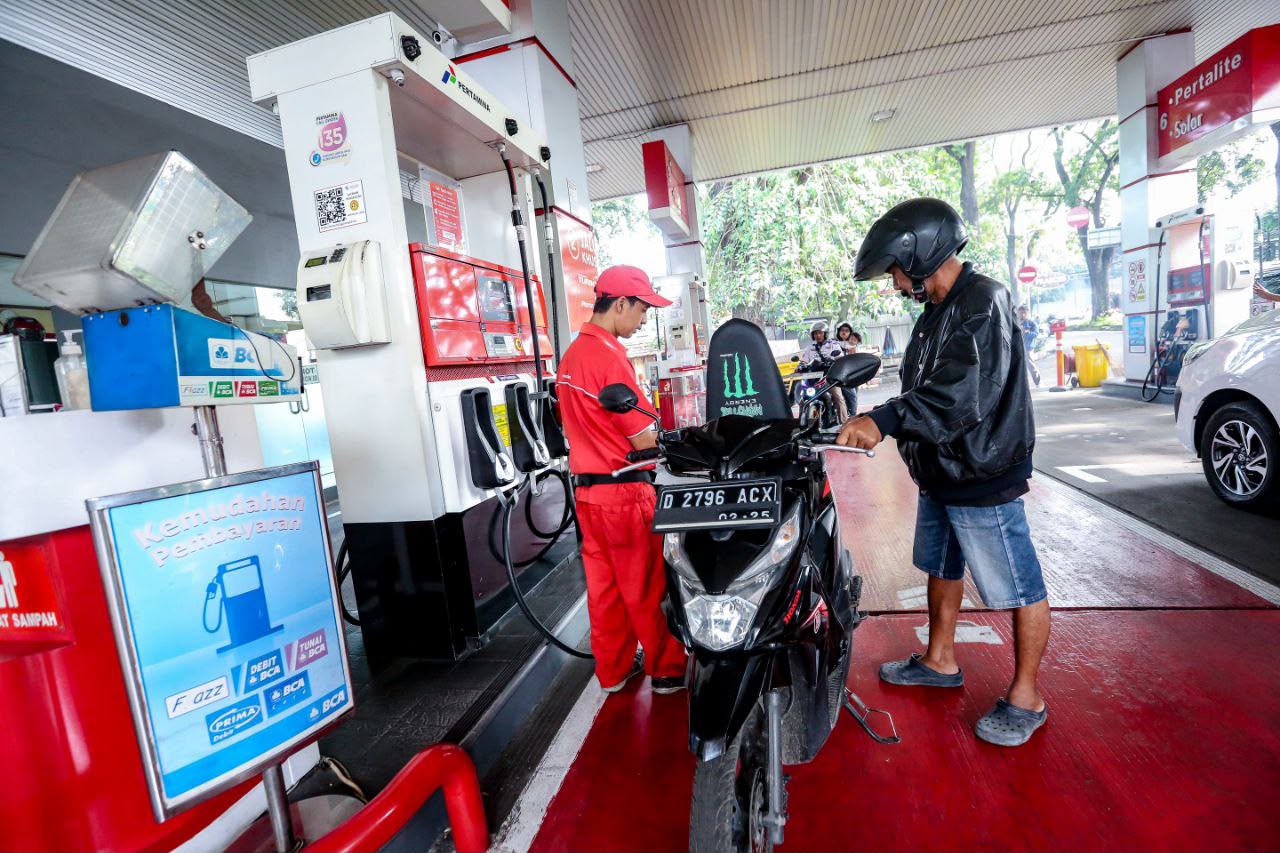
Responding to the central government’s increase in non-subsidised fuel prices, the Bandung City Government is implementing efficiency and operational savings within its administration. The fuel price that has risen is Pertamax, which increased to Rp16,250 per litre as of Wednesday, 10 June.
According to Bandung Mayor Farhan, the fuel price hike cannot be separated from global dynamics affecting the balance between energy supply and demand, including fluctuations in the US dollar exchange rate against the rupiah, which was recorded at around Rp17,928 per US dollar on 10 June 2026. "This is a matter of supply and demand. When demand never falls, while supply fluctuates. Add to that the dollar value, which is also fluctuating. With the rise in fuel prices, it means the supply level is low and the dollar price is high. We have no choice but to face this together," he explained.
Farhan assessed that amidst this situation, the local government does not have the authority to control fuel prices. However, the government can make various efforts to reduce the impact of rising operational costs. He therefore called on the entire community, including civil servants within the Bandung City Government, to begin adopting more energy-efficient consumption patterns. "My suggestion is, let us jointly carry out operational efficiency. I am thinking, perhaps Bandung City Government employees will be encouraged not to use private vehicles when commuting to the office. If they do use private vehicles, we can implement carpooling or vehicle sharing," he stressed.
According to Farhan, operational efficiency is an important step to ensure that the expenditure burden due to the fuel price increase does not swell further. "We indeed have no control over prices. But we can ensure we do not become wasteful consumers. That is what we can control together," he said.
Farhan acknowledged that one of the most worrying impacts for the Bandung City Government at present is the increase in operational costs for public services, especially waste collection, which is heavily dependent on fuel use. Waste collection vehicles use fuel with a much higher price than subsidised fuel, so the price increase will directly affect the government’s operational budget. "The most worrying thing for the Bandung City Government right now is the fuel cost for waste collection. Operational vehicles use fuel priced at up to Rp24,000 per litre. This certainly presents a particular challenge for us," he explained.
To maintain regional budget stability, Farhan said the Bandung City Government also plans to make adjustments to several non-urgent operational spending items. Some expenditures that will be reduced include spending on food and beverages as well as official travel costs. "Some operational spending will indeed be reduced later, such as food and beverages and official travel. The reduction could be quite significant because we have to adjust to the current conditions," he added.
Nonetheless, Farhan assured that public services for the community remain the top priority and will not be disrupted by the efficiency policies implemented by the local government. "We must adapt to the existing situation. The important thing is that services to the community continue to run well, while operational expenditure can be more controlled," he concluded.