
Non-Subsidised Fuel Prices Officially Fall in August, Bahlil Speaks Out
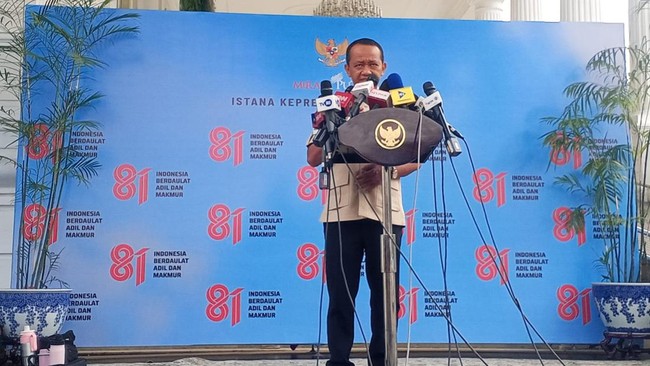
Jakarta - Minister of Energy and Mineral Resources (ESDM) Bahlil Lahadalia has explained that the decrease in non-subsidised fuel prices is a consequence of weakening global crude oil prices. He also confirmed that the price of subsidised fuel will not change.
According to Bahlil, the government maintains that non-subsidised fuel prices follow market movements, specifically the Indonesian Crude Price (ICP). The Ministry of Energy and Mineral Resources set the ICP for June 2026 at US$83.45 per barrel, a decrease from the previous month’s price of US$106.56 per barrel.
“I have said from the beginning that non-subsidised fuel prices will follow world market prices, the ICP. So if the world price falls, it will automatically be corrected. But if it rises, it will also go up,” Bahlil said at the Presidential Palace Complex on Monday (3/8/2026). He added that the price reduction was implemented by fuel providers after considering market conditions.
“And now it is falling. Then the private business entities made a correction to the price reduction,” he said.
Despite the decrease, Bahlil cautioned that the direction of non-subsidised fuel prices remains highly dependent on global geopolitical developments that influence crude oil prices. “It depends on the world’s geopolitical conditions,” he said.
Bahlil further assured the public not to worry about subsidised fuel prices. The government, he said, is committed to maintaining stable subsidised fuel prices despite fluctuations in global energy prices. “The important thing is that subsidised fuel will not increase. That is the most important thing,” he stressed.
According to him, around 80% of national fuel consumption is subsidised fuel, which is the government’s responsibility. Meanwhile, the non-subsidised portion is only about 20% and is generally consumed by people with higher economic capacity. “Because 80% of total fuel use is subsidised. The non-subsidised is 20%, that is for those who are well-off. But the 80% remains the government’s responsibility, namely the subsidy,” Bahlil concluded.