
Non-Subsidised Fuel Prices Could Rise as of 1 October 2026, Here is the Calculation!
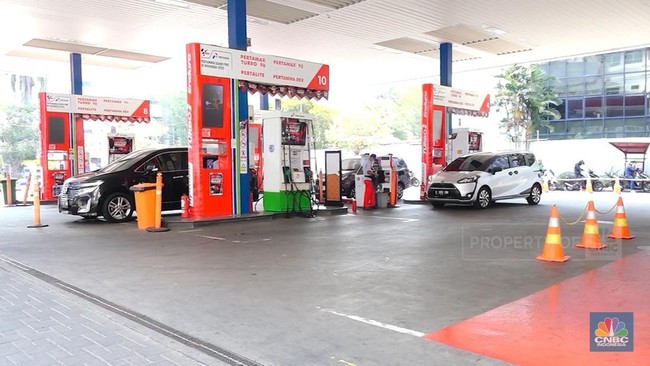
Non-subsidised fuel prices have the potential to increase, or at the very least remain unchanged, as of Thursday, 1 October 2026. This projection is estimated alongside the rising average price of global crude oil, despite the strengthening of the Rupiah against the US Dollar (USD).
These two factors will be the determining elements in the adjustment of non-subsidised fuel prices. According to Refinitiv data, the average price of Brent crude in September 2026 stood at US$102 per barrel, a 15.81% increase compared to the August 2026 average of US$88.08 per barrel. Meanwhile, the average price of West Texas Intermediate (WTI) was at US$95.45 per barrel in September 2026, appreciating by 15.77% from the August average of US$82.45 per barrel.
Global oil price movements throughout September 2026 continue to be overshadowed by geopolitical risks and supply disruptions in the Middle East. Oil prices have risen sharply due to escalating conflict between the United States and Iran. Tensions between the two nations have not only made markets wary of Iranian oil supplies but have also introduced risks of disruption to major energy routes in the Gulf region.
One primary market concern remains the Strait of Hormuz, a vital artery for global oil trade. Threats of disruption in this passage typically drive oil prices higher due to fears of global supply bottlenecks. Market anxiety is further heightened as the conflict involves Iranian-aligned armed groups, such as the Houthi militia in Yemen, which has increased pressure on Saudi Arabia by attacking energy infrastructure and oil shipping routes.
Attacks on Saudi Arabia’s East-West Pipeline are particularly critical, as this strategic route connects eastern oil-producing regions to the port of Yanbu in the Red Sea, serving as a vital alternative for exports if the Strait of Hormuz is compromised.
Regarding the currency, the Rupiah fluctuated against the US Dollar throughout September 2026 but showed a tendency to strengthen. Refinitiv data shows the average Rupiah rate in September 2026 was Rp17,730.23/US, a0.44.
How will October 2026 fuel prices look? The government determines fuel prices based on a specific formula involving two main variables: international market prices for oil or fuel products and the Rupiah exchange rate, given the high domestic demand for oil imports. According to the Decree of the Minister of Energy and Mineral Resources Number 1s87 K/10/MEM/2019, the formula uses the average publication of the Mean of Platts Singapore (MOPS) in USD/barrel.
The reference period for determining prices for the current month runs from the 25th of two months prior to the 24th of the previous month. For the price projection on 1 October 2026, the reference period is 25 August to 24 September 2026.
During the 25 August to 24 September 2026 period, the average Brent price was US$98.90 per barrel, a 12.50% increase from the previous reference period (25 July to 24 August 2026) which was US$87.91 per barrel. WTI also saw an increase, with the average price during the same period reaching US$93.63 per barrel, up 13.73% from the previous period’s US$82.32 per barrel. This rise in oil prices exerts significant pressure on domestic oil import costs.
However, the strengthening Rupiah acts as a partial buffer. The average Rupiah rate during the 25 August to 24 September 2026 period was Rp17,692.83/US, a1.09.
Consequently, the direction of non-subsidised fuel price adjustments is influenced by two opposing factors. From the oil price perspective, there is significant room for an increase due to the high rise in benchmark averages. Conversely, the strengthening Rupiah serves as a restraint, as it makes the cost of importing oil in Rupiah slightly lighter. Therefore, non-subsidised fuel prices are expected to potentially rise on 1 October 2026 or at least remain stable.
It should be noted that Pertamina already adjusted non-subsidised fuel prices on 1 September 2026. This adjustment applied to certain products, namely Pertamax Turbo, Dexlite, and Pertamina Dex, while Pertamax RON 92 and Pertamax Green 95 remained unchanged. In Jakarta, the price of Pertamax Turbo rose to Rp19,600 per litre from Rp18,300 per litre. A larger increase was seen in non-subsidised diesel: Dexlite rose to Rp23,700 per litre from Rp19,700, and Pertamina Dex rose to Rp25,200 per litre from Rp21,150. Meanwhile, Pertamax remained at Rp15,950 per litre, and Pertamax Green 95 stayed at Rp16,600 per litre. Subsidised fuel prices, including Pertalite at Rp10,000 per litre and Biosolar at Rp6,800 per litre, remain unchanged.
Source: jawawa.id (https://jawawa.id/newsitem/non-subsidised-fuel-prices-could-rise-as-of-1-october-2026-here-is-the-calculation-1790762291)
Originally published by CNBC Indonesia (https://www.cnbcindonesia.com/research/20260930130359-128-772124/harga-bbm-non-subsidi-per-1-oktober-2026-bisa-naik-ini-hitungannya), translated from Indonesian