
Non-Subsidised Fuel Price Hike Reduces State Budget Burden, Analyst Says
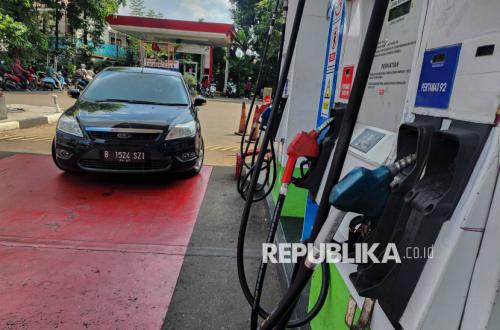
Energy economist from Universitas Gadjah Mada (UGM) Fahmy Radhi stated that the decision to adjust non-subsidised fuel prices is an appropriate policy to reduce the state budget burden for paying compensation due to Pertamina having to sell fuel below economic prices. Non-subsidised fuel is indeed not designed to be held back as it can increase the fiscal burden.
“Although somewhat late, the government has finally raised non-subsidised fuel prices effective from 18 April 2026,” Fahmy said when contacted by Republika in Jakarta on Sunday (19/4/2026).
Fahmy conveyed that this non-subsidised fuel price increase is quite high but is estimated not to raise inflation or significantly lower purchasing power. The reason is that the number of non-subsidised fuel consumers is not too large and they are categorised as upper class with strong purchasing power.
“The non-subsidised fuel price increase without raising Pertamax and Green Pertamax prices is also very strategic,” Fahmy said.
This is because, Fahmy continued, the number of consumers for those two fuels is relatively larger compared to the other three non-subsidised fuels. This is concerning as it could contribute to inflation increases and reduce public purchasing power if their prices were raised.
“Additionally, if Pertamax and Green Pertamax prices were raised while Pertalite prices were not, it would drive a massive migration from Pertamax to Pertalite, which would swell fuel subsidies,” Fahmy added.
He stated that the government has also guaranteed that subsidised fuels, Pertalite and Solar, will not be raised until the end of 2026. He assessed that this guarantee indeed provides long-term certainty for consumers, thus preventing panic buying.
However, Fahmy continued, using a time frame benchmark is very risky in disappointing consumers if that benchmark cannot be met, making the guarantee a false hope. This is because, Fahmy said, the escalation of the Middle East war cannot be predicted when it will end.
“That guarantee would be more effective if the government uses the global oil price benchmark rather than a time indicator in deciding subsidised fuel price increases, so the public is not disappointed by false hope,” Fahmy said.