
No Standard for Internship Allowances, 6 Students Challenge Manpower Law
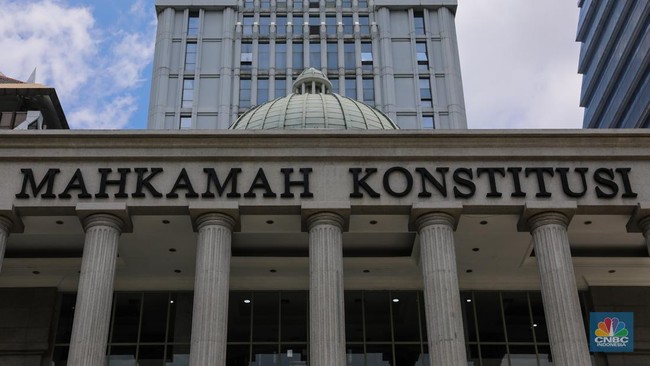
Six students have filed a judicial review against Law Number 13 of 2003 concerning Manpower (UU Ketenagakerjaan) with the Constitutional Court (MK), citing the absence of a minimum standard for internship allowances. The judicial review has been registered under case number 214/PUU-XXIV/2026, and the Constitutional Court judges held a Preliminary Hearing for the petition, led directly by Chief Justice Suhartoyo, on Wednesday (24/6/2026). During the initial hearing, the Petitioners stated that Article 22 of the Manpower Law contradicts Article 27 paragraph (2), Article 28D paragraph (1), and Article 28D paragraph (2) of the 1945 Constitution of the Republic of Indonesia. The petitioners are students Aisya Nayla Bihesthi Zewar (Petitioner I), Leres Shafa Azzahra Anshori (Petitioner II), Lourensya Varaniko (Petitioner III), Aulia Mirza Nabilla (Petitioner IV), Brillian Fairuz (Petitioner V), and Pascal Ibnu Kusuma (Petitioner VI). Petitioner II stated during the preliminary hearing that the core of their petition is to declare Article 22 of Law Number 13 of 2003 concerning Manpower contradictory to the 1945 Constitution, specifically Article 27 paragraph (2), Article 28D paragraph (1) and paragraph (2). The challenged Article 22 of the Manpower Law stipulates that apprenticeships are executed based on a written apprenticeship agreement between the participant and the employer, which must at least contain provisions on the rights and obligations of both parties and the apprenticeship period. Apprenticeships conducted without such an agreement are deemed invalid, and the participant’s status changes to that of a worker/labourer of the relevant company. In their material review petition, the petitioners argued that their constitutional rights granted by Article 27 paragraph (2) of the 1945 Constitution, which guarantees the right to work and a decent livelihood, are harmed by the enforcement of Article 22. As active students undertaking internships, they do not receive proper rights due to the lack of a minimum allowance standard, which directly legitimises inhumane compensation practices and ultimately causes them to lose their right to a decent livelihood. The petitioners stated that the absence of a minimum wage or allowance standard in the Manpower Law leaves them without legal protection against potential exploitation by internship providers who offer compensation far below the minimum cost of living. They also argued that companies tend to utilise interns to perform full operational workloads with negligible or unreasonably low compensation, creating a phenomenon of ‘shadow workers’ who have similar obligations to formal employees but without state-guaranteed economic rights. Consequently, the lack of a minimum allowance limit in the law renders the ‘agreement’ in internship contracts a mere formality. Sociologically, interns are forced to accept unworthy working conditions as they have no other choice to advance their careers or education, leading the petitioners to claim the state is complicit in the exploitation of its vulnerable citizens. This is particularly critical as students who have completed at least four semesters are often required to undertake internships as a graduation requirement, based on university and ministerial regulations. The petitioners argued that the absence of a minimum standard forces interns, especially in large cities with high living costs, to independently bear operational expenses such as transport, meals, and accommodation, creating a paradox where citizens effectively subsidise business operations. They noted that Minister of Manpower Regulation Number 6 of 2020 already stipulates that internship allowances should include transport costs, meal allowances, and incentives. The petitioners requested that the Court declare Article 22 of the Manpower Law conditionally unconstitutional and not legally binding unless it is interpreted to oblige every apprenticeship programme to guarantee legal certainty regarding participants’ rights, including the provision of fair and proportional compensation based on workload, working hours, and contribution.