
No Need to Fear Crisis, Indonesian Companies' Cash Reserves Are Now Much Thicker
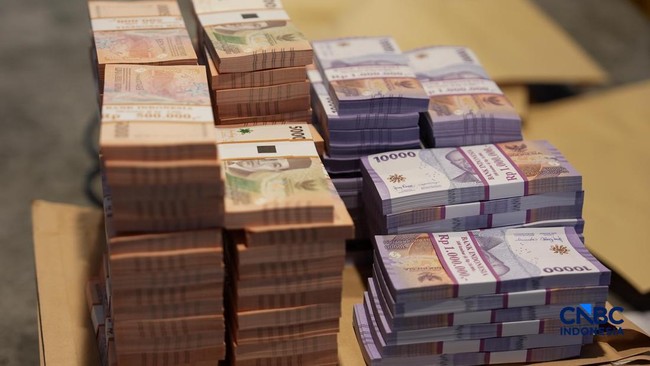
Concerns regarding the potential for a macroeconomic crisis similar to the 2008 financial shock often emerge among capital market players as global volatility increases. To provide an objective assessment, analysis must not rely solely on psychological sentiment but must dissect real fundamental indicators at the corporate level.
One of the most valid parameters in measuring a company’s resilience to systemic crisis risks is Free Cash Flow (FCF). This indicator reflects the availability of net operational cash ready for use after deducting capital expenditures. By comparing empirical data between the pre-2008 crisis period and projections for 2025, market participants can see the extent to which financial structures are capable of buffering global liquidity risks.
Looking at the data, a very contrasting financial dynamic is visible between the two periods. In 2008, several major issuers operated under very tight liquidity conditions, even experiencing deficits. For example, CPIN recorded a negative FCF of IDR 1.02 trillion, while MEDC stood at a deficit of IDLE 1.08 trillion. The limited real cash at that time made corporations highly vulnerable to interest rate shocks and heavily dependent on external funding.
This condition is structurally different from the 2025 fundamental projections, where CPIN has successfully reversed its position to generate positive cash of IDR 4.01 trillion, and MEDC stands solid with IDR 2.09 trillion. The most massive leap in liquidity is shown by the pillars of the telecommunications, heavy equipment, and consumer goods sectors. TLKM recorded a highly significant increase in FCF from IDR 12.67 trillion in 2008 to a projected IDR 38.07 trillion in 2025.
The trend of strengthening net operational cash is also demonstrated by INDF, which rose from IDR 1.79 trillion to IDR 13.93 trillion, and UNTR, which surged sharply from IDR 1.42 trillion to IDR 13.56 trillion. Impressive cash expansion is also evident in other first-tier issuers in the pharmaceutical, retail, and construction sectors. KLBF expanded aggressively from IDR 0.15 trillion to IDR 2.64 trillion, while UNVR strengthened steadily from an FCF of IDR 1.59 trillion to IDR 4.93 trillion. In the private construction sector, TOTL was even able to multiply its liquidity from a low of IDR 0.01 trillion in the 2008 era to IDR 0.37 trillion.
This availability of cash, ranging from tens to dozens of trillions of Rupiah, indicates that the index-driving issuers currently possess very thick internal cushions. This capacity is crucial for resisting potential external turbulence without having to sacrifice their strategic capital expenditures. Ultimately, this solid foundation of pure cash will guide future stock price movements.
A notable fundamental shift is only occurring in the mining and property sectors, which show a different cyclical pattern. INCO, during the 2008 crisis era, was at the peak of the commodity cycle, recording an FCF of IDR 11.85 trillion, but in 2025, it is projected to record a negative FCF of IDR 4.14 trillion. This decline is natural and driven by the massive phase of corporate capital expenditure allocation to build downstreaming projects and smelters.
A similar phenomenon is seen in the performance of state-owned mining issuers. TINS recorded a contraction in FCF capacity from a peak of IDR 2.30 trillion in 2008 to IDR 0.66 trillion in 2025. ANTM also experienced a slight correction, dropping from the IDR 4.58 trillion level to IDR 4.34 trillion due to similar operational dynamics. Outside the mining sector, isolated liquidity weakening was also experienced by the property issuer CTRA, which reversed to record a negative FCF of IDR 0.21 trillion from a previous surplus of IDR 0.12 trillion, alongside the phase of land acquisition and sector cycle adjustments.
Although these commodity and property sub-sectors are experiencing a phase of cash tightening due to aggressive capital investment or cyclical changes, the condition is isolated and does not spread into a national systemic risk. The absolute strength of the consumer, pharmaceutical, telecommunications, and heavy equipment sectors provides an extremely strong fundamental counterbalance in the market, proving that the domestic real economy is operating on a healthy balance sheet foundation.
Historically, the 2008 crisis was triggered by widespread liquidity freezing that paralysed various sectors simultaneously. With cash positions of tens of trillions of Rupiah secured by various first-tier corporations today, the aggregate fundamental structure of the capital market is in a much more flexible position to withstand potential macroeconomic slowdowns.
Source: jawawa.id (https://jawawa.id/newsitem/no-need-to-fear-crisis-indonesian-companies-cash-reserves-are-now-much-thicker-1782373908)
Originally published by CNBC Indonesia (https://www.cnbcindonesia.com/research/20260617150609-128-743409/tak-perlu-takut-krisis-kas-perusahaan-ri-kini-jauh-lebih-tebal), translated from Indonesian