
"No Need to Ask If You See an Elderly Person Standing": When Seniors Can't Get a Seat on the KRL
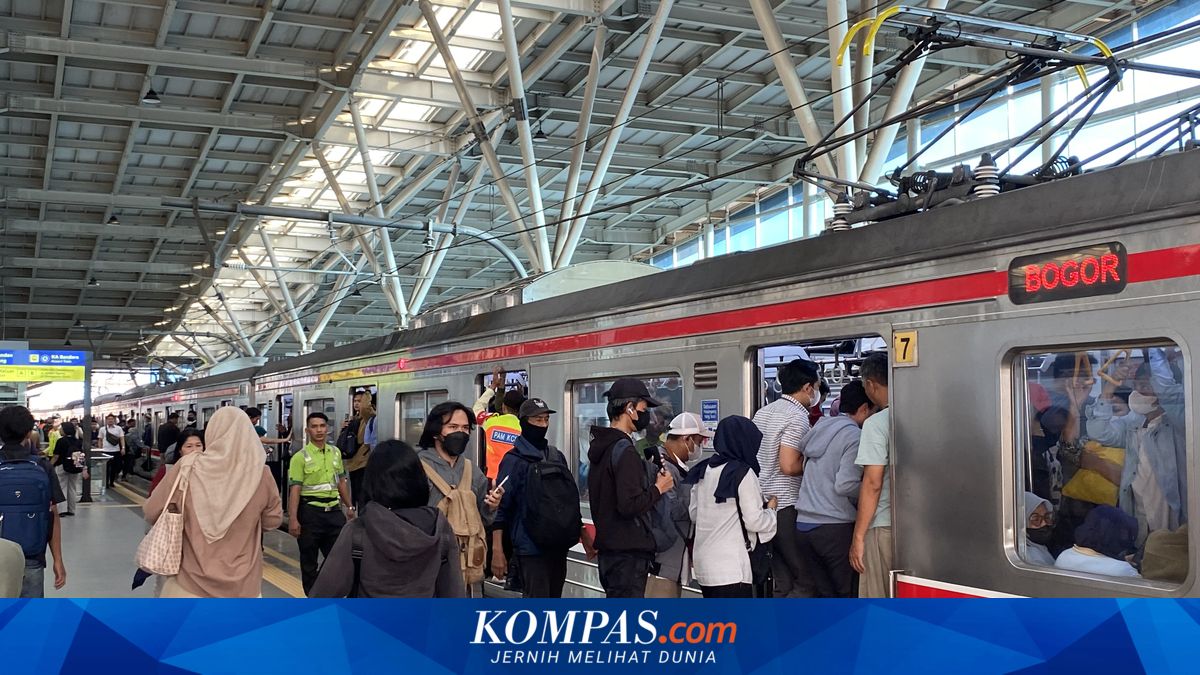
Amid the dense mobility of passengers on Jakarta’s Electric Rail Train (KRL), the existence of priority seats should serve as a safe space for vulnerable groups. However, in practice, not all passengers easily obtain those rights. For Suyatno (67), a resident of Pasar Minggu, priority seats are not just a facility but a necessity directly related to his physical condition as an elderly person. “It shouldn’t require asking. If you see an elderly person standing, just be aware,” Suyatno told Kompas.com inside a train carriage heading to Cikini Station on Wednesday (8/4/2026). However, his journeys are not always comfortable, especially when he does not get a seat. “When it’s crowded, I have no choice but to stand. But standing for too long, my legs can’t take it,” he said. On many occasions, he has seen priority seats occupied by younger, apparently healthy passengers. “Sometimes I see young people in priority seats. They might be tired too, but they should be aware,” he remarked. Although he has rights as a priority passenger, Suyatno admits he rarely confronts or directly asks. A sense of reluctance makes him choose to remain silent. As a result, he often endures standing while holding on in the moving carriage. Fortunately, other passengers are quick to support him. “I nearly fell once, luckily someone held me. Otherwise, it could have been dangerous,” he said. Suyatno understands that many other passengers are also fatigued after a day’s activities. However, he believes there is a fundamental difference between ordinary fatigue and physical limitations due to age. “Young people tired from work, I understand. But for me, it’s an age factor. I really can’t stand for long,” he said. Amid these experiences, he also encounters passengers who show concern. “Some immediately stand and say, ‘Please, Sir.’ That feels really good; there are still people who care,” he said with a smile. However, he hopes such moments happen more often. Meanwhile, another elderly passenger, Sofyan (60), views sitting in a priority seat not just as comfort but as a necessity. “I’m not just carrying my own body, but also my grandchild. If I stand, I’m afraid I can’t maintain balance,” said Sofyan, who was sitting in a priority seat holding his granddaughter. During the journey, he shoulders two responsibilities at once: protecting himself as an elderly person and ensuring his grandchild’s safety. “If the train shakes or stops suddenly, I’m not just thinking about myself falling, but my grandchild could get hurt too,” he said. Therefore, he feels priority seats are intended for situations like his. Even while seated in a priority seat, Sofyan has received uncomfortable stares from other passengers, especially those who might not understand his condition. “Once, someone looked at me in surprise, maybe thinking I can still stand. But I’m already 60,” he said. He understands that not everyone immediately grasps his situation. Sofyan realises that priority seats often become a space of “social judgement,” determining who is deemed more deserving and who is not. “Sometimes people only see the surface. If you’re not using a cane or don’t look ill, you’re considered not to need it,” he said. Amid these unpleasant experiences, Sofyan also feels the other side of KRL passengers who still have empathy. For him, such small actions are very meaningful, especially in journeys that are not always easy. Sofyan hopes society can be more sensitive and not judge solely by appearances. “Not all needs are visible. Sometimes people need to sit not because they’re weak, but because of other responsibilities,” he said. He also emphasises the importance of collective awareness that priority seats are not just a facility but a form of protection for those in need. Sociologist from State University of Jakarta, Rakhmat Hidayat, views the phenomenon of priority seats on KRL as not a simple issue. He sees it as a combination of social structure and an empathy crisis in urban public spaces. From a social structure perspective, the existence of priority seats is essentially an effort to create more inclusive spaces for vulnerable groups, such as the elderly, pregnant women, people with disabilities, and children.
Source: jawawa.id (https://jawawa.id/newsitem/no-need-to-ask-if-you-see-an-elderly-person-standing-when-seniors-cant-get-a-seat-on-the-krl-1775803856)
Originally published by Kompas (https://megapolitan.kompas.com/read/2026/04/10/13105871/tak-perlu-diminta-kalau-lihat-orang-tua-berdiri-saat-lansia-tak-dapat?utm_source=ABC&utm_medium=rss), translated from Indonesian