
No Need for Finger Pricks: UGM Students Develop Prediabetes Detection Device from Saliva
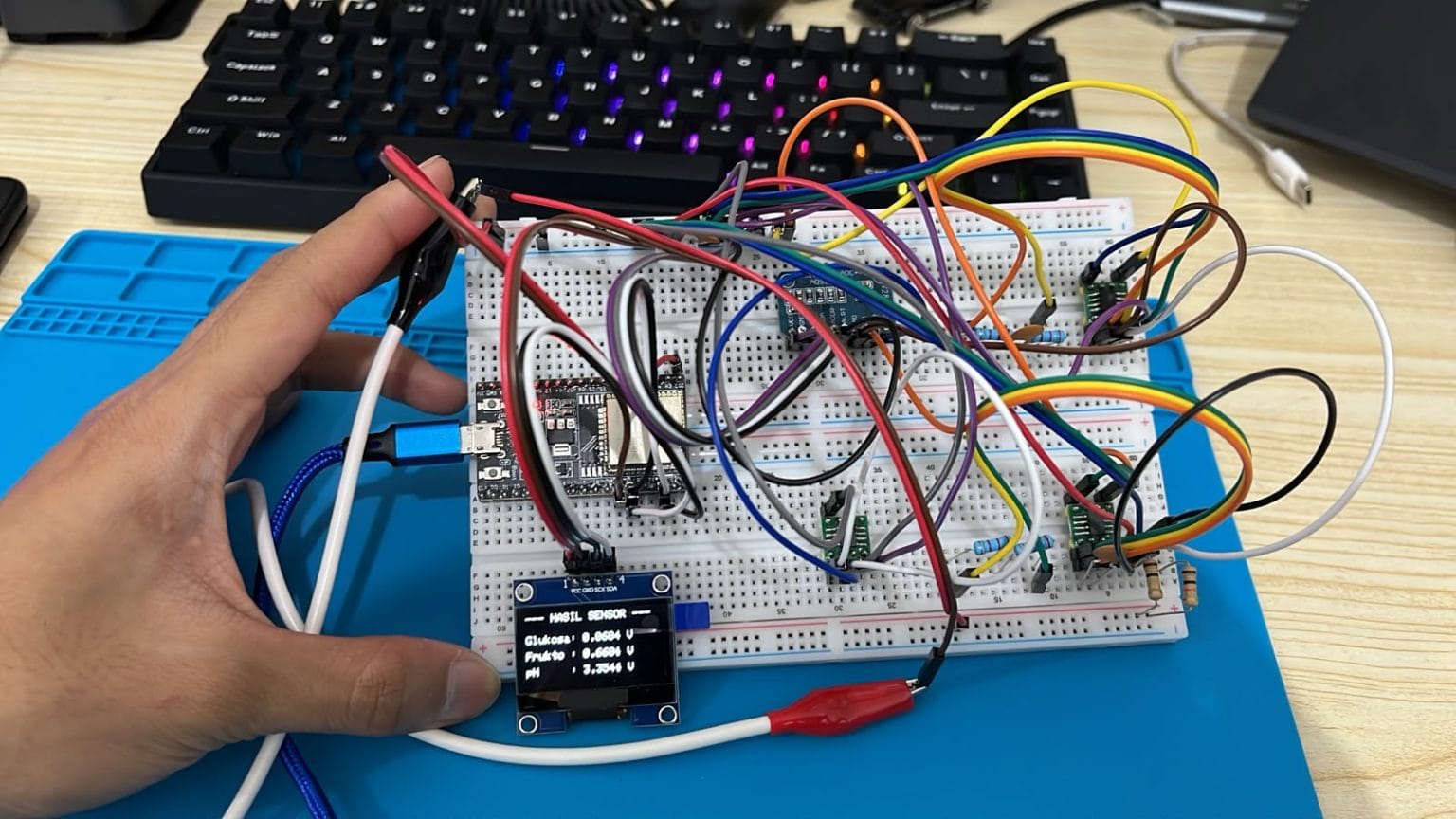
Prediabetes often develops without symptoms, meaning a person can be at high risk of developing diabetes mellitus without realising it. This problem prompted four students at Universitas Gadjah Mada (UGM) to develop a screening device that offers a different approach: detecting prediabetes risk through saliva without drawing blood.
The innovation, named Glicovia, combines electrochemical sensors, artificial intelligence (AI), and the Internet of Things (IoT) to read a number of indicators in saliva related to prediabetes risk.
The development team consists of Alya Ramadhani as chair, Naefi Luthfia Zahra and Emmily Martha Renaunia from the UGM Faculty of Dentistry, and Hendra Kurnia Maliqi from the UGM Faculty of Engineering. They developed Glicovia under the supervision of Dr. drg. Indra Bramanti, M.Sc., Sp.KGA(K).
Alya said the idea stemmed from diabetes remaining a health challenge in Indonesia. According to data underpinning the team’s development, around 20.4 million Indonesians aged 20–79 were living with diabetes in 2024. At the same time, an estimated 29.8 million people were in a prediabetic state or had impaired glucose tolerance.
“Prediabetes is a phase when blood glucose levels are above normal but do not yet meet the criteria for diabetes. This condition generally causes no symptoms, so sufferers are often unaware of it,” Alya said in a statement on 26 July.
Yet this phase represents one of the opportunities to intervene before a person develops type 2 diabetes mellitus. Lifestyle changes and early treatment can help reduce that risk.
The problem is that health check-ups for some people are still synonymous with blood sampling procedures. Glicovia seeks to shift that approach by using saliva as the test material.
The process begins when the user places saliva on a sensor on the device. The electrochemical sensor then measures a number of indicators, including glucose, salivary fructosamine, and acidity or pH levels.
The measurement data is then processed using an artificial intelligence model based on a Support Vector Machine (SVM) to produce an assessment of prediabetes risk level.
The results can then be transmitted to an application or digital platform through IoT integration. With this mechanism, users not only receive test results but can also store and monitor their examination history digitally.
“We want to present a screening method that is not only accurate but also more comfortable. By using saliva as a test sample and integrating artificial intelligence and IoT, we hope early detection of prediabetes can be carried out more widely so that the risk of developing diabetes can be reduced from the outset,” Alya said.
Nevertheless, Glicovia is not yet at the stage of being ready for use as a public diagnostic device. Its development has only reached around 70 percent.
The team has completed the system design, sensor development, IoT integration, and AI model development. The next stage is validation using real saliva samples to test the accuracy and reliability of the results obtained by the device.
The validation stage is important because the ability to detect certain indicators in saliva does not automatically make a device a diagnostic tool. The system needs to undergo testing to determine how consistent the measurement results are and how well the model identifies risk.
In addition to comfort, the UGM students have also incorporated the concept of green diagnostics into Glicovia’s development. Using saliva as a sample has the potential to reduce a number of consumables used in blood-based examination procedures.
Meanwhile, IoT integration is designed so that examination data can be stored digitally, enabling continuous health monitoring.
Glicovia was developed through funding from the 2026 Student Creativity Programme for Creative Works (PKM-KC), supported by the Directorate General of Higher Education, Research, and Technology through the Directorate of Learning and Student Affairs.
The team aims to continue developing the device through to the National Student Scientific Week (PIMNAS). However, their long-term target is not merely a student competition, but to present a more practical screening method that can be used to expand access to diabetes risk detection, particularly in the stage before the disease develops.
If the validation process shows adequate results, the saliva-based approach could potentially become an alternative for more comfortable health screening. In this way, efforts to detect diabetes risk would not depend solely on examinations conducted once a person has developed symptoms or requires further testing.