
No More Refugees in Tents, PRR Task Force Shifts Focus to Permanent Infrastructure
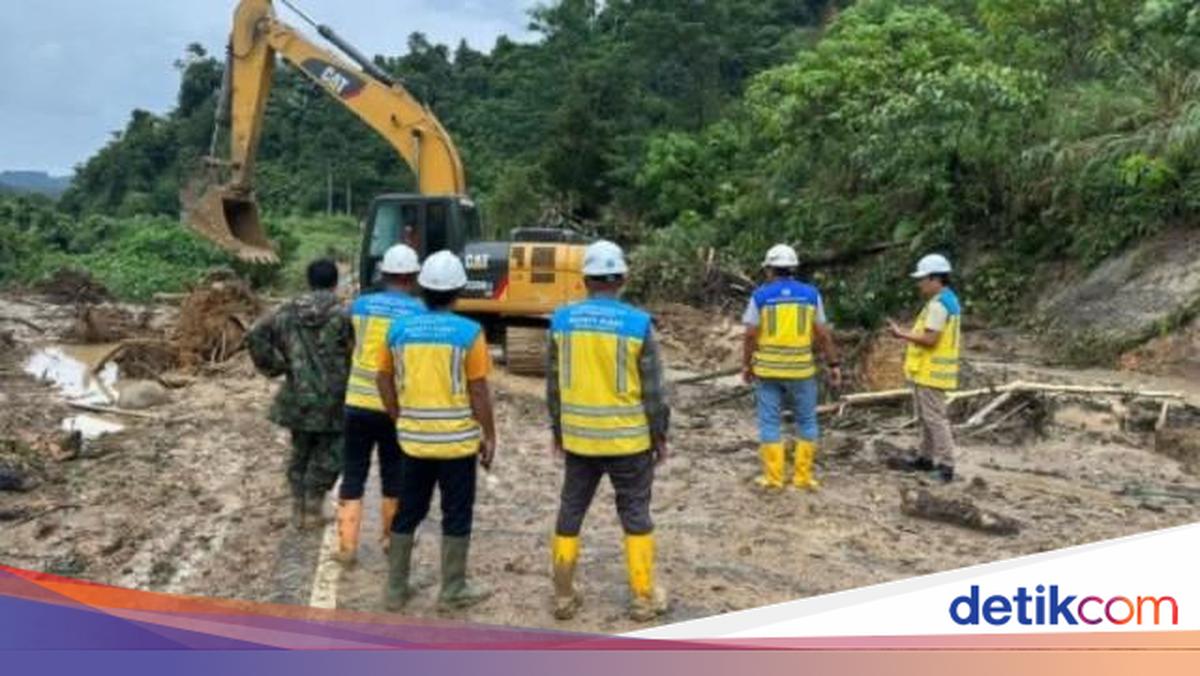
Post-disaster recovery in Aceh, North Sumatra, and West Sumatra continues to show progress. With basic public services gradually restored and functioning again, the Sumatran Post-Disaster Acceleration of Rehabilitation and Reconstruction (PRR) Task Force is now directing its focus towards the permanent recovery phase, particularly to strengthen infrastructure that is still only at a functional stage.
Head of the Sumatran Post-Disaster PRR Task Force, Muhammad Tito Karnavian, stated that the main priority going forward is to ensure that permanent infrastructure development proceeds more quickly and in a targeted manner so that communities can resume their activities normally and safely. “So our main priority going forward is infrastructure, making road infrastructure, bridges, district bridges, and district roads that have not yet been touched permanent. This must be done, either by the local government or taken over by the central government,” Tito said in a written statement on Friday (19/6/2026).
He made this statement during a Ministerial-Level Steering Committee Coordination Meeting for the Sumatran Post-Disaster PRR Task Force in Jakarta on Thursday (18/6/2026). According to Tito, several indicators show that the recovery process is moving in a positive direction. Government services have resumed, economic activity is beginning to recover, and the need for emergency response is steadily decreasing as conditions improve across the affected regions.
In the health sector, all affected hospitals in Aceh, North Sumatra, and West Sumatra are now fully operational again. Meanwhile, affected community health centres (Puskesmas) are also being continuously strengthened to ensure the public retains adequate access to healthcare services. Similar progress is evident in the education sector. Of the thousands of schools affected by the disaster, the majority have been reopened for teaching and learning activities. Although some schools are still utilising emergency facilities or awaiting relocation, recovery efforts are ongoing so that students can learn in a safer and more suitable environment.
Furthermore, the construction of temporary housing (huntara) for affected communities is nearly complete. According to the latest data from the PRR Task Force, 20,104 units have been built, representing approximately 97 percent of the total requirement of 20,674 units. “Based on reports from last Tuesday’s meeting, the regents, particularly in East Aceh and North Aceh, stated that no one is living in tents anymore, including in Aceh Tamiang,” Tito said.
The recovery of basic infrastructure has also yielded significant results. National roads and bridges are functional again, while fuel supplies, petrol station operations, electricity networks, and market activities in most affected areas are running normally and serving the community’s needs. Tito emphasised that these achievements form a crucial foundation for entering the permanent recovery phase. By accelerating the construction of roads, bridges, and other supporting infrastructure, the government aims to ensure that affected communities not only recover but also build better resilience against future disaster risks.