
No More Paperwork for Medical Treatment: SATUSEHAT EMR Now Available
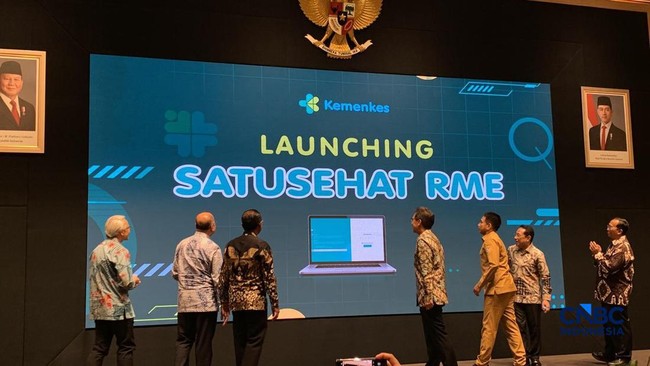
Jakarta, CNBC Indonesia - The Ministry of Health (Kemenkes) officially launched the SATUSEHTAT Electronic Medical Record (EMR) Viewer on Tuesday (1/9/2026). This system enables patient health histories to be accessed digitally when moving between hospitals or other healthcare facilities.
Minister of Health Budi Gunadi Sadikin stated that the launch of the EMR is part of the sixth pillar of Indonesia’s health system transformation, namely the transformation of health technology. The government aims to build a clinical database for approximately 280 million Indonesian residents.
The collected data includes results from Free Health Checks (CKG), laboratory tests, hospital examinations, medications, and doctor’s examination records.
“If we have a bank account, like mobile banking, this is like mobile banking but containing health data,” said Budi during the launch at the Ministry of Health in Jakarta on Tuesday (1/9/2026).
Budi noted that the presence of integrated medical records will make it easier for patients when transferring between healthcare facilities. Patients will no longer need to carry physical examination files from one hospital to another.
For example, when a patient moves from a Type C hospital to a Type B hospital, doctors at the destination facility can view their health history once access is granted by the patient.
The Director General of Health Services at the Ministry of Health, Azhar Jaya, stated that patients will only need to use their National Identity Number (NIK). This ensures that disease histories can be known by the healthcare facilities where patients are treated or referred.
“Examination results from other facilities can also be viewed by the next hospital. For instance, laboratory results previously conducted at Prodia can be accessed by RSCM, so patients do not need to carry physical examination documents,” said Azhar Jaya.
Budi added that this integration could also reduce unnecessary repeat examinations.
“Mr Aco has already been checked at Prodia, and his bloodwork is complete. Once he enters the hospital, the hospital can simply view it, provided Mr Aco grants access,” he said.
The Ministry of Health targets the integration of clinical data from nearly 100,000 healthcare facilities across Indonesia. Budi mentioned that these facilities include 3,200 hospitals, approximately 10,000 community health centres (puskesmas), 15,000 clinics, around 30,000 pharmacies, and 2,000 health laboratories. In total, about 98,000 healthcare facilities are targeted.
Budi also noted that out of approximately 100,000 healthcare facilities, about 60,000 are currently connected. However, the level of connectivity varies for each facility.
“There are about 100,000 healthcare facilities in Indonesia; currently, about 60,000 are connected. And that connection exists at several levels,” said Budi.
The Ministry of Health wants healthcare facilities to not only be connected to SATUSEHAT but also to transmit complete data, ranging from diagnoses and laboratories to medications and radiology.
Data Locked, Patient Grants Access
Budi ensured that health data remains under the control of the patient. He emphasised that the SATUSEHAT security system is designed to be at least as secure as banking services. Examination data from hospitals, clinics, pharmacies, or laboratories will become part of each patient’s individual health record.
“Because the only person who can open the data, just like a bank account, is the patient. And they are the ones who can grant permission to others to access their data,” said Budi.
Medical personnel’s access to patient medical records also requires a PIN and is valid for a specific period. Once the access period expires, healthcare facilities cannot reopen the data unless the patient provides new permission.
Meanwhile, Budi explained that data security is implemented through authentication and encryption. Authentication can use a PIN or facial recognition, while encryption is used to protect data during the exchange of information between healthcare facilities.
The Ministry of Health is also collaborating with the National Cyber and Crypto Agency (BSSN) to ensure that this data exchange remains secure.