
No More Flood Victims in Sumatra Living in Tents, Says Home Affairs Minister
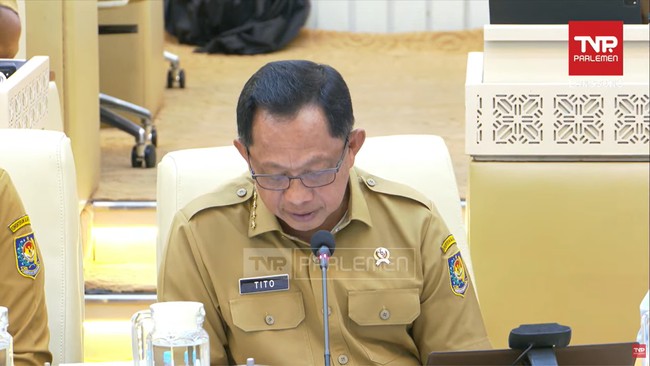
Home Affairs Minister Tito Karnavian has reported positive developments in the rehabilitation and reconstruction efforts following the floods in Aceh, North Sumatra, and West Sumatra. Several recovery indicators are showing results, from the resumption of health facility and school operations to the fact that no residents are still living in displacement tents. Tito stated that overall, the recovery progress in the three affected provinces is going quite well. One indicator is the restoration of local government activities in areas previously paralysed by the disaster. “The progress for post-disaster recovery in Sumatra is relatively good. This can be seen from governance indicators, for example, Aceh Tamiang district, which was completely non-operational because everything was affected by mud, has now returned to normal. Alhamdulillah, only a few village offices need repairing, especially those heavily damaged,” Tito said during a press conference at the Coordinating Ministry for Human Development and Cultural Affairs office in Jakarta on Thursday (18/9/2026). In the health sector, all hospitals in the affected areas are reportedly operational again. Meanwhile, only a few auxiliary community health centres (Puskesmas pembantu) have yet to fully recover. “Then from the health perspective, all hospitals are 100% operational in the three regions, with only a few auxiliary Puskesmas remaining. We appreciate the Health Minister (Budi Gunadi Sadikin) for working very quickly,” he said. Similar progress has been made in the education sector. Tito noted that teaching and learning activities have resumed in all affected areas, although some schools are still using temporary facilities. “Learning has also resumed 100%. There were 4,922 affected schools. Repairs have been carried out, and the Minister of Basic and Secondary Education has signed cooperation agreements with contractors. Most schools have started operating again, but it must be acknowledged that some are still in emergency locations, emergency schools,” he explained. According to Tito, some schools are still using tents or sharing premises with other schools because their buildings were heavily damaged or even destroyed by landslides and floods. Several schools also need to be relocated because their original sites are no longer deemed safe. Nevertheless, the government considers the most significant achievement to be the end of tent-based displacement for affected residents. This coincides with the construction of temporary housing (huntara) reaching 97%. “Other facilities, electricity is mostly reconnected, only about five villages in Central Aceh and two villages in South Tapanuli, if I am not mistaken, are still disconnected because the roads and bridges are cut off. But generators and Starlink for internet have been provided. These are some positive developments, including the huntara which is 97% built,” Tito said. He revealed that the latest checks show no residents are still living in displacement tents, whether in Aceh, North Sumatra, or West Sumatra. “During my last check, a direct meeting last Tuesday, I asked one by one, the regent in Aceh whether there were still people in tents. In West Sumatra, there have been none for a long time, almost two months ago. North Sumatra was also finished, but then there was another flood in Tukka sub-district, Central Tapanuli, so tents appeared again, but that has now been resolved,” he stated. Tito added that reports from regional heads indicate the displacement situation in Aceh has also ended. “The report from that meeting last Tuesday, the regents, especially in East Aceh and North Aceh, stated that no one is living in tents anymore, including in Aceh Tamiang,” he continued. Although several recovery indicators show positive progress, the government acknowledges there is still major work to be done, particularly the construction of permanent infrastructure such as roads and bridges damaged by the disaster. “So the main priority going forward is infrastructure. Making permanent the roads, bridges, district roads that have not yet been addressed. That must be done, either by the local government or taken over by the central government,” Tito concluded.