
No Longer Just Numbers, But Quality Too
In 10 days, two passenger ship fires occurred.
As one of the engines of economic growth, the tourism sector’s role in forming the Gross Domestic Product (GDP) cannot be underestimated. Based on the Tourism Satellite Account (TSA) Indonesia 2022-2024 report published by the Central Statistics Agency (BPS), the tourism sector in 2024 made a direct contribution to the national economy through the Tourism Direct Gross Domestic Product (TDGDP) of 4.82%, or Rp1,067.28 trillion. From the demand side, total tourism consumption was recorded at Rp2,245.94 trillion, consisting of domestic tourist spending of Rp1,954.26 trillion and foreign tourist spending of Rp291.68 trillion. These are not just numbers; they show that millions of people are part of the tourism ecosystem, such as accommodation, food and beverage provision, and air transport. For 2025, tourism’s contribution to the national economy is estimated to reach 3.97%-4.80%.
As a driver of the economic engine, tourism’s contribution to GDP is continuously being accelerated. The target is for its contribution to reach 8% when Indonesia celebrates its Golden Anniversary in 2045. So, what is the Ministry of Tourism’s strategy to pursue this target, which is far from easy? Here is the explanation from Minister of Tourism Widiyanti Putri Wardhana during an interview with Media Indonesia’s Director of News, Abdul Kohar, in early August:
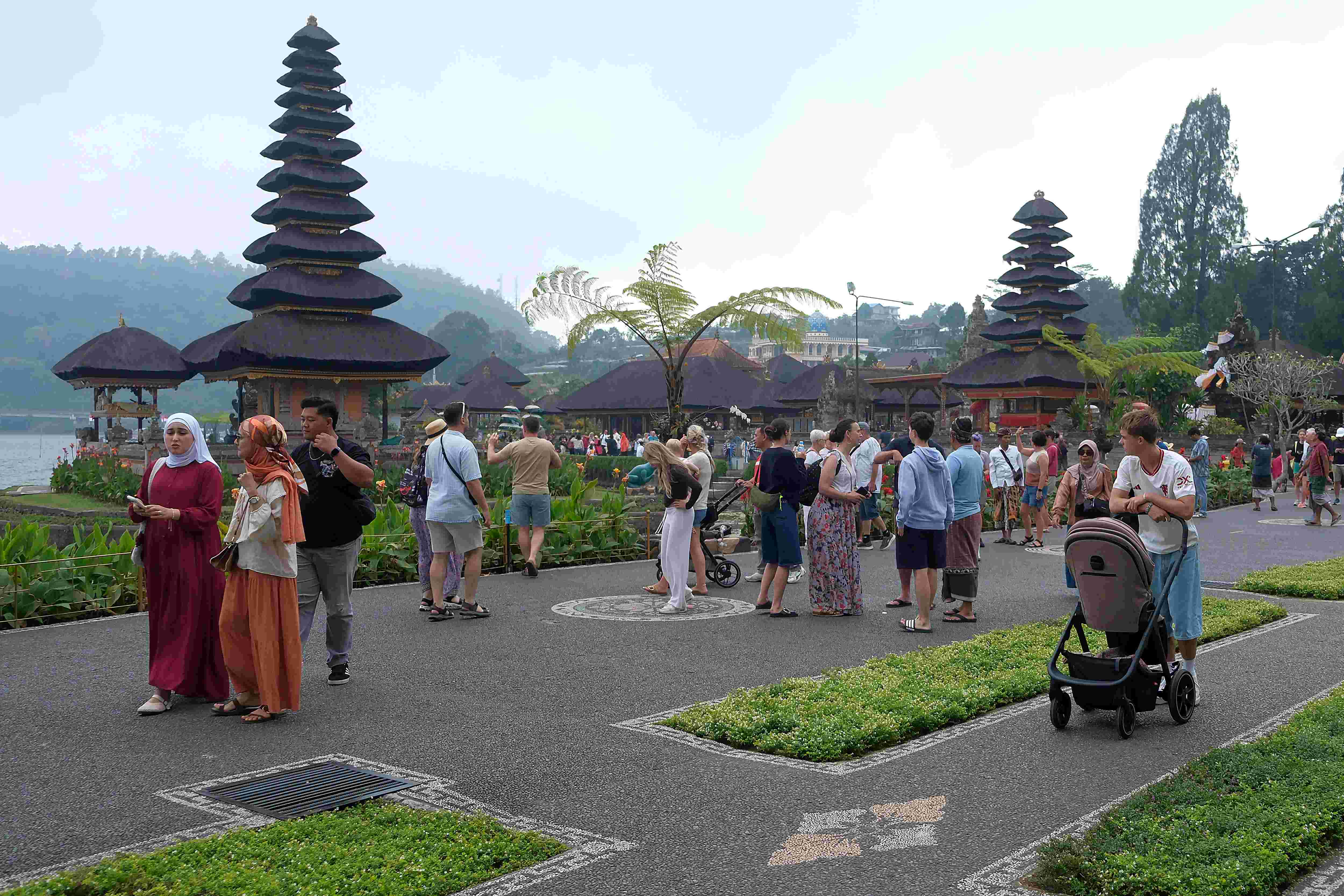
How do you view the achievements in foreign tourist arrivals and domestic tourist trips so far? The achievements of Indonesia’s tourism sector continue to show a positive trend. Throughout the first semester (January–June 2026), foreign tourist arrivals grew by 5.71% to 7.45 million visits, while domestic tourist trips increased by 2.71% to 630.41 million trips compared to the same period last year. Indonesia has managed to maintain positive growth in foreign tourist arrivals, despite a decline in tourists from the Middle East and Europe due to the impact of the prolonged war in the Middle East. We continue to strive to achieve the 2026 Government Work Plan targets, namely 16 million–17.6 million foreign tourist arrivals and 1.18 billion domestic tourist trips. These targets are important for maintaining foreign exchange, economic growth, and benefits for the community.
Amidst various global and domestic dynamics, what are the main factors driving this growth? Are there any specific strategies from you and the Ministry? Since the beginning of the year, when global geopolitical dynamics occurred, we moved quickly by pivoting our marketing strategy to short-haul and medium-haul markets that were relatively unaffected, namely Southeast Asia, East Asia, and Oceania, through integrated cooperation, familiarisation trips, and exhibitions. This step was followed by optimising direct and transit flight connectivity in the Asia Pacific, strengthening digital campaigns, implementing cross-border events and strengthening ‘Event by Indonesia’, and encouraging domestic tourists through the ‘Proud to Travel in Indonesia’ campaign.
On various occasions, you have emphasised that tourism success cannot be measured solely by the number of tourist arrivals, but also by the quality of experience, economic benefits, environmental sustainability, and tourist safety. How are the flagship programmes translated to achieve these goals? The tourism sector has a very broad scope, so when it grows, the benefits are felt comprehensively. However, this growth must also pay attention to sustainability aspects. The Ministry of Tourism has five flagship programmes. First, Improving Tourism Safety. This programme includes upskilling and reskilling, training and certification, tourist education, preparation of safety guidelines, mapping of disaster-prone destinations, and regulatory adjustments. The next programme is Tourism Villages. This programme focuses on improving the quality and quantity of tourism villages for equitable development and economic growth. There are currently more than 6,300 tourism villages in Indonesia. Quality Tourism is the third flagship programme. Its focus is on developing special interest tourism while strengthening transparent, accountable, and sustainable industry governance. The fourth flagship programme is Event by Indonesia. Currently, events are one of the main drivers of tourism. This programme includes Karisma Event Nusantara (KEN), national events, international events, and Meetings, Incentives, Conventions, and Exhibitions (MICE), as well as other regional events. The final flagship programme is Tourism 5.0. The Ministry is undertaking a digital transformation through the Visit Indonesia Portal, the AI travel companion MaiA, and the integrated Event by Indonesia Portal which is being prepared. These five programmes aim to improve the quality of the tourist experience, strengthen safety, enhance destination quality, upgrade tourism villages, and present quality events capable of driving the regional economy. The five flagship programmes complement each other to realise higher quality tourism. The goal is not only to increase the number of tourists but also to provide a safe and memorable experience, strengthen destination competitiveness, expand economic benefits for the community, and ensure that Indonesian tourism grows sustainably.
We would like to elaborate on gastronomy. Indonesia has enormous culinary wealth. Through the Wonderful Indonesia Gastronomy programme, how do you intend to elevate Indonesian cuisine and gourmet food? Indonesia indeed has extraordinary culinary wealth. Our challenge now is no longer whether we have quality cuisine, but how the world gets to know it. Therefore, through Wonderful Indonesia Gastronomy (WIG), our focus is on increasing the exposure of Indonesian cuisine on a global level.