
No Longer Just Land Tanks, Drones Now Make Global Seas Perilous
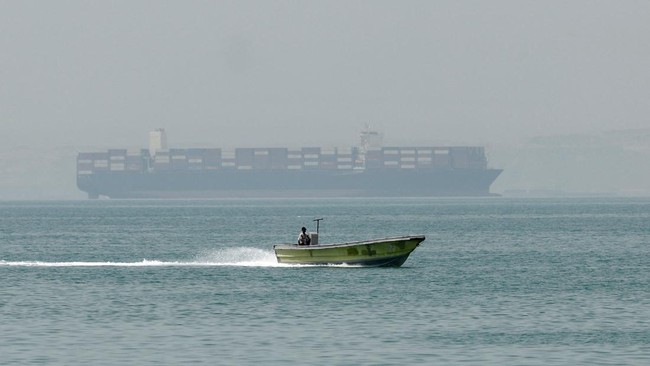
War is no longer confined to land territories. Straits, canals, ports, and merchant ships have become critical targets due to their vital role in global trade. This shift is evident from the Strait of Hormuz and the Red Sea to the Black Sea.
Attacks on commercial vessels have disrupted trade, raised freight tariffs and insurance costs, and forced shipping companies to abandon previously safe routes. According to CNBC International, approximately 80% of global goods trade is transported by sea. Disruptions in a single corridor can delay shipments, tighten supplies, and drive up prices for energy, food, and consumer goods thousands of kilometres away from the conflict zones.
The threat is escalating as the use of drones and missiles allows nations or armed groups to attack ships and maritime infrastructure at a significantly lower cost.
War Shifting to the Sea
David Roche, President and global strategist at Quantum Strategy, suggests the world is facing new maritime battlegrounds and trade chokepoints. This refers to the Sea of Azov and the Black Sea, where Ukrainian drones have targeted several Russian tankers. Roche describes these battles as some of the first maritime offensives conducted almost entirely via drones supported by missiles. Such weaponry enables smaller military forces to threaten ships, ports, and essential facilities, causing much greater economic damage than the cost of the attacks themselves.
Quantum estimates that approximately 2lar 25% of Russian grain exports and 25%-30% of Russian oil exports through the Black Sea are at risk of disruption. The impact could ripple through global food prices, as Russia supplies more than one-fifth of internationally traded wheat.
Senior researcher at the Atlantic Council, Yevgeniya Gaber, noted that Russia’s decision to halt navigation through the Kerch Strait in July 2026 has practically closed a vital link between the Sea of Azov and the Black Sea. Beyond sanctioned crude oil and petroleum products, this route is used to transport wheat, coal, and steel. Ukraine has also stated it has weakened approximately one-third of the Russian Black Sea fleet since 2022. Gaber assesses these attacks on Russia’s economic and maritime vulnerabilities as one of the greatest damages to military and commercial fleets since World War II.
Global Oil Routes Under Threat
Disruptions to maritime routes are particularly dangerous because much of the world’s energy trade passes through a few narrow chokepoints. Data from the Energy Information Administration (EIA) shows the Strait of Malacca was the world’s largest oil transit route in the first half of 2025, with a volume of approximately 23 million barrels per day. The Strait of Hormuz ranked second with about 21 million barrels per day, far exceeding the Suez Canal, the SUMED pipeline, the Danish Straits, Bab el-Mandeb, the Turkish Straits, or the Panama Canal.
The sheer volume passing through the Strait of Hormuz means even minor disruptions can destabilise global energy trade. However, the status of a maritime route is not determined solely by government announcements. While a nation may declare a strait remains open, the final decision rests with ship owners. Shipping companies must weigh the risk of attacks, potential casualties, and the availability of insurance before sailing.
Kpler data shows that physical attacks on vessels traversing the Strait of Hormuz have increased since early March 202t6. By the second half of July 2026, the number of attacks had exceeded 60 incidents, resulting in approximately 35 sailors injured and 17 deaths.
Daejin Lee, Head of Global Research at Fertistream Freight, stated that conflicts in the Strait of Hormuz, the Black Sea, and Bab el-Mandeb cannot be viewed as isolated events. These routes are increasingly becoming battlegrounds amidst the shifting global order.
The Panama Canal Could Be the Next Flashpoint
The threat to shipping is not limited to the Middle East and the Black Sea. The Panama Canal is being identified as a potential next conflict point. Lars Jensen, CEO of Vespucci Maritime, suggested that attention should not focus solely on the Strait of Hormuz. “If discussing the next conflict point, I would not look at the Strait of Hormuz. I would look at the Panama Canal,” he was quoted as saying by CNBC International.
The Panama Canal has served as a shortcut between the Pacific and North Atlantic Oceans for over a century. However, the route is now caught in a competition for influence between the United States, China, and Panama. Potential weather-related restrictions from late 2026 to early 2027 could further exacerbate the situation, as shipping capacity may decrease alongside rising geopolitical tensions.
These conditions indicate that threats to global trade are no longer centralised in one region. Disruptions can migrate from one strait to another even before previous routes have recovered.
Shipping Tariffs Surging
Shipping companies are beginning to bear higher costs due to increased security risks and rerouting. Freightos data shows that container spot rates from China and East Asia have surged since June 2026. Rates to the North American East Coast rose to nearly US$9,000 per 40-foot container by late July, compared to approximately US$4,000 at the start of the year. Rates to the Mediterranean region briefly exceeded US$7,000, with increases also noted for the North American West Coast and Northern Europe. Kevin O’Marah, Chief Research Officer at Zero100, noted that the Strait of Hormuz has become a critical component of the US-Iran tension, as Iran recognises that the mere threat to shipping is sufficient to halt navigation.