
No Longer Just a Mining Region, North Maluku Is Now a Nickel Industry Hub
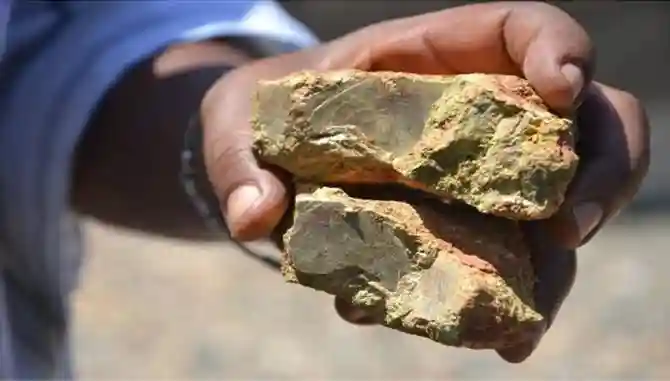
KABARBURSA.COM – North Maluku’s economic transformation is shifting the province from a raw-material-producing region into an industrial area focused on mineral processing.
Investment and Downstreaming Minister and Investment Coordinating Board (BKPM) Head Rosan Roeslani said the processing industry now contributes nearly half of the province’s gross regional domestic product (GRDP).
The change in the region’s economic structure demonstrates the success of the government’s policy to halt exports of unprocessed ore, which it has pursued for several years.
Rosan said North Maluku had become one of the largest nickel-processing manufacturing centres in eastern Indonesia.
“Processing industries in North Maluku contribute nearly half of the province’s GDP. It is no longer merely a mining region, but has become an industrial region,” Rosan said during the groundbreaking and commercialisation of 11 nickel downstreaming ecosystems and the first export of electric-vehicle batteries at the Weda Bay Industrial Estate in Central Halmahera, North Maluku, on Thursday, 8 October 2026.
The shift towards processing has had a direct impact on improving the region’s trade balance.
Mineral-based manufacturing activity has generated a substantial increase in North Maluku’s trade surplus.
“Its trade surplus also rose sharply, reaching Rp31.1 trillion in 2025,” Rosan said.
North Maluku’s exports are no longer raw mining products, but higher-value processed goods.
Various processed nickel products and associated minerals account for a large share of shipments from the province’s ports.
“These exports are dominated by processed nickel products, ferronickel, nickel matte, MSP (Mixed Sulphide Precipitate), nickel sulphate and cobalt, Mr President,” he said.
The region’s rapid economic growth has also been accompanied by significant contributions from companies operating industrial estates to nearby communities.
Corporate social responsibility (CSR) programmes have channelled hundreds of billions of rupiah into supporting villages in mining operating areas.
“Their CSR programmes have reached 32 villages around the industrial and mining areas through community empowerment initiatives, and they have spent more than Rp600 billion,” Rosan added.
The combination of industrial processing and community empowerment is seen as key to sustaining regional investment.
The government is confident that North Maluku will continue to strengthen its position as a mainstay of global green-energy materials manufacturing.
“As you have said, downstreaming ultimately means industrialisation. The presence of this industrial estate is not only changing the region’s GDP structure, but also concretely encouraging a more even distribution of economic growth beyond Java,” he concluded.
From nickel to recycling, Indonesia’s EV battery ecosystem is taking shape
Indonesia’s electric-vehicle (EV) battery ecosystem continues to develop as nickel downstreaming accelerates and industries are built across the supply chain. A chain that previously relied heavily on raw-material processing is beginning to encompass battery materials, supporting components, cell production and recycling facilities.
This ecosystem is developing mainly in nickel-based industrial estates, including Indonesia Weda Bay Industrial Park (IWIP) in Central Halmahera, North Maluku, and Indonesia Morowali Industrial Park (IMIP) in Central Sulawesi.
Both estates are important to the development of the battery industry because they are directly connected to the processing of minerals used as key battery inputs. The government has also recently promoted new projects to build battery-material and supporting-component facilities, alongside the first export of electric-vehicle batteries.
Indonesia’s battery-cell manufacturing sector includes PT HLI Green Power in Karawang, West Java. The company, a joint venture between Hyundai Motor Group and LG Energy Solution, has an annual production capacity of 10 GWh.
PT Contemporary Amperex Technology Indonesia Battery (CATIB) is also based in Karawang and is being developed through a partnership between PT Industri Baterai Indonesia (IBC) and a CATL consortium. The two facilities strengthen Indonesia’s capacity to produce battery cells domestically.
The supply chain is also expanding through the development of battery-material and component industries. PT Guang Ching Nickel Cobalt is developing nickel-based materials, while PT Inno Prima Material is developing battery separators. PT Tinci Materials Indonesia, meanwhile, is working on battery electrolyte materials.
These industries are important because EV batteries require not only cells, but also a range of supporting materials and components. As more stages of production take place domestically, the EV industry’s supply chain is becoming more integrated.
PT Industri Baterai Indonesia (IBC) is among the organisations involved in developing the national EV battery ecosystem. It coordinates the development of the battery supply chain from upstream to downstream.
The next stage is to strengthen the battery recycling industry. Recycling facilities are needed to recover materials from batteries that are no longer in use, ensuring the supply chain does not end with the production and use of electric vehicles.
These developments show that Indonesia’s nickel downstreaming is moving towards a more integrated industry. The next challenge is to ensure that all facilities operate optimally, meet global industry standards and support a sustainable export market.
With mining, nickel processing, materials manufacturing, battery-cell production, supporting components and recycling all being developed, Indonesia is building an increasingly complete domestic EV battery supply chain.
Source: jawawa.id (https://jawawa.id/newsitem/no-longer-just-a-mining-region-north-maluku-is-now-a-nickel-industry-hub-1791546639)
Originally published by kabarbursa.com (https://www.kabarbursa.com/makro/bukan-lagi-daerah-tambang-maluku-utara-kini-jadi-basis-industri-nikel), translated from Indonesian