
No Longer Beef Rendang, This Is Indonesians' Favourite Menu at Padang Eateries
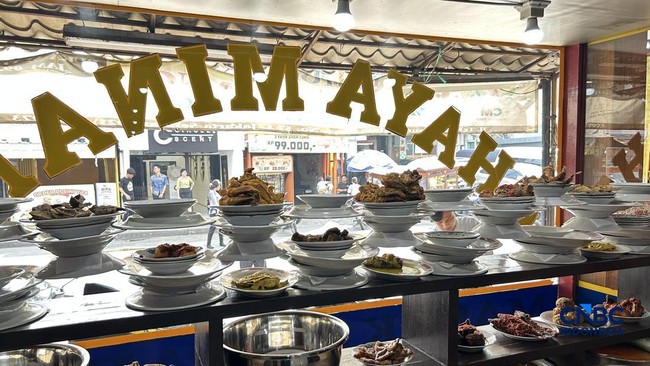
Jakarta, CNBC Indonesia - Beef rendang, the signature dish of Padang restaurants, is starting to be forgotten by customers. Nowadays, patrons are more familiar with other menu items that are wallet-friendly, or cheap and cheerful.
Padang restaurant business owners are observing a shift in consumer behaviour regarding Nasi Padang. Whereas previously the favourite Padang dishes were rendang, tunjang (beef tendon), minced meat, and fish, customers now tend to choose more affordable options.
According to traders, some customers tend to buy Padang meals priced around Rp 15,000 to Rp 20,000. Typically, menus in that price range include rice, an omelette, chicken, and vegetables.
“Yes, sometimes they look for the Rp 15,000 package,” said Ijan, a Padang restaurant operator in Tebet, to CNBC Indonesia last Tuesday, as quoted on Sunday (14/6/2026).
Alongside this, Ijan believes that people’s purchasing power has also begun to decline. This is evident from a drop in Nasi Padang turnover exceeding 10% recently.
Furthermore, Ijan noted that previously the Padang dishes at his establishment would usually sell out by around 2 p.m., but that is no longer the case. His Padang restaurant used to be bustling with visitors during lunchtime, but now the situation appears just ordinary.
Still in the Tebet area, another Padang restaurant operator, Ridwan, admitted he finds some visitors tend to choose thrifty menus during the middle to end of the month. During that period, Nasi Padang buyers usually prefer menus like rice with egg, rice with potato patty, and rice with aubergine priced at Rp 18,000.
“So far, from mid-month usually until the end it’s quiet, they are usually economising,” Ridwan stated.
So frugal are they, Ridwan continued, that he often gets visitors who only buy vegetables and sambal without rice to take home. On the other hand, there are also buyers who only want to purchase the side dishes to share with their families at home.
“In Nasi Padang, the vegetables are free and are already included when someone buys a side dish,” he explained.
The situation differs at the beginning of the month or during payday periods, when many Padang restaurant visitors buy packages of rice with fish, minced meat, rendang, and tunjang. These premium menus are usually priced around Rp 20,000 and above.
The majority of visitors also buy a complete package priced at Rp 27,000, which includes rice, one type of side dish, vegetables, and sambal. Unfortunately, sales of these package menus start to decrease from mid-month to the end of the month.
At that time, customers begin to economise by buying cheap menus. They usually ask for more rendang gravy and coconut milk sauce rather than buying the meat itself.
Shifting to the Cikini area in Central Jakarta, Taufik, a Padang restaurant operator, is also feeling a decline in Nasi Padang sales at his place. He sees a shift in the menu packages chosen by the public. Previously, most customers came to buy rice with rendang, rice with chicken, and other luxurious side dishes.
However, currently many customers tend to choose cheap menus such as rice with egg, rice with potato patty, and even rice with balado potatoes. Some who used to buy rendang are now switching to chicken dishes.
Taufik also explained that currently, food items like snapper head, squid, and other menus with expensive base ingredients are somewhat difficult to sell optimally. Seeing this condition, he decided to reduce the serving portions.
For example, Taufik previously sold 6-7 snapper heads, but now only half that amount, just three snapper heads. Nasi Padang with a snapper head menu is priced at Rp 50,000.
On the other hand, Andi, a Padang restaurant customer, admits he still buys Nasi Padang because the menus are relatively diverse and the portions are large. Nevertheless, in the current economic climate, he has started to economise when buying food, considering the prices of other necessities have become increasingly high.
“Nowadays, I’ve started to tighten my belt. Maybe rice and an egg is enough,” he explained.
He said that some food menus at the Padang restaurants he has visited have indeed experienced price increases. Because of this, he always pays attention to his available budget before deciding to buy Nasi Padang.
“Because the portions are also large, you get free vegetables. The drink is also free. Yes, it’s still worth it until now. It’s just the menu that needs to be adjusted,” he clarified.