
No 'Gifts' from Trump: US Imposes Strict Conditions on Iran
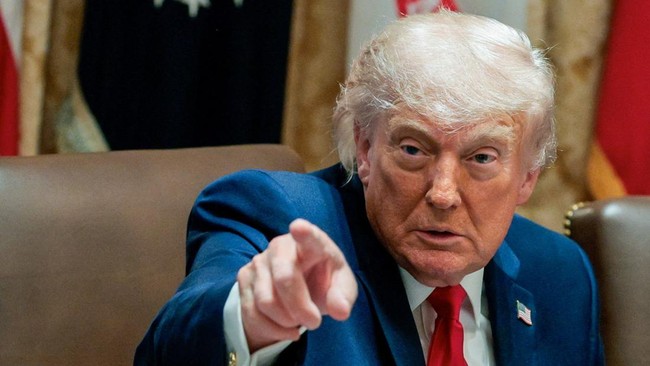
The administration of President Donald Trump has asserted that the removal of sanctions against Iran will not be granted as a reward for the reopening of the Strait of Hormuz. Washington has stated that any relaxation of sanctions will only be considered if Tehran agrees to cease its nuclear programme, amidst ongoing diplomatic efforts to end the conflict which entered its fourth month.
This stance was articulated by US Secretary of State Marco Rubio during a Senate hearing on Tuesday (2/6/2026), as lawmakers questioned the Trump administration’s strategy regarding the Iran conflict. Rubio rejected speculation that negotiators were offering sanctions relief in exchange for the reopening of the Strait of Hormuz, a vital maritime route for global oil and gas exports.
‘At this time, everything discussed with them [Iran] is that… any easing of sanctions is conditional, meaning it must be provided in exchange for the very reasons the sanctions were imposed in the first place, namely their nuclear programme,’ Rubio stated before the Senate, as reported by Reuters. He reiterated that the root cause of the sanctions remains Iran’s high-level uranium enrichment activities.
Rubio’s testimony marked his first public appearance before Congress since the outbreak of war involving the US, Israel, and Iran. He appeared before the Senate Foreign Relations Committee as part of a series of hearings regarding the Trump administration’s proposal to cut foreign affairs budgets by 30% to US$36 billion, while simultaneously increasing military spending by 50% to US$1.5 trillion.
Some Republican members have expressed growing unease regarding the protracted conflict, hoping Rubio could detail a strategy to end the war that began following US and Israeli strikes on Iran on 28 February. During a heated debate with Democratic Senator Cory Booker, Rubio asserted that the war had already ended, a claim Booker contested.
Pressure also came from senior Democratic Senator Jeanne Shaheen, who accused the Trump administration of failing to provide adequate information to Congress regarding the direction of the war policy. Shaheen argued that the American public prioritises domestic economic stability over regime change abroad, stating, ‘When I speak to my constituents, they ask for domestic economic help, not regime change in Havana, Caracas, or Tehran.’
Rubio defended Trump’s foreign policy and supported Washington’s actions in Venezuela following the removal of President Nicolas Maduro in January. He noted that Venezuela does not yet meet the conditions for free and fair elections.
The Trump administration faces significant domestic political pressure, with Americans struggling against the high cost of living and energy prices. Republicans hope Trump can reopen the Strait of Hormuz to lower petrol prices before the upcoming November elections. Meanwhile, Trump faces opposition from hardliners within his own party who reject any concessions to Tehran. While Trump maintains that success is defined by preventing Iran from acquiring nuclear weapons, negotiations remain difficult, as Iran seeks interim deals to access oil revenues, even as Washington continues to expand its list of sanctioned Iranian entities.