
No Fixed Salary: High-Rise Window Cleaners Live Project to Project
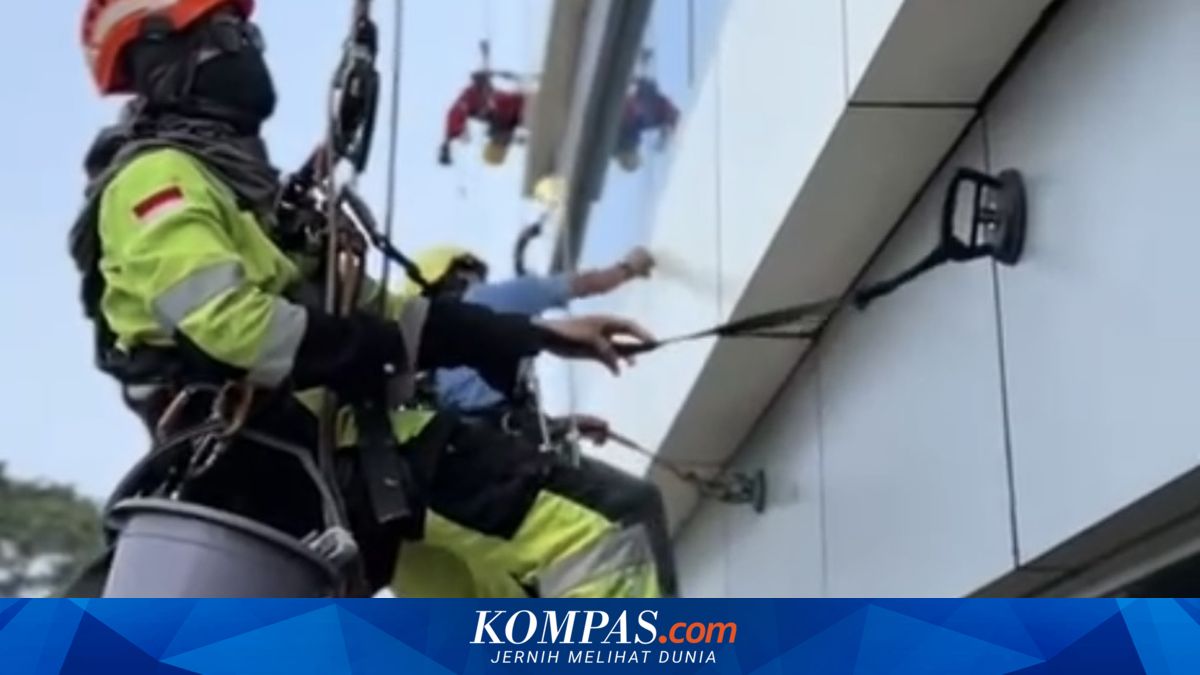
JAKARTA, KOMPAS.com - A number of high-rise window cleaners in Jakarta do not receive a fixed monthly salary because their status is that of freelancers. Their income depends on whether projects come in. If work is busy, earnings can reach tens of millions of rupiah in a month. But when projects are scarce, they must endure periods without a definite income.
At those times, rope-access workers are believed to earn more. However, to work in that profession, Rizki did not immediately go to the field because he had to undergo training and certification processes for several years. “It used to take about three to four years before you could truly obtain a licence and be able to start work,” Rizki said.
Fear haunted Rizki when he first worked at height. He says he turned pale when looking down from the side of the building. However, guidance from more experienced colleagues gradually helped him get used to it. “Two to three days, I started to get used to it,” he said.
During his career, Rizki has handled projects in various regions, including Kalimantan. Yet, despite more than a decade of work, his status remains freelance. According to Rizki, the working system is based on project-based profit-sharing according to the number of team members who go to work. “We operate on a profit-sharing basis. So it’s not a fixed salary,” he said.
In a month, the projects they receive typically number only one or two. There are periods when projects are scarce for long stretches. That situation forces workers to live with income uncertainty. When projects do not come, they can only wait for the next call to work.
On the other hand, the job also demands substantial upfront capital because many workers buy their own safety equipment. Rizki says a full set of work tools can cost around 25 million rupiah. All of the equipment is bought gradually from the proceeds of the projects. “Financed from project earnings,” Rizki said.
Even without a fixed salary and having to buy gear themselves, Rizki says he still chooses the freelance system because he finds it more flexible than full-time work at a company. “If tied to a company, I’m not that interested. It’s nicer to be flexible like now,” he said.
Yet that flexibility comes with high risk. When working on tall buildings, Rizki must face winds that can arrive suddenly and affect his balance.
Another rope-access worker, Fajar Maulana (27), also works under a similar system.