
Ningbo's "Eco+" Integration Practices Showcased at SCO Forum
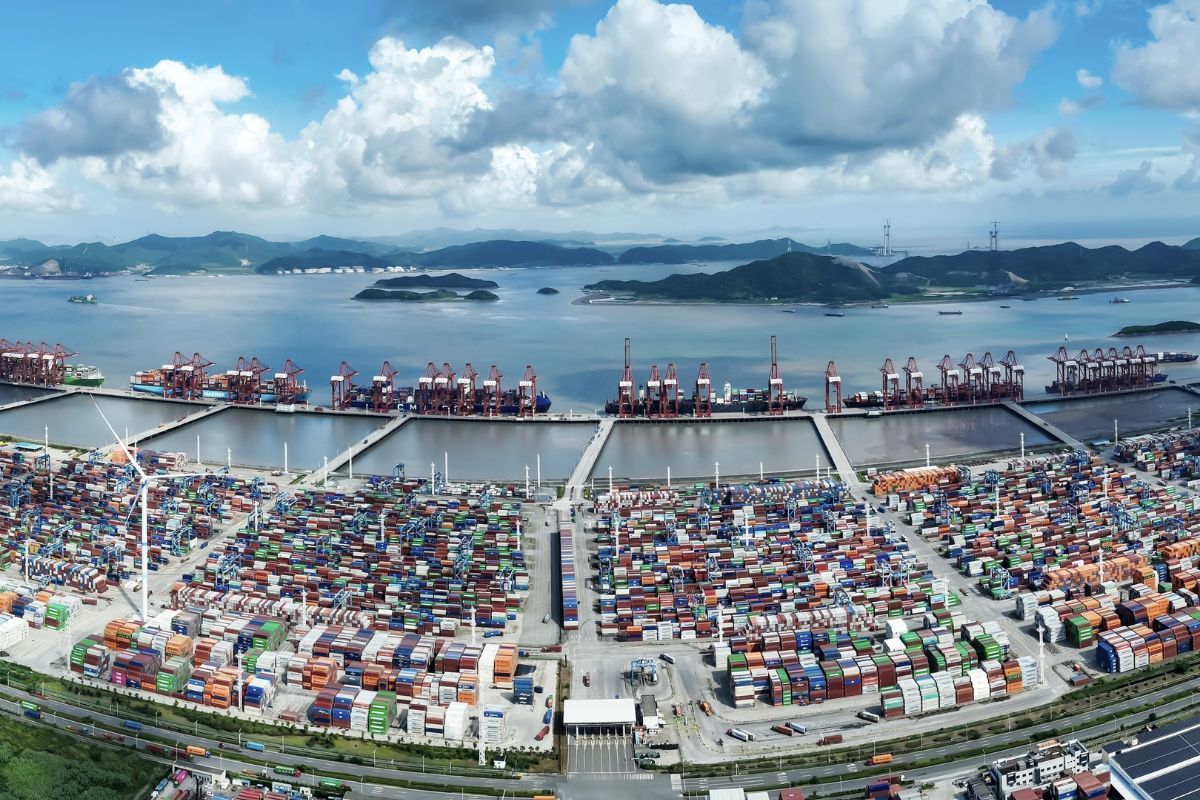
The Shanghai Cooperation Organization (SCO) Forum on Green and Sustainable Development was held in Ningbo, Zhejiang Province, from 28 to 30 April. At this international event focused on green and low-carbon transitions, Ningbo showcased various concrete examples of how humans and nature can coexist harmoniously.
An abandoned stone quarry area has been transformed into an international racing circuit, where the roar of engines also drives the development of cultural and tourism sectors. A once-barren mountain path known as the “firewood trail” has been upgraded into a national hiking route, while giving birth to distinctive local industries that have made the area known as “China’s Hometown of Sports Walking Sticks” and “China’s Capital of Flashlights.” Ningbo continues to promote the “Eco+” integration model, converting ecological assets into industrial strengths, development potential, and tangible benefits for shared prosperity. The city has developed practical pathways to realise value from “clear waters and green mountains,” while offering the “Ningbo model” that can be replicated for green and low-carbon urban transformations around the world.
In Beilun District, more than 500 species have been recorded, and the district has been designated as a city of charm for biodiversity by the United Nations. From the revitalisation of Meishan Bay in Beilun to the misty expanses of Dongqian Lake in Yinzhou and the historical charm of Moon Lake in Haishu, local governments have utilised the “golden key” of ecological governance to revive previously underutilised green mountains and clear waters. Ningbo’s ecological governance does not stop at mountain restoration and water management but also integrates “Eco+” development from the initial planning stage through integrated spatial planning and coordinated implementation—protecting ecological foundations while providing space for industries. This forward-looking approach yields dual benefits for ecology and development; along the Meishan Bay coastline, cultural tourism and recreation industries are flourishing with over two million visitors annually.
In Fenghua District, the “Shared Prosperity Studio” initiative has built a full-chain platform integrating “5G + IoT + Agriculture,” while introducing a model combining fixed leasing by village collectives, professional management by companies, and flexible participation by farmers. In Yuyao, the Hemudu area has pioneered China’s first integrated ecological farming system that cultivates soft-shelled turtles in water oat fields, balancing ecological protection, food security, and farmers’ income enhancement. Meanwhile, Zhenhai Refining & Chemical has established China’s first “zero-waste” petrochemical base, recognised as a national model for waste-free industrial parks.
By leveraging mountain and sea resources, Ningbo is deepening chain-based industrial integration between “Ecology + Cultural Tourism + Sports + Manufacturing,” and continuously converting ecological value into tangible societal benefits. Ninghai County has transformed an abandoned ancient path into a 500-kilometre national hiking route and established a national-level sports industry demonstration base. Xiangshan County has harnessed the momentum of the Asian Games to revitalise coastal tourism and open pathways for marine ecological value conversion. Meanwhile, Yinzhou and Haishu are developing biodiversity-friendly districts and cities, while promoting the emergence of new sectors such as educational tourism and cultural creative industries.
To ensure stable and sustainable green development, Ningbo has established a multi-stakeholder governance system involving government, businesses, and communities. Ninghai has pioneered a “Land and Forest Bank,” which uses financial instruments to unlock the value of forestry resources. Yinzhou, Cixi, and other areas have also successfully encouraged broad community participation in ecological protection, creating models of shared development and mutual benefits that support the sustainable realisation of ecological value.