
Nine Level-Crossing Posts Begin Operations as KAI Strengthens Safety Measures
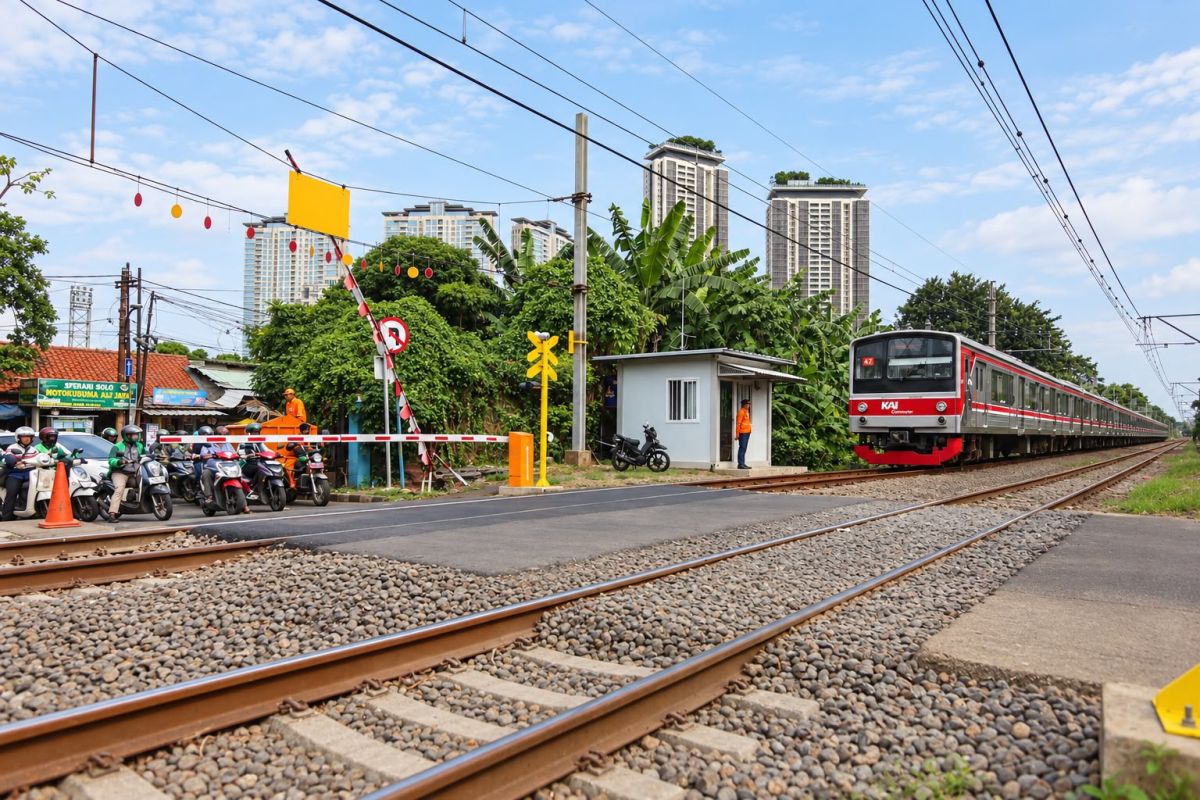
Jakarta (ANTARA) — PT Kereta Api Indonesia (Persero) is continuing to improve safety at level crossings by providing facilities and ensuring staff are ready. As part of efforts to accelerate the implementation of recommendations from the National Transportation Safety Committee (KNKT), KAI is developing safety facilities at 190 direct level-crossing (JPL) sites across its operating regions.
As of 9 October 2026, nine JPL posts have begun operating in the Jakarta Regional Operations area (Daop 1) and Bandung Regional Operations area (Daop 2). Five are in Daop 1 and four in Daop 2. They are being brought into service in stages, depending on the readiness of facilities and personnel at each location.
KAI Vice President of Corporate Communications Anne Purba said the accelerated follow-up to the KNKT recommendations involved ensuring that facilities, staff and operational arrangements were ready as essential elements of level-crossing safety.
“We are advancing the follow-up to the KNKT recommendations by completing work on the ground in stages. At each site, the facilities, staff and operational arrangements must be confirmed ready before it enters service to support level-crossing safety,” Anne said.
In Daop 1 Jakarta, the posts now operating are at JPL 124 and JPL 126 on the Lemahabang–Kedunggedeh line, JPL 98 on the Tambun–Cibitung line, JPL 98 Cisauk, and JPL 156 on the Tigaraksa–Cikoya line.
In Daop 2 Bandung, posts have begun operating at JPL 146 on the Padalarang–Cimahi line, JPL 340 on the Padalarang–Cilame line, JPL 263 on the Sukatani–Plered line, and JPL 325 on the Maswati–Sasaksaat line.
Alongside the start of operations at the nine posts, civil works under the programme to develop 190 JPL sites had been completed at 188 locations, or around 98 per cent, as of 9 October 2026. Modular posts and supporting facilities are being installed in stages, taking account of technical conditions and each site’s readiness before it moves into the operational phase.
KAI is also preparing personnel to support level-crossing safety. By that date, 739 level-crossing attendants (PJL) had passed competency certification. The next steps include submitting staffing requirements, assigning personnel from the respective regions and preparing them for duty in line with operational needs.
“Facilities must be completed alongside the preparation of staff. Every post entering the operational phase needs personnel with the competencies required for crossing safety duties, so that safety measures on the ground can be applied consistently,” Anne said.
Anne said construction at the 190 JPL sites was being carried out in stages because each location had different technical characteristics and safety requirements. Readiness is assessed before facilities are used for operations.
KAI also urged the public to help maintain safety by obeying signs and road markings and following staff instructions when crossing railway lines. Road users were reminded to give priority to train journeys in accordance with the applicable rules.
“Safety at level crossings depends on facility readiness, staff competence and road users’ discipline. That is why we are continuing to accelerate the implementation of safety recommendations in stages, according to readiness at each location,” Anne concluded.