
Nine Controversial Remarks by Trump on the Iran War and the US Economy
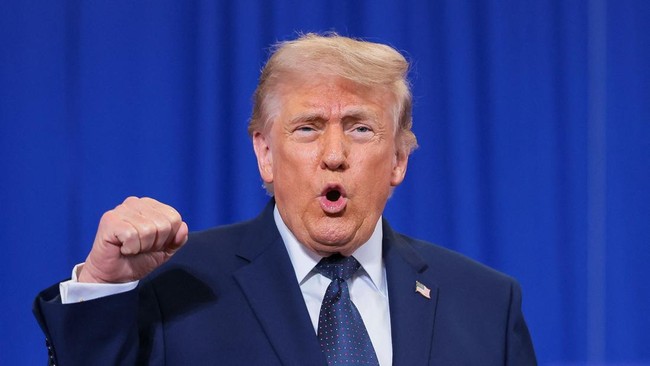
US President Donald Trump has once again come under the spotlight after a series of statements regarding the war with Iran and the domestic economic situation were deemed increasingly detached from the concerns felt by the American public. Within a span of just about 24 hours, Trump made two comments that sparked controversy. On Tuesday morning (7/6/2026), he downplayed the downing of a US Army Apache attack helicopter by Iran during a ceasefire. Speaking to the Wall Street Journal, Trump called the incident ‘no big deal’. A day later, as US inflation surged past 4% for the first time in three years, Trump responded with a startling phrase. ‘I love it. I love inflation,’ Trump said when asked about the latest inflation figures.
One comment that drew criticism came after the first reports of three US soldiers killed in the Iran conflict. Speaking to NBC News, Trump appeared to factor the casualties into a cost-benefit calculation of war. ‘We lost three people, but we did expect casualties. But in the end this will be a great deal for the world,’ he stated. In another remark, Trump even said, ‘That’s the way it is,’ while predicting additional casualties in the future. The statement was immediately condemned by the Democratic Party, which judged that Trump failed to show empathy for the families of the victims.
Trump has also argued several times that rising oil prices actually benefit America because the country is the world’s largest oil producer. ‘The United States is the largest oil producer in the world, far above any other country, so when oil prices go up, we make a lot of money,’ Trump wrote on social media in March. However, criticism emerged because most US citizens do not work in the oil sector and are actually feeling the burden of rising energy costs.
Trump’s comments on the impact of import tariffs on consumers also became a subject of debate. In April 2025, Trump suggested American families could reduce the number of goods bought for their children. ‘Maybe kids will have two dolls, not 30 dolls,’ he said. He later made a similar remark regarding stationery. ‘You know, you can cut back on certain products. You can cut back on pencils, because under China’s policy, every child can get 37 pencils. They only need one or two,’ he stated. The comment was considered to ignore the reality that rising consumer goods prices have burdened many middle- and working-class families.
Trump also drew criticism when attending the World Economic Forum in Davos, Switzerland, last January. Amid the economic pressures still felt by some US citizens, Trump instead boasted about his policy successes in enriching the business class. ‘I don’t even ask how you’re doing anymore now. It seems like everybody’s making so much money,’ Trump told the CEOs in attendance. He added that his administration had provided a ‘platform’ allowing business people to maximise their capabilities. The statement was seen as contradicting the populist image Trump had built as a defender of the working class.
Trump’s dismissive attitude towards the Iranian threat was also evident after Tehran launched attacks on US bases in Kuwait, Bahrain, and Kuwait airport last week. Trump called the attack ‘no big deal’ and described it as an understandable form of retaliation. The statement came despite tensions between Washington and Tehran remaining extremely high at the time.
Last month, Trump also played down the impact of rising fuel prices. ‘It’s just pennies,’ he told reporters. ‘I appreciate everybody putting up with it for a little while. It won’t be long.’ In fact, a Reuters/Ipsos poll showed nearly two-thirds of Americans said rising fuel prices had affected their household finances to at least some degree.
Throughout last year, Trump repeatedly called the issue of cost-of-living affordability a ‘hoax’ or a ‘scam’. ‘It’s a scam. I think affordability is the biggest scam there is,’ he said on one occasion. The statement puzzled many, as during the 2024 Presidential Election campaign, Trump had made lowering the cost of living a key promise. A number of surveys show that a majority of US citizens believe cost-of-living affordability is a real problem and feel the government has not paid enough attention.