
Nikkei and Kospi Fall in Tandem as Asian Markets Weighed Down by US Yields
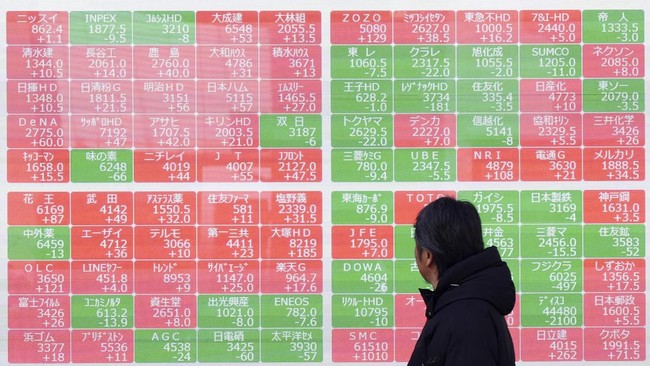
Asian-Pacific markets moved lower in trading on Friday (21/8/2026), following global market pressure after long-term US government bond yields continued to climb.
Citing CNBC.com, investor concerns over inflation strengthened again despite the US government’s efforts to stem the sell-off in the bond market.
In Japan, the Nikkei 225 index fell 0.92%, while the Topix index weakened 0.40%. Pressure was also felt in South Korea, with the Kospi index down 1.07%, while the small-cap Kosdaq index slumped deeper by 2.44%.
Meanwhile, Australia’s benchmark S&P/ASX 200 index also moved into the red with a decline of 0.21%. The movement reflected cautious sentiment among Asian investors amid renewed pressure on the US bond market.
Market pressure came as long-term US government bond yields continued to rise after government efforts to stem the bond sell-off failed to ease investor concerns about inflation. Rising bond yields generally weigh on equity markets because they increase borrowing costs and reduce the appeal of riskier assets.
UBS Chief Investment Officer for the Americas, Ulrike Hoffmann-Burchardi, said the buyback of bonds by the US Treasury Department differs from the quantitative easing (QE) policy carried out by the Federal Reserve (The Fed).
According to her, the Treasury Department does not have the ability to create money to finance asset purchases, so any buyback action must be funded through other sources.
“Unlike QE through the Federal Reserve, the Treasury Department cannot create money to fund asset purchases,” Hoffmann-Burchardi wrote. She assessed that the funding would likely be carried out through increased issuance of short-term debt or adjustments to other parts of the government financing programme.
Hoffmann-Burchardi added that the operation essentially only changes the maturity profile of debt held by investors without reducing the total debt that must be absorbed by the market. The move also does not eliminate the government’s financing needs nor resolve market concerns about the large supply of US government bonds.
On the other hand, investor attention also turned to the performance of several companies on Wall Street. Ross Stores shares surged more than 7% in after-hours trading after the company reported second-quarter results that exceeded market expectations.