
Nicotine-Tar Regulations Require Accommodation for Affected Stakeholders
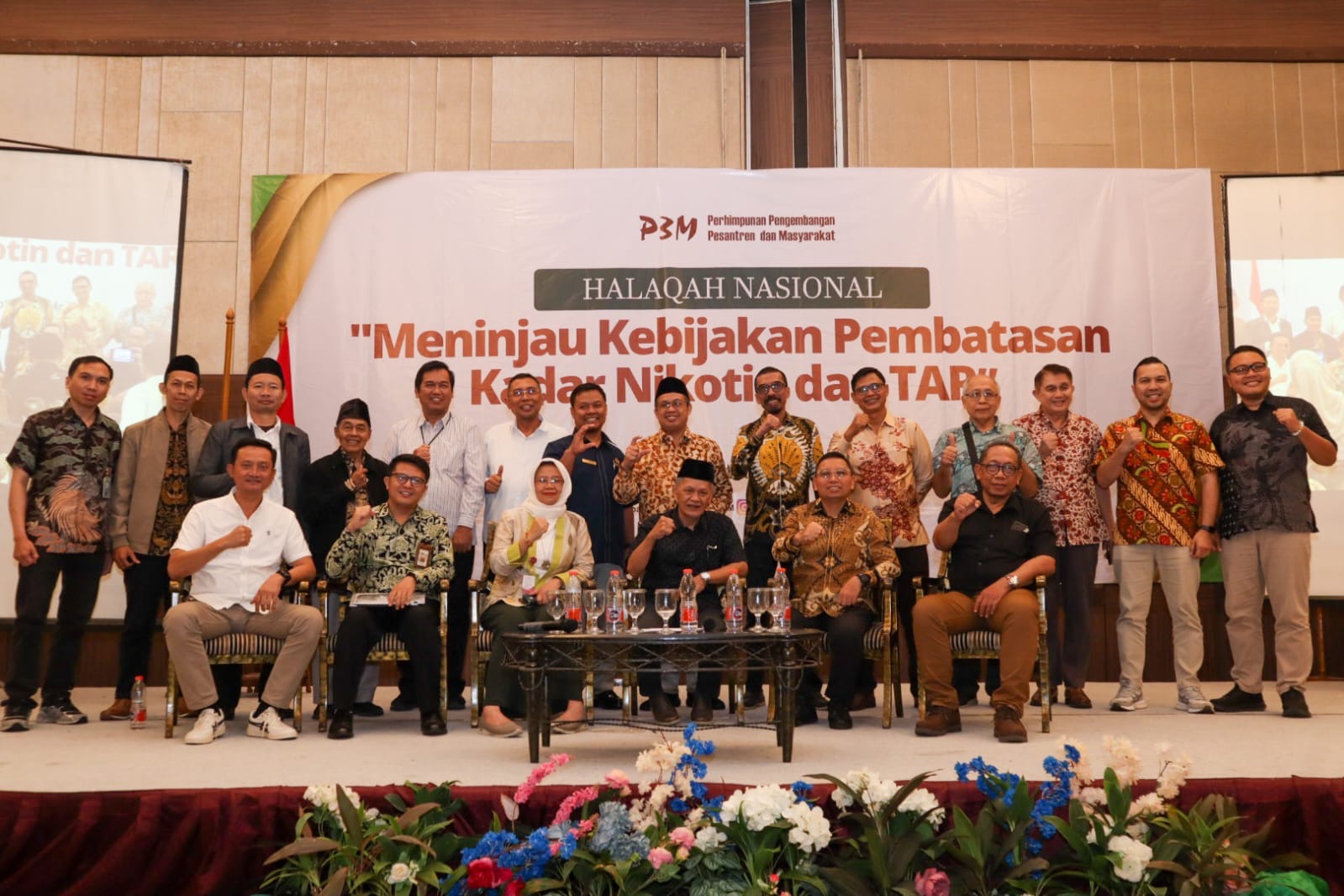
Amidst the ongoing discussions regarding the derivative regulations of Government Regulation Number 28 of 2024 concerning Health, significant concerns are emerging from stakeholders across the tobacco ecosystem, from upstream to downstream. Wisnu Brata of the Indonesian Tobacco Farmers Association (APTI) issued a stern warning during the National Halaqah: Reviewing Nicotine and Tar Limit Policies, organised by the Association for the Development of Pesantren and Society (P3M).
This statement reflects deep-seated anxiety at the grassroots level, where the regulations currently being drafted by the Government are viewed as having the potential to sever the livelihoods of national tobacco and clove farmers. This dilemma was a primary focus of the forum. P3M emphasised that the forum was not intended to reject the national health vision, but rather to seek a fair middle ground between protecting public health and ensuring the economic sustainability of small-scale farmers. For millions of farmers, from the slopes of Temanggung to remote areas of West Nusa Tenggara, tobacco is not merely a commodity but a vital instrument for survival in arid lands during long droughts.
The forum served as a platform to provide input on the derivative regulations of Government Regulation No. 28 of 2024, which include the regulation of additives and the limitation of nicotine and tar levels. This has met with massive opposition from affected stakeholders, reflecting a gap between policy design and field reality. P3M believes that adopting policies that mimic European regulations without considering the adaptability of local varieties could trigger national economic shocks due to unready infrastructure. This would not only hit tobacco farmers but also weaken the national clove-kretek industry, which absorbs nearly 140,000 tonnes of local cloves annually. The collapse of this ecosystem is predicted to significantly increase poverty rates in production centres.
While advocating for farmers, the forum also provided space for health perspectives. Representatives from the Coordinating Ministry for Human Development and Cultural Affairs (Kemenko PMK) and the Ministry of Health emphasised that strengthening national health resilience through maximum nicotine and tar limits is a mandate of the Health Regulation to reduce the burden of non-communicable diseases. However, P3M maintains that public health and farmer welfare should not be positioned as opposing forces.
The forum also warned the government of the potential shift towards illegal products that do not adhere to standards, do not contribute to state revenue, and may undermine the effectiveness of the control objectives. When regulations for the legal industry become unrealistic for local farmers and producers to implement, the resulting vacuum will be filled by illegal products that evade excise taxes and oversight.
In this context, a more proportional, phased, and domestic-based policy approach is required. Experts and farmer representatives proposed several strategic policy instruments: 1) Phased Regulation, implementing limits through a clear roadmap and adequate adaptation time; 2) Regulatory Transition Period, to provide sufficient time for farmers and businesses to adjust; and 3) Regulatory Sandbox, as a limited adjustment space for the industry to move towards compliance gradually, minimising harmful impacts.
P3M, which has supported tobacco farmers for over 25 years, asserted that the economic sovereignty of farmers is essential to social welfare. The recommendations from this forum will be submitted to the Government, specifically the Coordinating Ministry for Human Development and Cultural Affairs, the Ministry of Health, and the BPOM (Indonesian FDA), as constructive input for the drafting of Health Law derivative regulations, ensuring the state protects both public health and the livelihoods of its farmers.