
Nicotine and Tar Restrictions Aimed at Reducing Smoking Harm
Chairman of the Tobacco Disease Control Working Team (PPAT) at the Ministry of Health (Kemenkes), Benget Saragih, said that data from Indonesia’s 2023 Health Survey show that the adult smoking rate is around 35.5%, or about 68.8 million people. Meanwhile, smoking among children aged 10-21 stands at around 12.4%, and child smoking tends to rise even as overall prevalence declines. Accordingly, the government is drafting limits on nicotine and tar levels in tobacco products to address the problem of smoking prevalence in Indonesia.
‘There is actually no safe limit for nicotine and tar, there isn’t. Nicotine is certainly harmful to health. The point is how to ensure that addiction is not determined by nicotine levels. If you look at smokers, when they do not smoke they feel dizzy. That is because the level is very high. If you look at smokers from abroad, none have high nicotine levels. That is all, so that the impact is not too harmful to health,’ he said at a recent event organised by the Association for the Development of Pesantren and Community (P3M).
Furthermore, Benget added that the policy will not be implemented immediately but phased in through the Coordinating Ministry for Human Development and Culture (Kemenko PMK).
‘This will be implemented by Kemenko PMK, and it will be rolled out gradually. Perhaps later the Ministry of Agriculture will educate our farmers, train them, or provide seeds with nicotine levels that are not so high. That is what must be done. It must be a comprehensive approach; it cannot involve just one party,’ he said.
In the same venue, Assistant Deputy for Capacity Building and Health Resilience at the Coordinating Ministry for Human Development and Culture, Dr. Nancy Dian Anggraeni, added that the policy has been studied with a panel of experts, including academics and professionals.
‘This is what is being considered as well. Therefore, for the timing of implementation, the recommendations may be that it cannot be direct. It will be phased to prepare both the farmers’ side and the industry or other actors,’ Nancy said.
Nancy stated that the regulation is likely to take the form of a ministerial decree that will provide a reference for the ministries/agencies involved to socialise the rules.
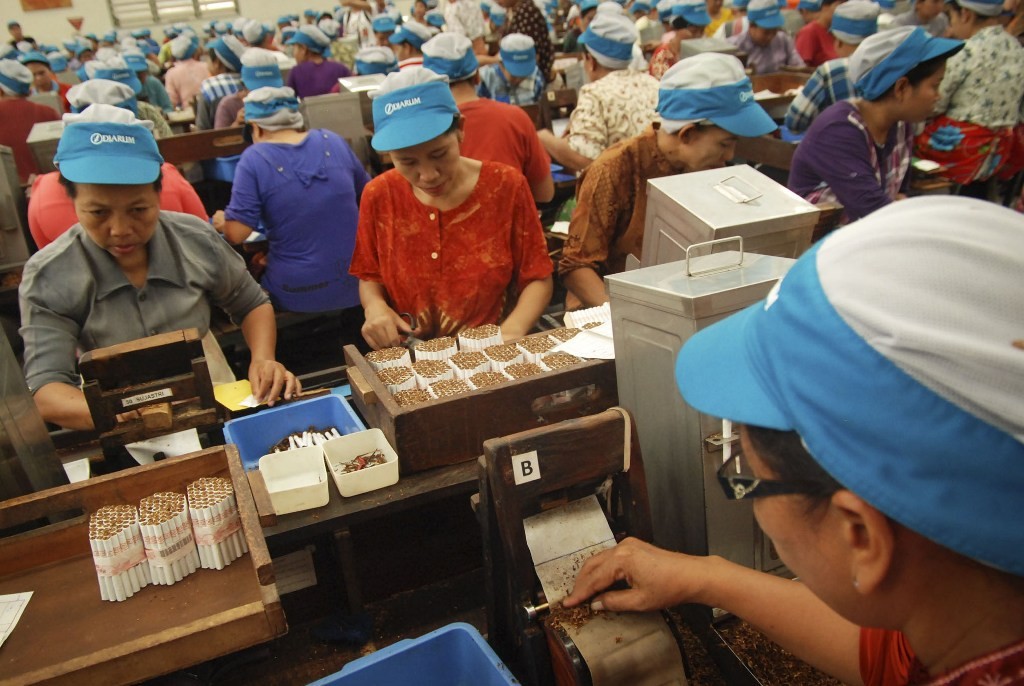
‘Throughout, this will not be set immediately, especially for kretek. Kretek remains somewhat difficult in terms of nicotine and tar levels. But for the industry such as machine-made kretek cigarettes, they already export widely with similar levels, so they can implement it more directly,’ she explained.
Meanwhile, the Deputy for Accreditation at the National Standardisation Agency (BSN), Wahyu Purbowasito, emphasised that the policy requires harmonisation capable of accommodating the interests of all parties involved in the industry.
‘If harmonisation is unilateral, well, that is another matter. There are interests of the industry and health. Health comes first, but we must be realistic that if people do not smoke, they will not be healthy either. If it is banned, farmers cannot produce—what then? The government must be mindful of this. If not, it could spark horizontal conflict,’ he said. (E-3)
Director of the Association for the Development of Pesantren and Community (P3M), Sarmidi Husna, stressed the need for thoughtful and comprehensive thinking in drafting a maximum nicotine limit.
Another issue highlighted is the plan to ban certain additives in tobacco products.
The Ministry of Agriculture understands the character of local tobacco varieties that grow according to climate and soil conditions across regions.
Stakeholders in the tobacco ecosystem are seeking protection from the idea of nicotine and tar limits on tobacco products.
Standardising nicotine and tar content to excessively low levels could wipe out kretek cigarettes, a distinctive Indonesian product.
The policy discussions that open space for legalisation of illegal tobacco operators through the addition of layers or categories in the tobacco tax tariff have drawn criticism from academics and observers of law.
Heart specialist Dr Dony Yugo Hermanto reminded that vaping carries risks comparable to conventional cigarettes. The National Narcotics Agency (BNN) reports etomidate in vape liquids.
Stakeholders in the tobacco ecosystem are seeking protection from the idea of nicotine and tar limits on tobacco products.
IHT again faces policy pressures. Various regulations have emerged in recent years.
The discourse around adding layers or tariff categories to the tobacco tax regime has raised concerns among workers and industry players.