
Nickel Production Relaxation Could Lure Foreign Funds Back to Mining Stocks
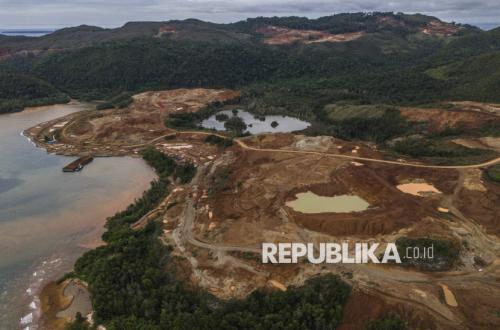
The Ministry of Energy and Mineral Resources’ plan to relax nickel production quotas in 2026 is considered capable of attracting foreign funds back into national mining stocks. The policy is also expected to serve as a positive catalyst for the mining sector, particularly for issuers involved in the downstream agenda. Panin Sekuritas analyst Elandry Pratama assessed that the relaxation and policy support for the nickel industry could accelerate the realisation of the national downstream programme. The policy also has the potential to increase asset utilisation for nickel mining companies, such as PT Aneka Tambang Tbk (ANTM) and PT Vale Indonesia Tbk (INCO), members of the MIND ID Group. “For ANTM, the opportunity comes from strengthening the nickel business and developing the electric vehicle battery ecosystem, while VALE has catalysts from the expansion of processing facilities and ongoing downstream projects,” he said in Jakarta, quoted on Tuesday. He added that sentiment towards the Indonesian nickel sector could also improve in the eyes of global investors due to Indonesia’s strategic position in the global electric vehicle battery supply chain. If supported by improvements in fundamentals and issuer performance, this condition could open opportunities for capital inflows into related sectors. As an illustration, throughout 2025, ANTM’s nickel ore production reached 16.11 million wet metric tons (wmt), an increase of 62 percent compared to the 2024 production achievement of 9.94 million wmt. Meanwhile, INCO’s total nickel production in matte form was recorded at 72,027 metric tons (mt) throughout 2025. On the other hand, Doo Financial Futures commodity analyst Lukman Leong stated that the policy could potentially increase investor interest in the Indonesian mining sector by improving the companies’ growth prospects. However, the flow of foreign funds is also heavily influenced by several factors. “The entry of foreign funds is not solely determined by nickel sector policy, but is also influenced by macro conditions such as the direction of global interest rates, the rupiah exchange rate, and overall sentiment towards emerging markets. So, this policy is more likely to encourage sector rotation into nickel stocks rather than being the main trigger for foreign fund inflows into the Indonesian market as a whole,” said Lukman. It is known that the Indonesian capital market is currently facing a heavy outflow of foreign investors with an accumulated net foreign sell of Rp76.15 trillion year-to-date. This trend is continuing with foreign funds outflows reaching Rp8.52 trillion. Amid these conditions, the two nickel issuers under the auspices of MIND ID actually showed a trend of foreign fund accumulation. This can be seen from the monthly net foreign buy values of ANTM and INCO, which reached Rp508.39 billion and Rp50.84 billion, respectively. Previously, the Director General of Mineral and Coal at the Ministry of Energy and Mineral Resources, Tri Winarno, emphasised that the relaxation of nickel production is carried out to meet the raw material needs of smelters that are still experiencing supply shortages. He explained that the additional production granted will not materially change the nickel RKAB target for 2026, which is in the range of 250 million to 270 million tons. The adjustment is solely to meet the needs of the domestic processing industry which still requires additional raw material supply.