
Nickel Mining Operators Struggling as Exports Held Hostage by Rare Earth Elements Regulations
Nickel mining operators are urging the government to immediately reopen the export of mineral products that are currently stalled due to inspections for Rare Earth Elements (REE) content. The absence of regulatory certainty regarding REE as a by-product mineral has hindered exports and triggered significant losses for the industry.
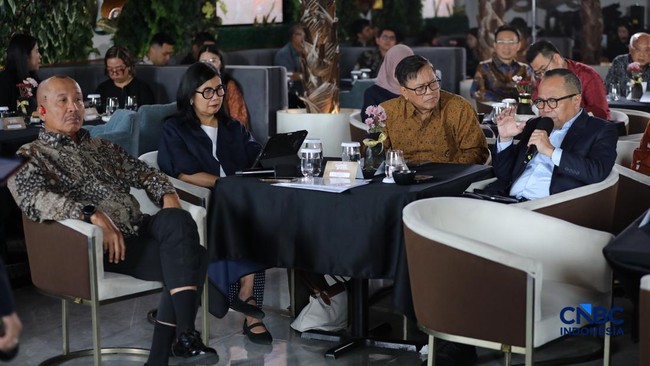
Arif Perdanakusumah, Chairman of the Indonesian Nickel Industry Forum (FINI), stated that the REE issue has recently become a primary concern for business owners because the governance rules remain unclear. “We see that this REE issue has been discussed very intensively by business actors recently. This is part of governance, but very little has been regulated, which ultimately leads to confusion,” Arif said during a CNBC Indonesia Coffee Morning event.
He further revealed that the nickel industry is currently facing multi-layered pressures, ranging from the impact of Middle East geopolitics, which has triggered surges in energy and logistics costs, to domestic issues such as increased royalty rates, ore supply limitations due to the Work Plan and Budget (RKAB), and policies related to REE.
“We are bleeding. We are being extraordinarily impacted by the geopolitics in the Middle East. The geopolitics occurring there directly impact the production costs of the industry,” he remarked.
According to Arif, approximately 80% of Indonesia’s sulphur requirements for 2025 originate from the Middle East. When sulphur prices surged from around US$220 per tonne to US$1,200 per tonne, nickel industry production costs rose sharply. “In 2025, there will be approximately 6 million tonnes of sulphur imports, the majority of which are needed by the nickel industry. Besides the scarcity, the price has risen incredibly. In 2025, the price of sulphur was US$220 per tonne, but recently it reached US$1,200 per tonne, which has consumed 50% [of costs],” he added.
On the other hand, policies regarding REE have also disrupted export activities. According to recent data, approximately 120 ships are unable to sail because they cannot depart from ports.
Previously, the Chief of Staff to the President, Dudung Abdurachman, addressed the disruption of mineral exports containing REE as a by-product. He spoke out after the Presidential Staff Office (KSP) received reports from several entrepreneurs regarding the disruption of mineral export activities.
He noted that the obstacle was triggered by the lack of regulatory certainty regarding the threshold for REE content, which has created doubt among both business actors and law enforcement agencies.
“I have received reports from several entrepreneurs that mineral exports are being hindered, and I have communicated with many parties involved here,” Dudung said after leading a coordination meeting on the governance of critical mineral exports containing REE at the Bina Graha Building, Jakarta, on Monday (27/7/2026).
Dudung revealed that one of the causes of the export bottleneck is the absence of regulations governing the maximum allowable REE content as a by-product in export commodities. This regulatory vacuum has led to differing interpretations between business actors and law enforcement.
He subsequently emphasised that as long as there are no regulations governing REE content, law enforcement officers must not create their own interpretations that result in the disruption of export activities.