
Nickel Investors Have Poured US$44 Billion Into Indonesia, But Export Hurdles Emerge
Jakarta, CNBC Indonesia – A number of nickel pig iron (NPI) shipments have reportedly been held up because they must undergo additional testing for rare earth element (REE) content before they can be exported. This has caused concern among business players.
They believe the testing process could potentially hamper export flows and increase logistics costs.
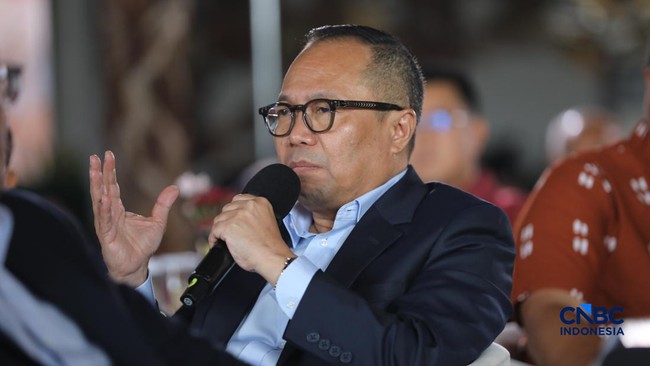
In fact, Arif Perdanakusumah, Chairman of the Indonesian Nickel Industry Forum (FINI), said the nickel industry is the largest contributor of investment in Indonesia, at around US$44 billion.
“Between 2026 and 2028 there will be an additional US$20 billion in investment. That is enormous. This is a capital-intensive, technology-intensive and labour-intensive industry,” he said at CNBC Indonesia’s Coffee Morning on Thursday (30/7/2026).
Furthermore, he said, a single nickel industrial zone contributes hundreds of thousands of jobs. For this reason, business players are hoping for good governance, business certainty and legal protection, given that the investments involved are very large.
“And Indonesia has already enjoyed the benefits, from export relaxations and so on,” Arif revealed.
He stressed that disrupted exports damage Indonesia’s reputation, noting that 120 survey reports have yet to be processed, or that there are large export volumes that have not yet been realised.
“We have already sorted everything out on our end, but at the final stage we are being held up. As with this REE issue, we have already carried out mining, nickel extraction, secured markets, long-term and short-term contracts, and so on,” he said.
Meanwhile, Sari Esayanti, Executive Director of the Indonesia Mining Association (IMA), believes the current issue is not merely an export problem. Rather, it reflects challenges within the system for identifying, testing and regulating associated minerals that occur naturally in various mining commodities.
According to Sari, mining activities have to date focused on the principal commodity in line with each company’s business licence and processing facility design. Meanwhile, in commodities such as tin, bauxite, nickel and copper, REE elements are generally only associated minerals present in very small concentrations.
“Most companies do not even have adequate facilities or technology to identify, separate or utilise these REE elements economically,” she said.
She added that the emergence of new interpretations regarding the obligation to report or export REEs has created uncertainty among business players.
“What businesses actually need is a return to certainty over technical parameters, testing methodology and reporting mechanisms, so that all business players operate to the same standard,” she said.
Source: jawawa.id (https://jawawa.id/newsitem/nickel-investors-have-poured-us-44-billion-into-indonesia-but-export-hurdles-emerge-1785408762)
Originally published by CNBC Indonesia (https://www.cnbcindonesia.com/news/20260730163039-4-755147/tak-bisa-ekspor-pengusaha-investor-nikel-sudah-investasi-us-44-m), translated from Indonesian