
Nickel Investment Remains Strategic for Indonesian Economy Despite Bauxite Shift, Says APNI
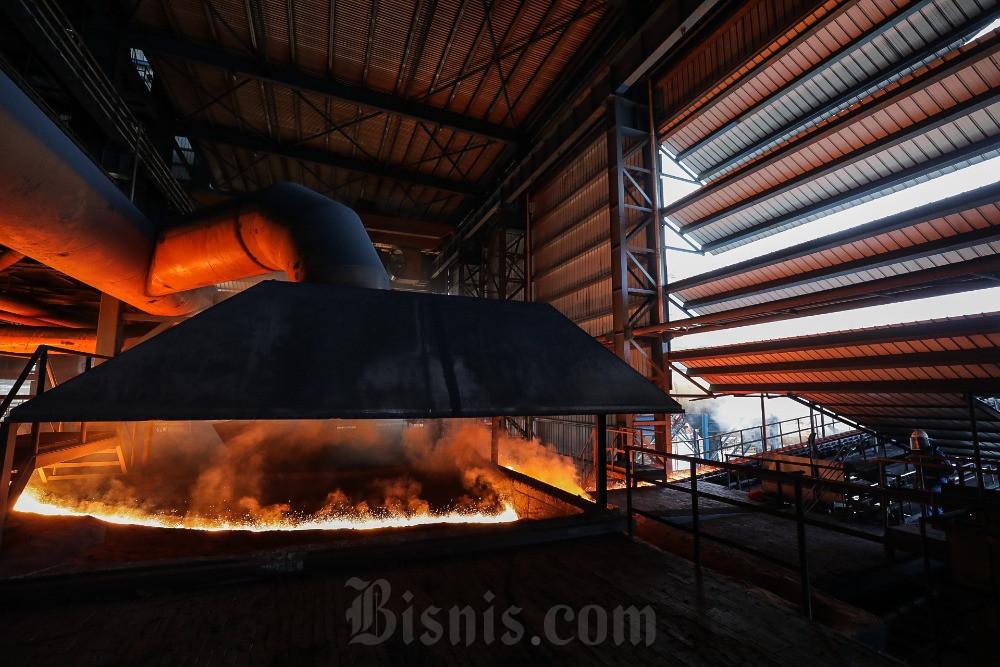
Business.com, JAKARTA — The contribution of nickel downstreaming investment is still considered to play a strategic role in the national economy, even though its realisation was no longer the largest in the second quarter of 2026.
Meidy Katrin Lengkey, Secretary General of the Indonesian Nickel Miners Association (APNI), said nickel downstreaming investment remained at the top cumulatively in the first half of this year.
The Ministry of Investment and Downstreaming/Investment Coordinating Board (BKPM) recorded that the top position for downstreaming sector investment in the second quarter of 2026 was led by bauxite, valued at Rp40.1 trillion.
Meanwhile, nickel, which has often been the top contributor, has now slipped to second place with Rp29.4 trillion.
“Nickel’s position was temporarily displaced by bauxite in the second quarter of 2026 [in downstreaming investment realisation] due to uncertainty over the revision of RKAB [work plan and budget] quotas,” Meidy told Bisnis, quoted on Monday (20/7/2026).
According to her, the nickel sector remains the backbone of Indonesia’s mineral downstreaming agenda amid growing investment competition between mining commodities.
At the same time, she assessed that the national nickel industry is entering a crucial phase. According to her, Indonesia can no longer be content merely with maintaining its status as the world’s largest nickel producer, but must begin to strengthen its influence over global industry governance.
In her view, Indonesia needs to transform into a country capable of influencing supply, added value, sustainability standards, and the formation of global nickel prices.
“Indonesia must start managing the nickel industry based on value, not merely chasing production volume. We must ensure that reserves remain sustainable, miners receive fair prices, smelters obtain supply certainty, and the state gains optimal economic benefit,” Meidy said.
She believes Indonesia’s dominance in global nickel production should translate into stronger bargaining power in the formation of prices and international nickel trade governance.
However, that goal can only be achieved if Indonesia has an accurate supply data system, credible reserves, production discipline, transparent trade governance, and consistent policy coordination.
“We cannot forever be a price taker. Indonesia must prepare a credible data system, trade governance, transaction transparency, and a national nickel price index so that it can become one of the global market references,” she explained.
Furthermore, Meidy stressed that the RKAB revision must be utilised as an instrument to align mining production with the needs of the processing industry. This step is deemed important to conserve reserves, prevent oversupply, and provide business certainty for miners and smelters.
According to her, additional production quotas should be granted selectively to companies that meet technical, administrative, environmental, forestry, workplace safety, and trade governance requirements.
APNI noted that the 2026 RKAB revision process, taking place from 1 to 31 July 2026, is the most crucial variable for the direction of nickel prices, smelter utilisation rates, and the sustainability of downstreaming investment in the second half of this year.
The association estimates that a significant increase in production quotas could push nickel prices back down to the range of US$14,000–16,000 per tonne. Conversely, consistent quota discipline could keep prices at the US$17,000–20,000 per tonne level.
Source: jawawa.id (https://jawawa.id/newsitem/nickel-investment-remains-strategic-for-indonesian-economy-despite-bauxite-shift-says-apni-1784566215)
Originally published by ekonomi.bisnis.com (https://ekonomi.bisnis.com/read/20260720/44/1989485/tergeser-bauksit-apni-sebut-investasi-nikel-tetap-strategis-untuk-ekonomi-ri), translated from Indonesian