
Nickel Exports Hindered, Business Players: Rare Earth Elements are Merely By-products
The Indonesian Mining Association (IMA) has voiced concerns regarding the issue of mineral exports being hindered due to the presence of Rare Earth Elements (REE). In essence, the REE content within minerals such as nickel, tin, and bauxite serves only as an incidental by-product.
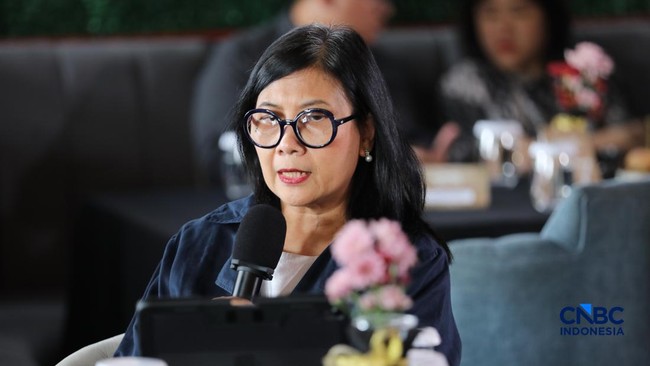
IMA Executive Director Sari Esayanti explained that the current system for testing and identifying minerals still faces significant challenges. According to her, business players require standardisation in reporting mechanisms to prevent obstacles that could harm international trade.
“In essence, the current situation is not solely an export error but also demonstrates challenges in the identification system, testing, and the regulation of by-products, which naturally occur in various types,” she stated during a CNBC Indonesia Coffee Morning event.
Sari mentioned that mining companies do not yet possess the technology required during the mining process. This makes it impossible to identify the REE content that may exist as a by-product in mining commodities.
“With very low concentrations, most companies do not yet have sufficient facilities or technology to adequately identify, separate, or utilise these REE elements economically,” she added.
Uncertainty has arisen due to new interpretations regarding export reporting obligations, which are deemed burdensome for business players. The IMA has requested that the government provide certainty regarding testing methodologies so that all industry players have uniform technical parameter standards in the field.
“This situation, involving new interpretations of reporting or export obligations, is creating uncertainty for businesses. What businesses actually need is certainty regarding technical parameters, testing methodologies, and reporting mechanisms,” Sari emphasised.
Sari assessed that supervision is necessary to ensure that current regulations do not lead to alternative interpretations that hinder trading activities. She noted that while regulatory improvements are needed, law enforcement must remain a priority if violations are discovered.
“There must be supervision to prevent multiple interpretations; without standards, it is difficult, so improvements are needed. However, if problems arise, they must be resolved legally,” she explained.
The association hopes that mineral export activities can continue according to previous regulations during this transition period. This is viewed as a strategic step to protect the public interest and maintain the stability of Indonesia’s mineral trade in the global market.
“We are currently in a transition period. The hope is that the export of the aforementioned primary commodities can continue according to previous provisions; this is an important step to safeguard the public interest and the stability of Indonesian trade,” she concluded.