
Nickel Downstreaming Pushes Indonesia to Become World's Leading Critical Minerals Supplier
The government continues to strengthen its downstreaming strategy as a key pillar of national economic transformation. Through the development of the critical minerals industry, Indonesia is no longer merely playing the role of a raw material exporter, but is being directed towards becoming a producer of value-added industrial products that support the global energy transition.
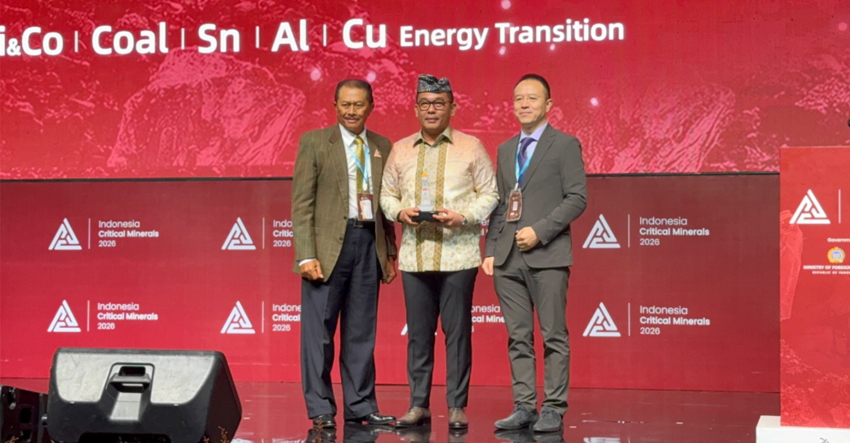
Deputy Minister for Investment and Downstreaming at the Investment Coordinating Board (BKPM), Todotua Pasaribu, stated that critical minerals have now become strategic assets in determining industrial competitiveness. “Critical minerals are now viewed not only as commodities, but also as strategic assets that determine industrial competitiveness, investment growth, and global trade dynamics,” said Todotua at the Indonesia Critical Minerals Conference and Expo (ICMCE) 2026 in Jakarta on Wednesday (3/5/2026).
According to him, the increasing global demand for critical minerals coincides with a limited supply of processed products in a number of countries. This situation opens up opportunities for Indonesia to strengthen its position as a strategic partner in the global supply chain. “Indonesia no longer merely acts as a supplier of raw materials. Instead, Indonesia has now moved towards mineral processing and refining. Over time, we have also built various industrial supply chains domestically. We are positioning ourselves as a strategic partner in the global mineral ecosystem as well as a leading supplier of the world’s critical minerals,” he explained.
The government assesses that the foundation of the national economy remains strong amidst global challenges. Indonesia’s economic growth was recorded at 5.03% in 2024 and is projected to continue rising, driven by strengthening investment, domestic consumption, government spending, and the manufacturing sector. Within the structure of economic growth, investment contributes around 30%, while domestic consumption contributes approximately 25%. Therefore, downstreaming is positioned as one of the main strategies to increase added value, create jobs, and support the green energy agenda.
The government is targeting total investment of US$787 billion for the 2024-2029 period. Meanwhile, the national investment target for 2026 has been set at US$116.69 billion. In the first quarter of 2026, investment realisation had reached approximately 25% of the annual target, with relatively balanced contributions from domestic and foreign direct investment.
Meanwhile, in the downstreaming sector, the government has identified 38 strategic commodities spread across eight priority sectors with an investment potential reaching approximately US$680 billion. Nickel stands as one example of the success of this strategy. Since the downstreaming policy was implemented in 2019, Indonesia has developed an industrial chain spanning from mining and smelting to the production of electric vehicle battery materials. The government also continues to encourage the development of an integrated green energy ecosystem, including the construction of the solar panel industry, copper processing, metal alloys, as well as supporting industries for electric vehicles and renewable energy.