
Nickel Downstreaming Drives Economic Structural Changes in Sulawesi
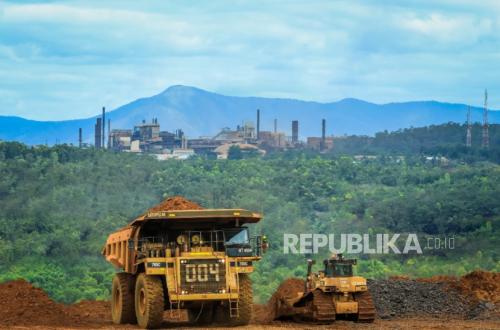
Mohammad Faisal, an economist from the Centre of Reform on Economics (CORE) Indonesia, stated that nickel downstreaming is beginning to drive changes in the economic structure of several regions in Sulawesi. The development of mineral processing industries is causing areas that previously relied on the mining and agricultural sectors to shift towards the industrial sector.
This shift is visible in Morowali and North Morowali, Central Sulawesi, which have experienced growth in mineral processing-based industrial activities over the last decade. Industrial development has also expanded investment activities, labour force, and supporting economic activities around processing zones.
“In the past, Morowali was dominated by mining and agriculture; now, more than 75 per cent of its economy is supported by the industrial sector,” said Faisal, as quoted on Thursday (1/10/2026).
According to him, this development demonstrates the impact of downstreaming on the economies of mineral-producing regions. The development of processing industries extends the mineral value chain within the country while simultaneously increasing the role of the industrial sector in the regional economic structure.
On the other hand, the electric vehicle value chain in Indonesia is beginning to show integration from upstream to processing activities. Faisal noted that the upstream sector has achieved a higher level of maturity, whereas midstream and downstream activities are still developing.
“While we have high maturity in the upstream sector, the midstream and downstream sectors are still developing. However, this could increase rapidly in the future, and the impact on regional economies will become even greater,” he said.
Mineral processing industrial development is also occurring in South Sulawesi. Statistics Indonesia (BPS) recorded that the economy of South Sulawesi grew by 5.59 per cent in the second quarter of 2026 compared to the same period the previous year, with GRDP reaching IDR 206.70 trillion at current prices.
Nickel processing investment is also strengthening the development of the industrial ecosystem in Sulawesi. PT Vale Indonesia Tbk, part of the MIND ID Group, is developing several growth projects in Pomalaa, Morowali, and Sorowako as part of its nickel value chain expansion.
These developments include High Pressure Acid Leach (HPAL) technology-based facilities to produce Mixed Hydroxide Precipitate (MHP), an intermediate product that can be further used in the battery material supply chain. The HPAL development is linked to the Pomalaa, Bahodopi, and Sorowako Limonite projects.
Faisal assessed that the significant benefits of downstreaming in the future will not only depend on increasing production capacity. The industry’s connection to the local economy, workforce development, involvement of local businesses, and environmental impact management are also crucial components for ensuring that economic transformation can occur sustainably.
With the expanding processing capacity and mineral value chain, Sulawesi holds a vital position in resource-based industrialisation. The structural economic changes in several regions indicate that downstreaming has the potential to expand regional growth sources while opening new economic activities outside the primary sector.