
Nickel Business Increasingly Selective, ESG Key to Facing Global Markets
Sustainability practices are now considered increasingly decisive for the resilience of extractive industry businesses amid commodity price fluctuations, environmental demands, energy needs, and changing global market standards. PT Vale Indonesia Tbk believes sustainability strategy needs to be integrated with business decisions so that companies can survive in various market conditions.
Director and Chief Sustainability & Corporate Affairs Officer of PT Vale Indonesia Tbk Budiawansyah said the company’s experience over more than five decades shows sustainability must be positioned as a strategy to maintain business continuity. He recounted his experience as a young engineer around 20 years ago, when the company faced a choice to meet energy needs for a mining expansion requiring a large electricity supply.
According to Budiawansyah, coal-fired power plants were one option because they could provide large amounts of energy at relatively low cost. However, Vale, then still named PT International Nickel Indonesia Tbk (Inco), chose to develop renewable energy through hydroelectric power plants.
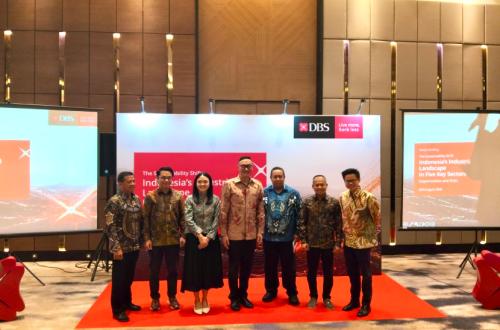
“Sustainability is a strategy,” Budiawansyah said in a discussion titled The Sustainability Shift: Indonesia’s Industrial Landscape in Five Key Sectors, Opportunities and Risks held by Bank DBS Indonesia and Tenggara Strategics on Thursday (20/8/2026).
The decision required significant investment. In 2005, the company allocated more than US$490 million for the energy development. Budiawansyah said the decision later became important when the nickel industry faced commodity price volatility. Sharp price movements meant the company needed a strategy to maintain business resilience in various market conditions.
“Commodity prices are like a rollercoaster. There was a period when nickel prices reached their highest level. Suddenly they dropped sharply. Extraordinary,” he said.
In low-price conditions, the company faced a dilemma because production could cause losses, while halting production also had the potential to cause even greater losses. According to Budiawansyah, PT Vale’s 58 years of experience shows the company’s continuity is determined not only by production, but also by the ability to integrate economic, environmental, and social aspects.
The mining industry faces particular challenges because extractive activities, including nickel mining, require land clearing and intersect with ecosystems and water resources. “Nickel mining does require large-scale land clearing. With such a methodology, it cannot be denied. So what we can do is be different,” he said.
According to him, energy use is one focus of the company’s long-term strategy. Technology and system optimisation are also continuously developed to improve efficiency. Beyond energy, the company needs to prove that mining activities can be carried out responsibly, including in water resource management.
“Can we do this business in a good way, in a responsible way? The answer is yes. We have been operating 58 years,” he said.
He said PT Vale’s mining activities are located in areas with water resources and ecosystems that must be protected. Therefore, water management is an important aspect of the company’s operational sustainability. “We can go hand in hand with environmental aspects, water resource management,” he said.
On the other hand, company access to global markets is also becoming more selective. According to Budiawansyah, owning large mineral resources does not automatically guarantee business success if the production process does not meet market demands and sustainability standards. “It is pointless if we have resources, but no one owns them,” he said.
Senior Vice President of Institutional Banking Group at PT Bank DBS Indonesia Agnes Theresa said environmental, social, and governance (ESG) aspects are now increasingly important in banks’ risk assessment of companies. According to Agnes, the change is visible in the customer onboarding process. Previously banks focused more on financial risk and financial statements, but now ESG aspects are also examined in depth.
“In the past, perhaps what we paid attention to was the financial risk perspective, financial statements. Today ESG has become a risk assessment that we need to deep dive properly,” Agnes said.
She believes ESG should not be positioned merely as an additional programme or reporting obligation. These aspects need to enter the company’s main strategy and influence the business model and decision-making. Agnes said change is also occurring on the investor side. According to her, investors are now increasingly examining sustainability aspects when evaluating companies. “As a bank, we see the ESG perspective in the eyes of investors has shifted,” she said.
She said global and institutional investors are increasingly using complex approaches in evaluating corporate sustainability performance. This means companies that want to maintain access to financing and global markets need to place ESG in their business strategy. For extractive industries, sustainability concerns not only reputation, but also operational resilience, energy access, financing, global markets, and long-term acceptance of business activities.