
Nezar warns Indonesia must not be late entering the AI supply chain
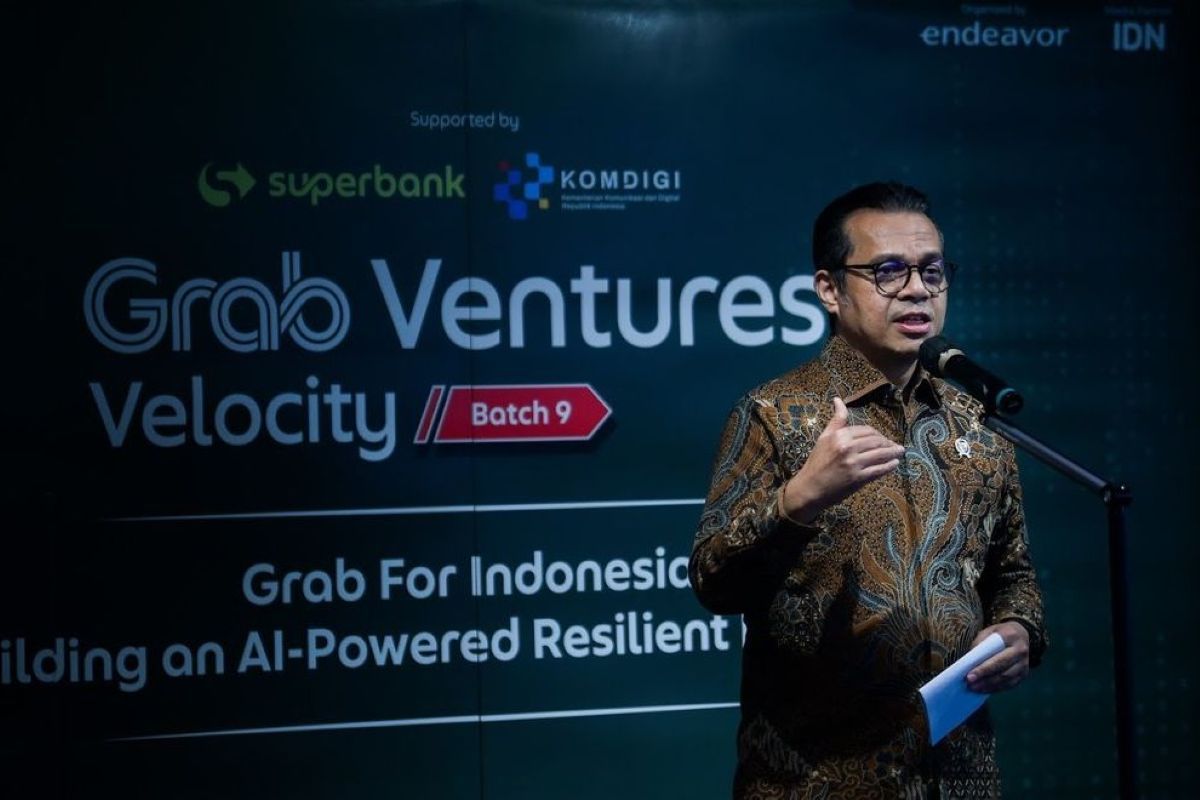
Jakarta (ANTARA) - Deputy Minister of Communication and Digital Affairs (Wamenkomdigi) Nezar Patria has reminded that Indonesia must not be late in entering the global artificial intelligence (AI) industry supply chain.
According to him, AI competition is no longer merely about application development, but has shifted into a contest over the control of semiconductors, data centres and critical minerals that will determine a country’s position in the global digital economy.
“What is most important is not being late in entering the global supply chain, including AI,” said Nezar in a statement confirmed in Jakarta on Friday.
He assessed that India’s experience shows that government intervention through strengthening the startup ecosystem, the Make in India policy and the development of the semiconductor industry has been able to encourage the emergence of new AI-based innovations.
“AI this time is becoming a driving process for the growth of startups,” he said.
Nezar judged that Indonesia has significant capital to compete in the AI industry. High AI adoption, the growth of AI-based startups and the emergence of initiatives to develop a national large language model (LLM) form an important foundation towards sovereign AI.
However, he reminded that Indonesia is still at the stage of utilising the technology, and therefore needs to strengthen national capabilities through collaboration with various stakeholders.
“We are still at the usage level. We have not yet become developers when it comes to AI,” said Deputy Minister Nezar.
According to Nezar, mastery of AI also requires digital infrastructure support, particularly data centres, Graphics Processing Units (GPU) and the semiconductor industry.
In addition, Indonesia holds reserves of critical minerals such as nickel and silica sand that need to be downstreamed so that they add value to the national technology industry.
“Downstreaming raw critical minerals into intermediate products would roughly strengthen our position in the global supply chain of the semiconductor industry,” he explained.
The government is currently preparing an AI Roadmap that will become a Presidential Regulation serving as a reference for national AI development.
The regulation is being drafted using a risk-based approach so that it can safeguard space for innovation whilst ensuring that AI is utilised responsibly.
Nezar emphasised that AI must be a technology that helps humans improve productivity, not one that replaces human thinking capacity.
“This technology must be made a companion for us. It should not be that we then hand everything over to artificial intelligence,” he said.