
Nezar Highlights Urgency of Digital Ethics in Responding to Legal Cases on Social Media
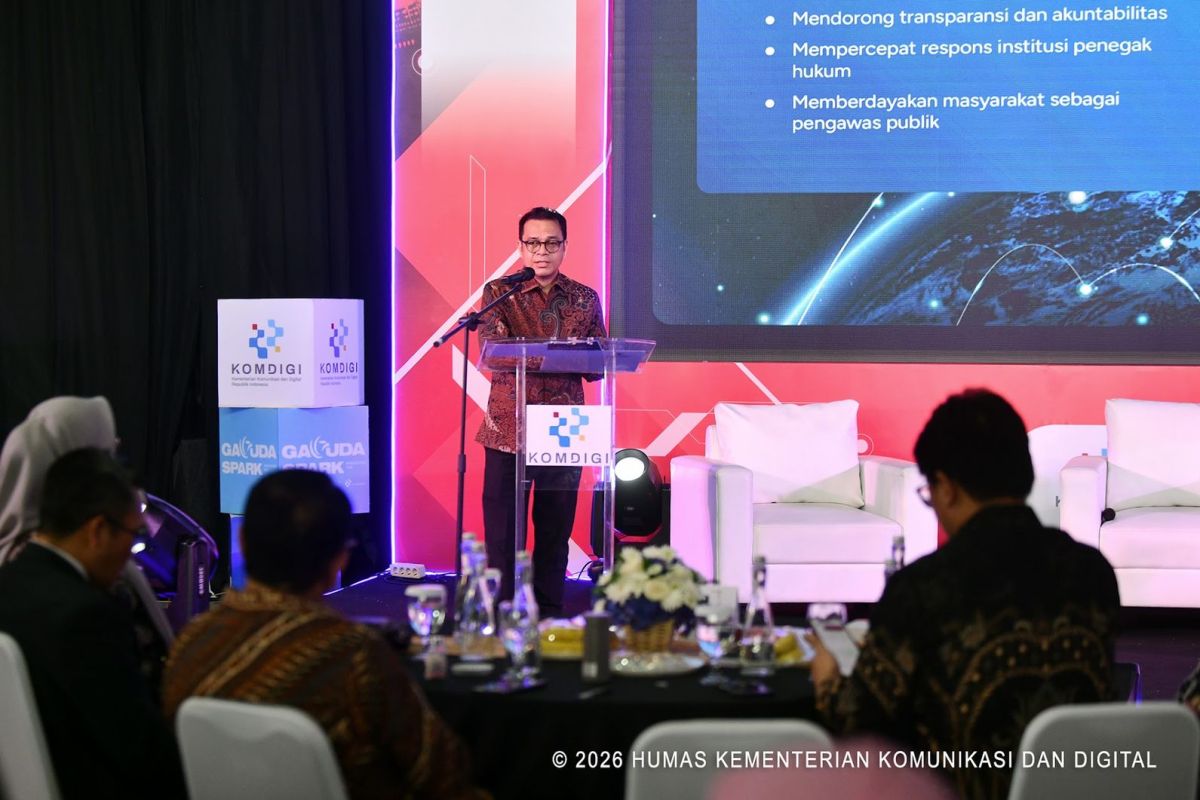
Deputy Minister of Communication and Digital Affairs Nezar Patria has highlighted the urgency of understanding digital ethics, especially for the younger generation, to respond appropriately to legal cases shared through digital platforms, including social media. He stated that critical thinking skills and a strong foundation in digital ethics are essential for digital natives to address issues objectively and not rely on a single source of information. “The most important thing to introduce to them is how to think critically and then also to introduce digital ethics, because ethics do not only exist in physical spaces but must also be reflected when interacting in digital spaces,” Nezar said in a written statement received in Jakarta on Thursday.
This statement was made in response to the phenomenon of law enforcement based on sentiment on social media, which carries the slogan ‘no viral no justice’. “The law must not be driven by sentiment, the law cannot be driven by anger, the law cannot be decided based on like or dislike,” Nezar asserted. He made these remarks during a national seminar titled “No Viral No Justice: Changes in the Paradigm of Legal Justice in the Digital Era” in Central Jakarta on Wednesday.
He opined that the phenomenon of law enforcement driven by social media sentiment has been occurring globally for almost a decade, a result of the digital public sphere causing more intense public communication. “This phenomenon has been happening for almost 10 years. How cases exposed by social media receive extraordinary attention from law enforcement officials. It is actually not a phenomenon unique to Indonesia, but a global one,” he said. He also reminded that the algorithms used by digital platforms do not verify facts, making the digital space vulnerable to hoaxes, disinformation, misinformation, and the formation of perceptions that do not always match reality.
To address these challenges, the government is continuously strengthening digital literacy among the youth and introducing adaptive regulations. These efforts aim to ensure the public can use digital spaces responsibly while being protected from misleading information. Currently, digital literacy programmes no longer focus solely on enabling the public to use digital devices but also on understanding the importance of digital security, digital culture, and digital ethics. “The government is trying several approaches. There is digital literacy, and also adaptive regulations. We have the ITE Law so we can use this legal instrument to provide space for those seeking justice,” Nezar concluded.
Source: jawawa.id (https://jawawa.id/newsitem/nezar-highlights-urgency-of-digital-ethics-in-responding-to-legal-cases-on-social-media-1782368436)
Originally published by Antara (Indonesian) (https://www.antaranews.com/berita/5622339/nezar-ungkap-urgensi-etika-digital-merespons-kasus-hukum-di-medsos), translated from Indonesian