
NEXT Indonesia urges DSI to become an integrated data centre and supervisor
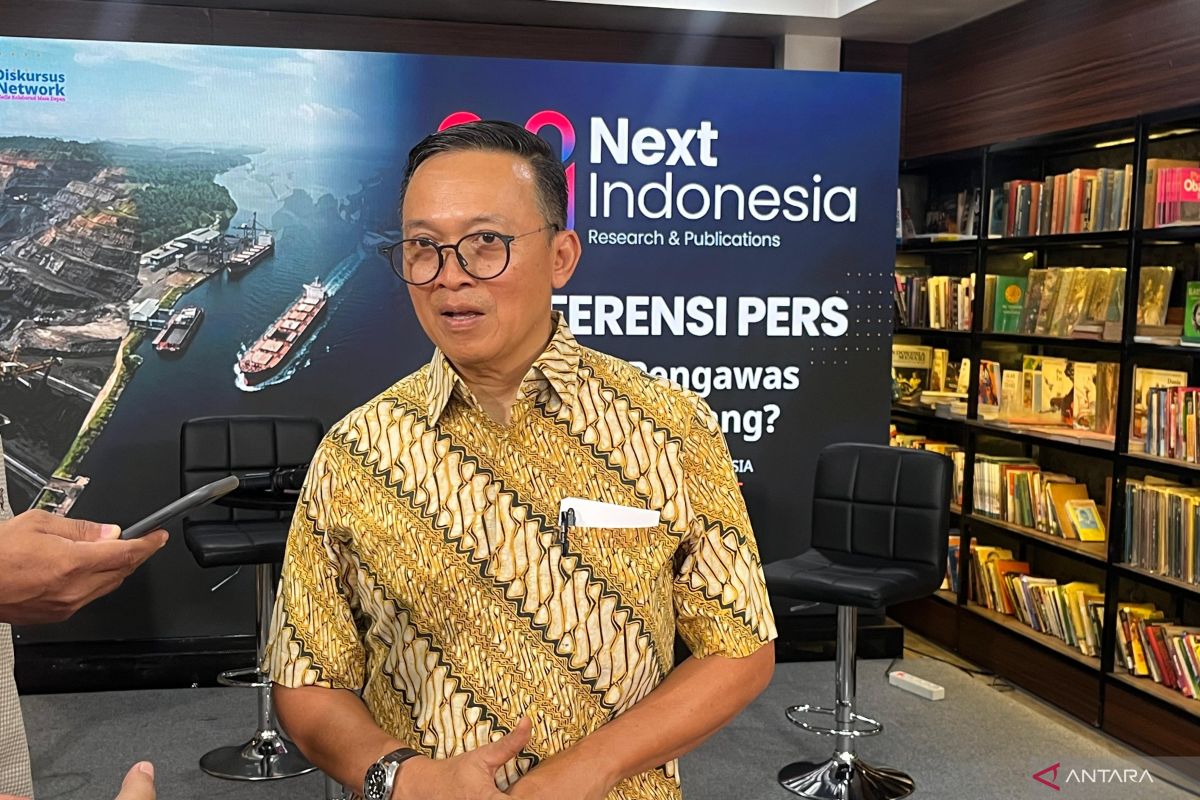
DSI should serve as an ‘integrated data centre’ and a supervisor based on risk analytics or ‘risk signalling’ to strengthen the governance of strategic natural resource exports, according to the NEXT Indonesia Center.
Executive Director of NEXT Indonesia Center, Christiantoko, stated that strengthening supervisory functions is necessary because the primary issue in the governance of strategic commodity exports is not a lack of physical traders, but rather data fragmentation between agencies.
During a public discussion held in Jakarta on Thursday, he noted that Indonesia already possesses several export and foreign exchange monitoring systems spread across various institutions, including INATRde owned by the Directorate General of Foreign Trade under the Ministry of Trade, CEISA owned by the Directorate General of Customs and Excise, the Directorate General of Taxes system, and SiMoDIS owned by Bank Indonesia.
However, the synchronisation of data between these systems is believed to still face challenges, which could create loopholes for misinvoicing or discrepancies in trade value records.
“DSI should be present as an integrated data centre and a supervisor based on risk analytics (risk signalling). By combining company transaction profiles, DSI can raise early red flags. For example, when anomalies in HS Code determination or price deviations are found, these can then be followed up by law enforcement agencies and technical ministries,” he explained.
Christiantoko also highlighted the risks if DSI takes on the role of a sole buyer (offtaker) for strategic commodities, as it could potentially transfer market, logistics, warehousing, and financial risks to the state.
“The export transaction value for these three commodities is massive, with an estimated turnover that could exceed IDR 1,000 trillion. The State Budget (APBN) will not be able to sustain the working capital and liquidity requirements of that magnitude. Not to mention the risks of global price volatility and the operational burden of warehousing,” he said.
The formation of DSI is part of the government’s policy through Government Regulation (PP) Number 24 of 2026 concerning the Governance of Strategic Natural Resource Commodities.
Indonesia holds a strategic position in the trade of several commodities, including crude palm oil (CPO), coal, and ferroalloys.
These three commodities contributed approximately 25.2 per cent to Indonesia’s total exports in 2025, with a value reaching 71.1 billion USD.
During the 2021–2025 period, Indonesia controlled approximately 54 per cent of the global market share for CPO, 20 per cent for coal, and 89 per cent for lignite. Meanwhile, Indonesia’s ferroalloy exports in 2025 accounted for about 45.1 per cent of total global exports.
He stated that the high value of this trade also presents challenges in optimising state revenue and monitoring global value chains. One indicator that requires further examination is the discrepancy in mirror trade statistics for the 2015–2024 period.
According to him, this data indicates a potential underinvoicing of Indonesian exports amounting to 391.7 billion USD, dominated by coal and lignite at 26.4 billion USD. Meanwhile, potential overinvoicing of exports was recorded at 248.9 billion USD, with CPO dominating at 32.3 billion USD.
Christiantoko emphasised that these findings of misinvoicing should be viewed as signals requiring further investigation rather than as evidence of violations.