
NEXT Indonesia: Success of DSI Measured by Improved Natural Resource Governance
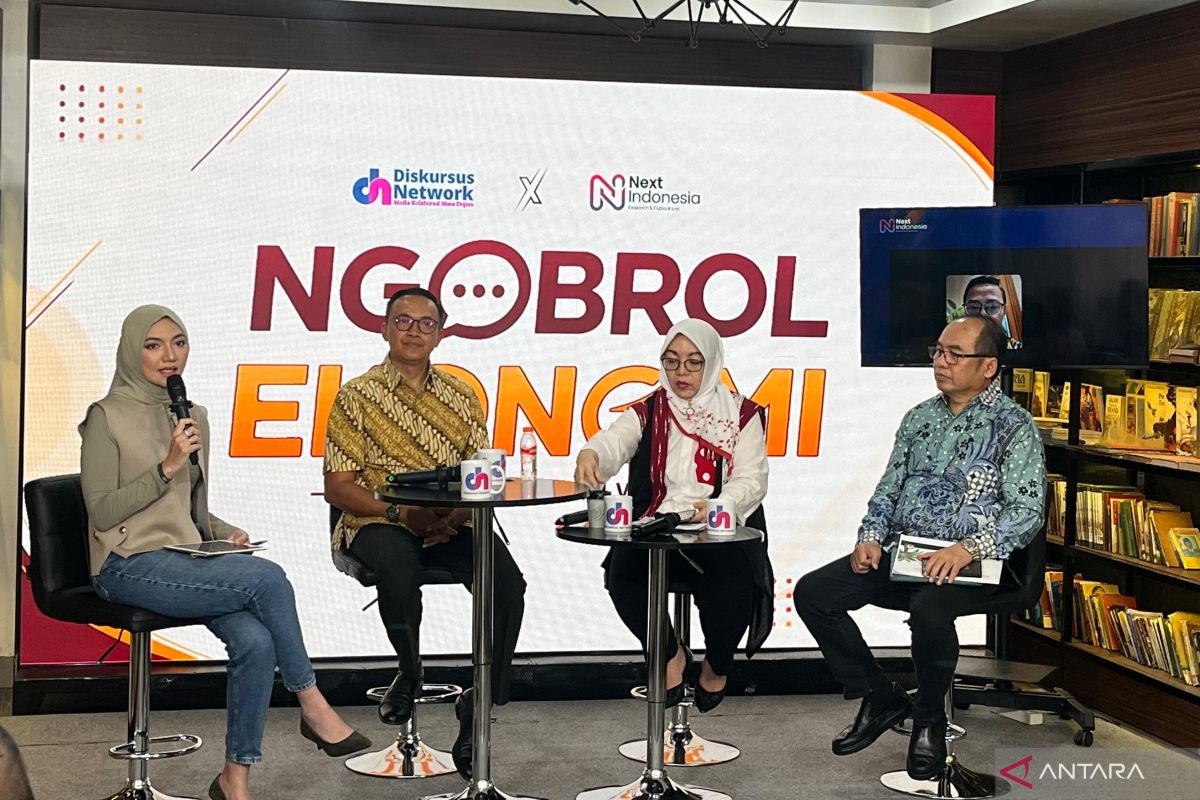
Jakarta (ANTARA) - The Executive Director of NEXT Indonesia Center, Christiantoko, stated that the success of the formation of PT Danantara Sumberdaya Indonesia (DSI) is measured by its ability to improve the governance of natural resource (SDA) trade, rather than the volume of commodities sold.
He emphasised that improving governance is the primary metric of DSI’s success, whereas increased state revenue, export performance, and other economic indicators are secondary impacts of better governance.
“Therefore, the success of DSI is measured by the improvement of governance, not by the volume it manages to sell and so on, but by the improvement of governance. The bonus regarding better figures for the state budget, our exports increasing, and so forth is a bonus, but what needs to be improved is the governance,” he said during a public discussion held in Jakarta on Thursday.
According to him, DSI needs to be directed towards resolving export governance issues, such as underinting and misinvoicing, through data integration and verification capable of providing accurate risk signals for natural resource trade supervision.
“It is not about duplicating existing data, but being able to perform verification effectively and provide good risk signals, so that governance functions properly,” said Christiantoko.
Strengthening such governance is considered vital given that natural resource exports remain one of the main drivers of economic growth, balance of payments stability, and job creation in Indonesia.
His organisation noted that crude palm oil (CPO), coal, and lignite are strategic commodities, with a combined export value reaching 54.6 billion USD in 2025, representing 19.39 per cent of Indonesia’s total exports.
During the 2021-2025 period, Indonesia supplied approximately 53.96 per cent of the world’s palm oil export volume, 28.63 per cent of coal, and 88.74 per cent of lignite. However, this dominance remains concentrated in the upstream sector and faces challenges regarding value-added optimisation and the potential for foreign exchange leakage within the global value chain.
One issue requiring attention is trade misinvoicing, specifically the discrepancy between Indonesia’s export data and the import data of partner countries.
NEXT Indonesia Center emphasised that such discrepancies do not automatically indicate violations, as they can be influenced by differences in recording methods, timing, shipping and insurance costs, transshipment, changes in HS codes, or administrative errors.
Therefore, these indications should be treated as risk signals requiring further investigation.
An analysis of mirror trade statistics for the 2015-2024 period recorded indications of Indonesian export underinvoicing amounting to 391.7 billion USD and overinvoicing of 248.9 billion USD.
In this context, the organisation recommends that DSI should function as a gateway for data integration and a support for supervision, rather than acting as a sole offtaker.
Source: jawawa.id (https://jawawa.id/newsitem/next-indonesia-success-of-dsi-measured-by-improved-natural-resource-governance-1789632492)
Originally published by Antara (Indonesian) (https://www.antaranews.com/berita/5745391/next-indonesia-keberhasilan-dsi-diukur-dari-perbaikan-tata-kelola-sda), translated from Indonesian