
NEXT Indonesia Sets Out Five Steps to Tackle Alleged CPO Underinvoicing
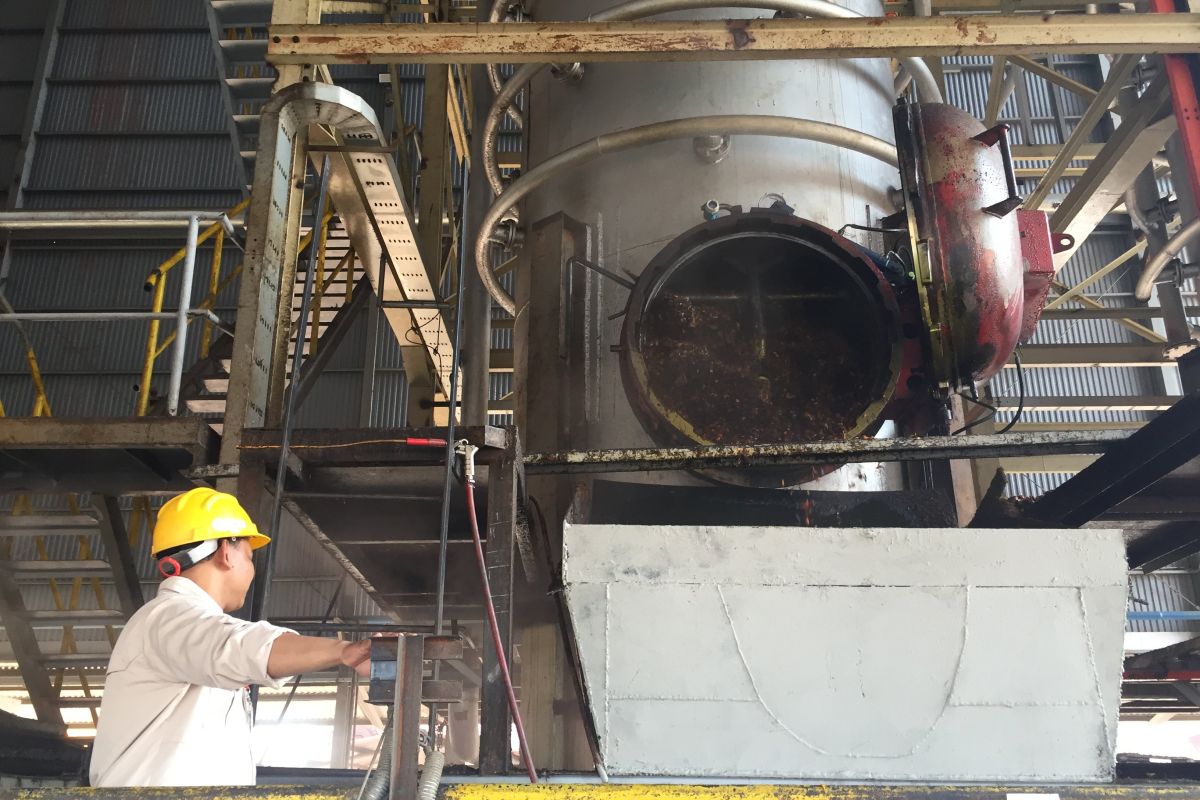
If weaknesses are found in the export system, the government must fix the system itself.
Jakarta (ANTARA) - NEXT Indonesia Center has put forward five priority recommendations for strengthening the handling of alleged transfer pricing and underinvoicing of crude palm oil (CPO).
“First, the government needs to open up the data-matching methodology in a proportionate manner, including how benchmark prices are constructed and adjustments are made, without having to disclose the identities of companies still under investigation,” said Ade Holis, Head of Research at NEXT Indonesia Center, in a statement in Jakarta on Tuesday.
Furthermore, Ade said verification needs to be carried out on every transaction or shipment (shipment by shipment) so that differences in value can be traced concretely.
As the third recommendation, he argued the government also needs to integrate data across agencies, including Customs, the Directorate General of Taxes, relevant strategic ministries handling trade, banking, ports, shipping companies, and data from destination countries.
“Fourth, the application of the arm’s-length principle and comparability analysis must be carried out consistently,” said Ade.
In addition, he said the government needs to distinguish between repairing weaknesses in the export system and law enforcement against companies proven to have violated the rules.
“If weaknesses are found in the export system, the government must fix the system. If corporate violations are found, legal proceedings must run their course. Meanwhile, if it turns out the price differences have a legitimate business explanation, then the case must be closed objectively,” said Ade.
On the other hand, he considered the setting of benchmark prices to be one of the most important aspects in proving alleged transfer pricing.
CPO, according to him, does not have a single universal price applicable to all transactions. The commodity’s price can be influenced by quality, specifications, origin, volume, timing of the transaction, delivery location, contract terms, payment method, as well as logistics and insurance costs.
“Therefore, the government needs to conduct comparability analysis consistently and provide accountable adjustments where there are material differences between the transaction under examination and comparable independent transactions,” he said.
Ade also encouraged a more in-depth review of CPO export transactions’ compliance with customs, taxation, international trade, and foreign exchange reporting requirements, as well as transaction documentation.
According to him, the investigation should not stop at finding price discrepancies, but should be followed up with a transaction-level audit.
Documents that need to be examined include contracts, invoices, purchase orders, bills of lading, quality certificates, proof of payment, insurance and transport documents, affiliated company documents, and resale transactions to end buyers.