
Next Indonesia: Circulating Money During Eid Reaches Rp1.37 Quadrillion, Evidence of Strong Economy
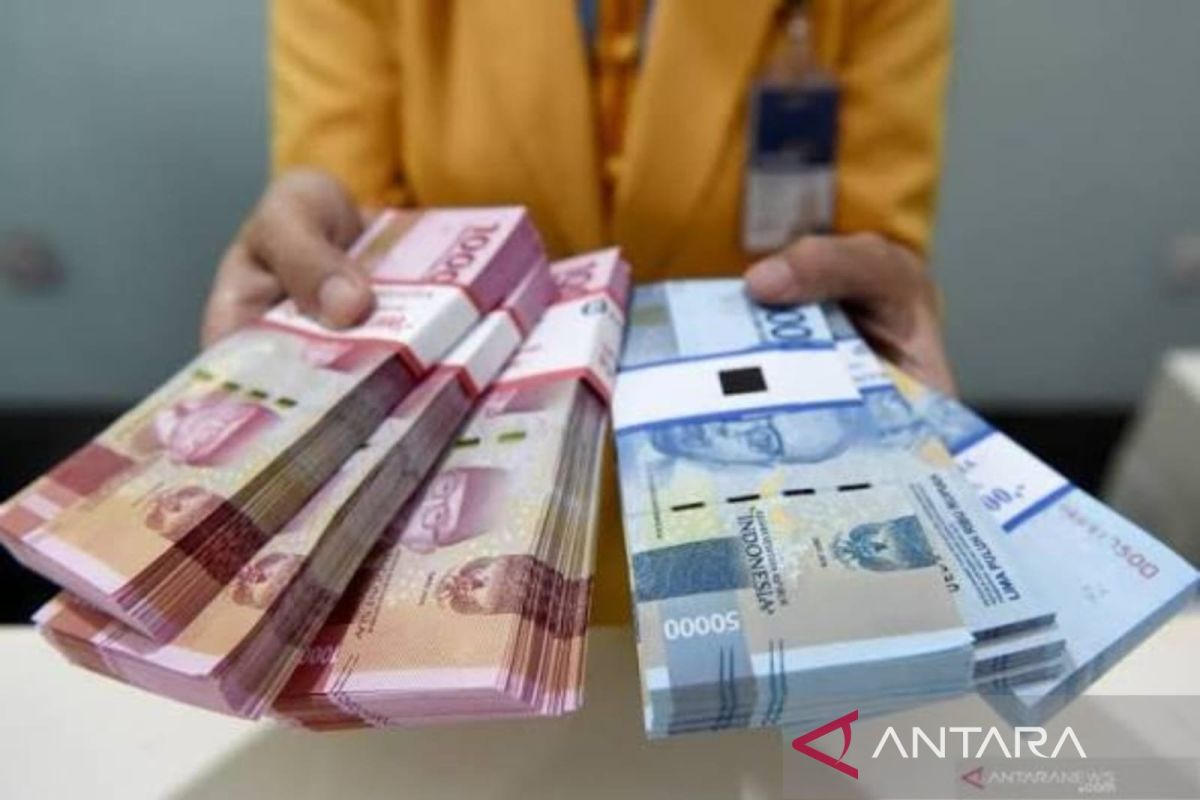
Jakarta (ANTARA) - The NEXT Indonesia Center research institute records that the circulation of cash or currency for Eid 2026 needs reached Rp1.37 quadrillion, reflecting strong purchasing power, increased consumption, and the resilience of the domestic economy.
“Based on our research using Bank Indonesia data, the amount of cash or currency in paper and metal form distributed for (pre-)Eid 2026 needs reached Rp1.37 quadrillion. This figure is 10.4% higher or an increase of Rp130 trillion compared to pre-Eid 2025, which was only Rp1.24 quadrillion,” said Head of Researchers at NEXT Indonesia Center, Ade Holis, in a statement in Jakarta on Thursday.
Ade Holis stated that the increase in cash circulation not only reflects society’s consumption readiness but also indicates strengthening economic activity down to the regional level.
In addition to the total money distributed, another equally important indicator is the amount of funds directly in the hands of the public.
Pre-Eid 2026, ready-to-spend funds outside banking vaults were recorded at Rp1.241 quadrillion, an increase of Rp104 trillion compared to the same period the previous year at Rp1.137 quadrillion.
“This certainly becomes a very strong economic modality for the regions. The additional Rp104 trillion in cash held by the public represents fresh liquidity ready to turn the wheels of the economy in various mudik destinations,” he said.
This phenomenon, he continued, is further strengthened by the high mobility of the public during the Eid homecoming period.
Data from the Ministry of Transportation shows an increase in passenger numbers across nearly all modes of transportation during the H-8 to Eid al-Fitr day period in 2026.
Sea transportation via ships became the sector with the most significant growth. The number of passengers increased from 2,336,619 people in 2025 to 2,697,459 people in 2026, or an addition of 360,840 homecomers.
“This increase in sea route passengers is very crucial because it indicates the equalisation of economic circulation between islands. Money does not only circulate in the centre but flows strongly to various regions,” Ade Holis explained.
In the land transportation sector, bus services also showed positive performance with an addition of 145,085 passengers, bringing the total from 1,441,510 people in 2025 to 1,586,595 people in 2026.
Meanwhile, rail transport recorded an increase in passenger numbers to 1,832,584 people in 2026, or an addition of 193,805 compared to the previous year’s 1,638,779 passengers.
The aviation sector also experienced a rise, with an addition of 71,993 passengers. The total aircraft users during the 2026 Eid homecoming period were recorded at 2,400,544 people, up from 2,328,551 people the previous year.
“The synchronisation between liquidity and mobility is the key to national economic growth. Society has purchasing power and they have mobility access to spend it in their hometowns, which automatically enlivens the local economic ecosystem,” he stated.
The NEXT Indonesia Center projects that the combination of high ready-to-spend funds and the strong homecoming flow will have a significant impact on national economic growth, particularly in the first quarter of 2026.
“Eid 2026 is a golden momentum. With cash circulation reaching the highest record in the last six years, we are witnessing the domestic economic engine working at optimal capacity,” he said.