
Newly Built Submarine Sinks During Trial After Valve Problem
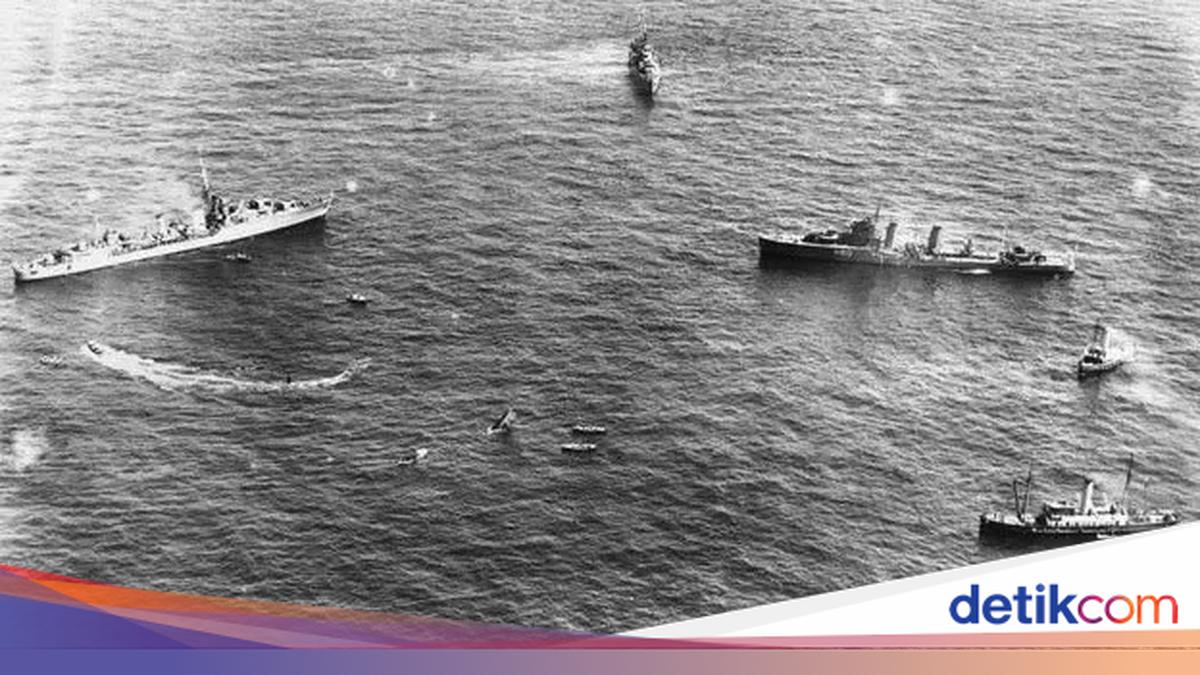
The British submarine HMS Thetis sank in 1939 during a trial voyage, shortly after it was built.
According to a report by the Liverpool Nautical Research Society, the submarine sank on 1 June 1939. The disaster resulted from a combination of technical errors and human negligence, with an investigation identifying several contributing factors.
That morning, HMS Thetis set off from Birkenhead for Liverpool Bay to conduct a deep-water diving trial. It was carrying 103 people, including crew members, naval officers, technicians and shipyard workers.
HMS Thetis began its dive, but struggled to submerge because of excess buoyancy in the bow. The crew then inspected several torpedo tubes.
The aft door of torpedo tube number five was opened. Seawater immediately flooded the torpedo compartment, making the bow even heavier. HMS Thetis then plunged steeply and struck the seabed at a depth of about 160 feet (48 metres).
The escort vessel Grebecock and the destroyer Brazen struggled to pinpoint the location of the sunken submarine. Meanwhile, conditions inside continued to worsen as carbon dioxide built up.
Eventually, the stern of HMS Thetis appeared above the surface at an angle of about 40 degrees. Its appearance revealed the submarine’s position.
Four people escaped using the Davis Submarine Escape Apparatus (DSEA). They made their way out through the escape chamber in two groups.
The next evacuation attempts failed. Four more people died while trying to use the escape equipment. Poor air quality caused by the build-up of carbon dioxide also hampered the rescue effort.
The British Admiralty officially announced that there was no longer any hope of rescuing those still trapped inside HMS Thetis. A total of 99 people were declared dead.
The official inquiry recorded several factors behind the tragedy. One was a blocked valve orifice: during interior work on the torpedo tube by a subcontractor, bitumastic enamel had blocked a small opening in the test-cock.
When Lieutenant Frederick Woods inspected the tube’s test-cock, no water came out because the opening was obstructed by enamel. This gave the impression that the torpedo tube was empty, even though its outer bow cap was still open.
Believing the tube to be empty, the crew opened the aft door of torpedo tube number five. High-pressure seawater then rushed in and flooded the forward section of the submarine.