
New York Follows Indonesian Regulations as Global Movement Rejects AI Dominance
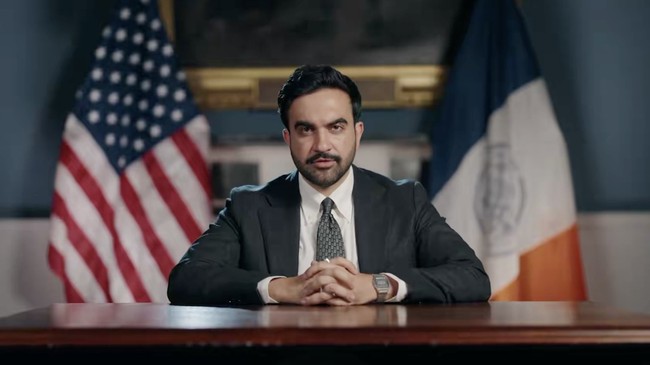
New York City in the United States has recently announced a ban on the use of generative artificial intelligence (AI) in public schools for all students up to grade eight. This policy will remain in effect for a full year and affects approximately 600,000 students. This step aligns with the policy direction previously initiated by Indonesia, which aims to protect children from becoming overly dependent on AI and algorithms during their developmental years.
New York Mayor Zohran Mamdani stated that the ban was established to preserve human connection within the classroom. Children should learn to solve problems, interact socially, and develop thinking skills through teacher guidance and peer discussion, rather than delegating everything to chatbots.
“This is our commitment to ensuring our children’s future remains sound. We will welcome new technology, but only if that technology truly serves the interests of the students, and not the other way around,” Mamdani said during a press conference.
The world is slowly beginning to realise the same thing understood by Indonesia: AI and algorithms must not replace the human role during a child’s development. If left unchecked, children may grow up with the habit of outsourcing every question to a machine, causing their critical thinking skills and independence to gradually vanish.
The policy implemented in New York bears a striking resemblance to the child protection direction initiated by the Indonesian government through the ‘PP Tunas’ regulation, which limits children’s access to technology to prevent interference with their growth.
Key comparisons between the measures taken by New York and Indonesia include:
Ban for minors: Students up to grade eight (approximately 13 to 14 years old) are prohibited from using generative AI tools in school.
Screen time limits: Primary school students are limited to a maximum of 30 minutes of screen time per day, while junior high students are limited to 45 minutes.
Limited exceptions: Children with special needs, language programme participants, and computer science students are permitted to use AI under strict supervision.
Teachers may still use AI: For lesson planning and administrative tasks, provided they meet data security standards.
Students from grade nine and above: Permitted to participate in pilot programmes under supervision, where they are taught how to understand and evaluate AI to avoid being misled.
Over the next year, the New York City government will research the impact of AI on child development before deciding on long-term policies.
New York’s move is not an isolated case. An increasing number of countries are realising the dangers of children becoming too dependent on artificial intelligence too early. Norway has implemented similar restrictions in public schools, and Italy requires parental permission before children under 14 can use AI services. Nationally, the United States is discussing legislation that would mandate age verification and prohibit AI companies from providing services to minors.
The technology industry is reportedly working hard to obstruct such regulations. In the first half of 2026 alone, tech companies spent US$41.8 million (approximately Rp 656 billion) on lobbying efforts to prevent AI restriction regulations from being passed. However, despite intense pressure, the wave of child protection continues to move forward from one nation to another.
For Indonesia, New York’s decision serves as tangible evidence that the child protection policy formulated through ‘PP Tunas’ is correct and is being followed by more nations. While Indonesia’s regulations were previously viewed by some as too strict, now one of the largest cities in the United States has established nearly identical limits.
The administration of President Prabowo Subianto is also preparing regulations to serve as principles and guidelines for AI usage in Indonesia.
The world is slowly changing. More leaders are realising that technological progress must not come at the cost of losing the thinking capabilities of future generations.
Source: jawawa.id (https://jawawa.id/newsitem/new-york-follows-indonesian-regulations-as-global-movement-rejects-ai-dominance-1788407658)
Originally published by CNBC Indonesia (https://www.cnbcindonesia.com/tech/20260903093813-37-764555/new-york-ikut-aturan-ri-dunia-ramai-ramai-tolak-dikuasai), translated from Indonesian