
New War Erupts in Middle East, Oil Prices Feared to Surge
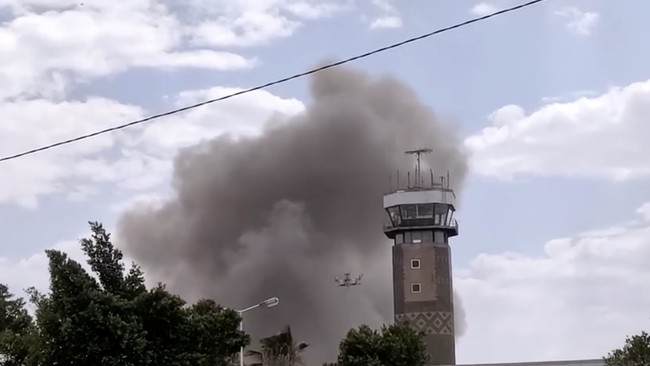
Signs of a widening war involving Iran became clearly visible this weekend, even as the United States decided to suspend its wave of attacks. Iran-allied Houthi forces in Yemen launched strikes on Saudi Arabian oil facilities along the Red Sea coast. At the same time, Iran accused Ukraine of targeting its commercial ships in the Caspian Sea.
The US military stated on Saturday that the naval blockade against Iran “remains in full effect”, but did not disclose the reasons behind the halt in the 13-night bombing campaign. Responding to the pause, a senior official in President Donald Trump’s administration said Washington’s policy direction remains unchanged. “Trump has always made it clear that his choice is the diplomatic path, but he has shown Iran what will happen if they fail to negotiate seriously,” the official stated.
No retaliatory strikes from Iran against neighbouring countries were reported on Saturday, a stark contrast to the daily responses seen previously. According to a New York Times report citing two sources familiar with the discussions, Trump decided to step back from initial plans to escalate attacks on Iran. The president and his advisers reportedly expressed concerns about the conflict spreading, dwindling defence reserves, strained relations with Gulf allies, and the negative impact on global energy supplies and the economy.
Despite the de-escalation in the Gulf, fighting between the Houthis and Saudi Arabia on Saturday indicated that the war, which has already disrupted energy supplies through the Strait of Hormuz, is now threatening a second major shipping route and risks reigniting the civil war in Yemen.
Separately, Iran’s Foreign Ministry accused Ukraine of attacking an Iranian commercial vessel in the Caspian Sea. The attack triggered an explosion that killed one sailor and injured another. Earlier on Saturday, Ukrainian President Volodymyr Zelenskiy praised the results of a “long-range strike” in the Caspian Sea targeting military cargo ships, though he did not specify the nationality of the targeted vessels.
Houthi military spokesperson Yahya Saree stated that the group struck sites belonging to the state oil company Saudi Aramco in Jizan and Yanbu. Video footage on social media verified by Reuters showed thick plumes of smoke rising from the direction of the Aramco refinery in Jizan. Two Asia-based trading sources confirmed information regarding potential damage to fuel and oil storage facilities in Jizan. In Yanbu, two ballistic missiles aimed at oil facilities were intercepted by a US-made Patriot defence system operated by the Greek military under an agreement with Riyadh, according to a Greek security source. Yanbu is a major Saudi oil port on the Red Sea, serving as a key route for oil shipments bypassing the blockaded Strait of Hormuz, while the Jizan refinery near the Yemeni border has a capacity of up to 400,000 barrels per day.
In Yemen, the air force of the internationally recognised, Saudi-backed government launched strikes on Houthi launch sites and weapons depots in the provinces of Marib and al-Jawf. The Saudi-led military coalition had previously bombed Houthi military positions in the Red Sea port of Hodeidah on Friday. Yemeni officials reported that both sides are now mobilising forces along the front lines.
Saudi Arabia has led an Arab coalition against the Houthis for over a decade since the Iran-allied fighters seized the Yemeni capital, Sanaa. The Yemeni civil war, which has killed hundreds of thousands through fighting and famine, had been paused under a truce agreement since 2022. However, that ceasefire collapsed this month after the Houthis effectively joined the wider war being waged by their Iranian allies following attacks by the US and Israel. Over the past week, the Houthis declared a naval blockade against Saudi Arabia, with leader Abdul Malik al-Houthi stating that all Saudi oil facilities could be targeted. On Thursday, the Houthis struck two Saudi oil tankers in the Red Sea.
Meanwhile, US forces recently resumed their blockade of Iranian ports. US Central Command stated on Friday that it had disabled a vessel in the Gulf of Oman whose crew attempted to breach the blockade despite repeated warnings. The temporary ceasefire effectively collapsed two weeks ago, followed by US forces striking targets in southern Iran in response to shipping disruptions by Iran in the Strait of Hormuz. On Friday, Trump said the US and Iran were in talks to negotiate an end to the conflict, but reiterated that Tehran was not ready to reach a deal.