
'New Victims' of the Iran War Cry Out: Petrol Nearly Rp 38,000 Per Litre
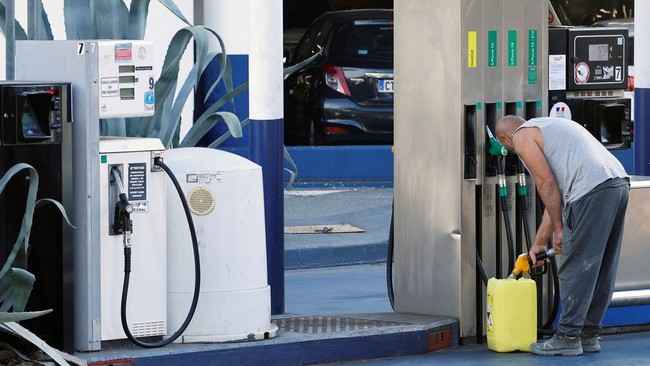
Drivers in Europe have drastically cut their fuel consumption. The Iran war and soaring global oil prices are now forcing citizens to tighten their belts at petrol stations. Quoting Russia Today, petrol sales volumes in the Eurozone fell 3.5% year-on-year in April. This decline is the steepest since October 2023, according to a report by the statistics agency Eurostat. Six major European economies even recorded a double-digit drop in fuel sales. Among the countries experiencing sharp declines are Germany, Norway and Austria. As of early June, the average price of petrol in the European Union is hovering at €1.80 per litre, or US$2.10 (Rp 37,800). This figure has soared from around €1.50 per litre before the Iran war erupted at the end of February. Twelve EU countries saw diesel prices surge by more than a third in April compared to the previous year. The average diesel price increase across the entire bloc reached 33.7%. The Iran war has resulted in the de facto closure of the Strait of Hormuz. The conflict has also caused damage to major oil facilities in the Gulf region. These conditions have kept benchmark Brent crude oil prices afloat in the range of US$94 (Rp 1,692,000) per barrel, although this figure is significantly lower than the war’s peak price, which once exceeded US$120 (Rp 2,160,000). The domino effect of the war continues to loom over the EU economy despite a fragile ceasefire between the United States and Iran. In late March, EU officials revealed that the bloc’s fossil fuel import bill had surged by €14 billion. Moreover, overall Eurozone inflation reached 3.2% in May, up from 3% in April. Britain is also suffering from the war’s impact, with petrol prices peaking at £1.59, or US$1.98 (Rp 35,640). The country has also seen a more than 20% increase in fuel theft cases at petrol stations, where drivers fill up and drive off without paying. The rise in this new type of crime was officially disclosed by the security industry. ‘Britain has experienced a more than 20% increase in drive-off fuel theft at filling stations,’ security firm Forecourt Eye stated regarding the rampant criminal activity. Meanwhile, Britain’s annual inflation rate via the Consumer Price Index rose to 3.3% in March, briefly cooling to 2.8% in April. However, analysts predict this economic easing will only be short-lived. Drivers in the United States are experiencing an equally grim situation. Their national average petrol price reached US$4.16 (Rp 74,880) per gallon as of 8 June. A global economic analysis agency also provided data on the massive losses societies must bear due to this protracted conflict. ‘The average US household has spent nearly US$450 (Rp 8,100,000) more on energy costs since the conflict began,’ Moody’s Analytics explained regarding citizens’ spending burdens.