
New UN Rules to Determine Fate of Online Motorcycle Taxi Drivers, Manpower Minister Speaks Out
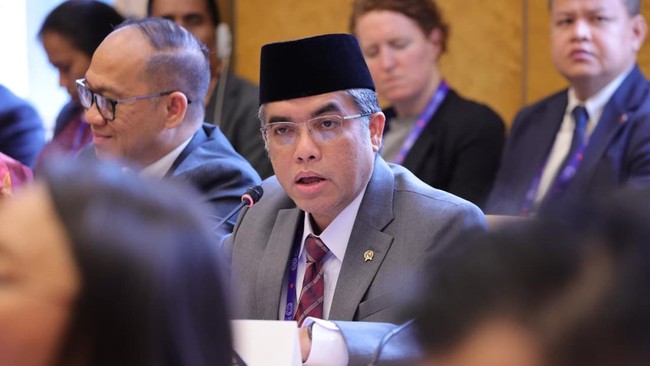
The Indonesian government welcomes the adoption of international labour standards specifically regulating work within the digital platform economy (gig workers). In Indonesia, the term ‘gig worker’ frequently refers to online motorcycle taxi (ojol) drivers, online taxi drivers, and online couriers.
These standards were ratified during the closing session of the International Labour Conference (ILC) held in Geneva, Switzerland.
Minister of Manpower Yassierli believes the emergence of these global regulations is a significant step amidst the rapid development of the digital economy, which is transforming work patterns for everyone from ride-hailing drivers and couriers to workers earning income through various digital applications.
He noted that worker protection should not be positioned in opposition to technological innovation or digital business growth.
“The government welcomes the birth of international standards regarding decent work in the platform economy. For Indonesia, worker protection and digital innovation must proceed together, so that the digital economic transformation truly benefits workers, businesses, and society,” Yassierli stated in Geneva on Friday (12/6/2026).
The Convention on Decent Work in the Platform Economy produced by the ILC can serve as an important guideline for member states of the International Labour Organization (ILO). Indonesia views this convention as a means to maintain the balance between strengthening platform worker protections and allowing each nation the flexibility to implement them according to their respective national legal systems.
Key aspects addressed in the standards include occupational safety and health, fair wages, social protection, transparency in the use of automated systems or algorithms, personal data protection, and fair dispute resolution mechanisms.
These issues are increasingly relevant as app-based services have become part of daily life. Millions of workers who rely on digital platforms for their livelihoods require certainty regarding their rights, including workplace safety, system transparency, and income stability.
Yassierli added that Indonesia is one of the countries with the largest digital economic growth in the region and possesses a very large number of platform workers. Therefore, the presence of these international standards is seen as a momentum to strengthen the governance of the digital economy sector without hindering industry growth.
Meanwhile, the Director General of Industrial Relations and Labour Social Security at the Ministry of Manpower, Indah Anggoro Putri, emphasised that the adoption of standards at the international level does not automatically make all provisions immediately applicable in Indonesia.
The government still needs to conduct studies and adjustments with existing domestic labour regulations.
“This is good news and serves as an important momentum for Indonesia’s tripartite system. However, Indonesia still needs to follow the appropriate mechanisms, closely monitor the follow-up processes at the ILO, and assess national readiness before making a decision regarding ratification,” said Indah.
The government will also follow further discussions at the ILO level, including the agenda of the ILO Governing Body this coming November and the preparation of technical recommendations that will regulate the implementation of these standards in more detail.
The primary objectives of this implementation include:
Supporting the realisation of decent work for digital platform workers through the strengthening of fundamental labour rights.
Encouraging the creation of a fair, safe, transparent, and sustainable platform economy ecosystem.
Maintaining the balance between worker protection and the development of innovation and digital business growth.
Strengthening occupational safety and health, social protection, and income certainty for digital platform workers.
Increasing transparency in the use of digital systems and technology that affect the working conditions of platform workers.
Encouraging the formulation of labour policies that are adaptive to digital economic developments and changing work patterns.
Strengthening synergy between the government, workers, and business actors in developing inclusive platform economy governance.
Serving as a reference in reviewing and adjusting national policies to international labour standard developments.
Improving the quality of protection and welfare for digital platform workers without hindering investment growth and innovation.
Supporting digital transformation that can create economic opportunities while ensuring work is safer, fairer, and more dignified.
Source: jawawa.id (https://jawawa.id/newsitem/new-un-rules-to-determine-fate-of-online-motorcycle-taxi-drivers-manpower-minister-speaks-out-1781340685)
Originally published by CNBC Indonesia (https://www.cnbcindonesia.com/tech/20260613111606-37-742564/aturan-baru-pbb-tentukan-nasib-driver-ojol-menaker-buka-suara), translated from Indonesian