
New Tax Refund Regulations under Purbaya: Leaks and Business Reactions
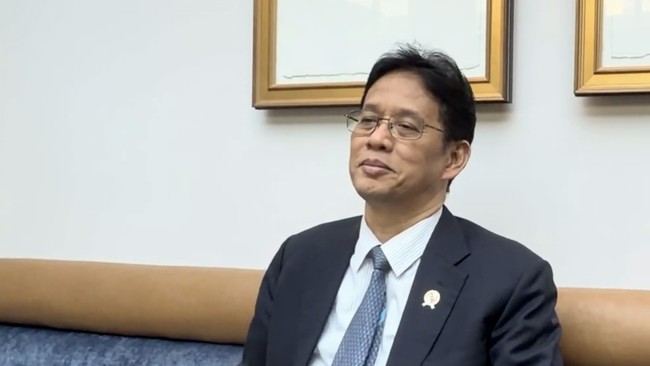
Starting from 1 May 2026, the government will implement a new policy on tax overpayment refunds, known as restitutions. This policy will be regulated in a Minister of Finance Regulation (PMK) that revises PMK No. 39/PMK.03/2018, which has been amended several times, most recently with PMK 119/2024. Finance Minister Purbaya Yudhi Sadewa previously explained that the changes to the corporate taxpayer restitution scheme are due to suspicions that it has been a source of state revenue leakages. According to Purbaya, the annual restitution amounts disbursed by the state are substantial. Last year alone, the figure reached approximately Rp 361.5 trillion, a 35.9% increase from the 2024 record. “Last year’s restitutions were huge, Sir. Rp 360 trillion, and the reports to me weren’t very clear. Month by month, how it was. Now it’s starting to be monitored. I suspect there’s some leakage there,” Purbaya stated during a working meeting with Commission XI of the House of Representatives early this week, quoted on Monday (20/4/2026). The restitution tightening mechanism involves comprehensive audits, particularly related to restitutions in the natural resources (SDA) business sector. The audit process will cover the period from 2020 to 2025. Purbaya will collaborate with the Financial and Development Supervisory Agency (BPKP) as an external party for the auditing. “Internally, I’m focusing on 2025 onwards, and externally, that’s involving BPKP from 2020 to 2025,” he said. He explained that the audit is intended to identify vulnerable points in the restitution system while ensuring its distribution remains on target. “So now we’re tightening it. It doesn’t mean we’re stopping restitutions, but we’re tightening so that those who aren’t entitled don’t get restitutions,” he stated. New Tax Refund Concept Director of Outreach, Services, and Public Relations at the Directorate General of Taxes (DJP), Inge Diana Rismawanti, assured that the latest policy will not interfere with taxpayers’ restitution rights. “Regarding restitution rights, we fully understand that restitutions are actually the rights of taxpayers. Of course, we won’t keep it ourselves if it’s indeed the taxpayers’ right,” Inge said in Nganjuk, East Java. Nevertheless, she emphasised that the fundamental change in the restitution policy will focus on improving accelerated restitutions. According to Inge, accelerated restitutions will be strengthened going forward, specifically for those proven compliant with their obligations. “However, at this time, we’re trying to ensure that those who receive fast restitutions or preliminary refunds are truly taxpayers whose compliance levels are indeed as such,” she stressed. “That’s the main point, actually, to make it more targeted who gets it. But don’t worry, it’s said it will come out soon, so better we wait,” Inge added. As known, the draft regulation includes provisions on the timeframe for settling applications, namely a maximum of 3 (three) months for Income Tax and 1 (one) month for Value Added Tax since the application is received. This plan was revealed in the Draft Minister of Finance Regulation already submitted to the Ministry of Law and Human Rights. “As part of regulatory renewal, this RPMK (Draft Minister of Finance Regulation) will revoke and replace several previous regulations related to preliminary refunds of tax overpayments, and is planned to take effect from 1 May 2026,” quoting the Directorate General of Legislation (DJPP) website of the Ministry of Law. DJPP held a Harmonisation, Rounding, and Concept Finalisation Meeting for the Draft Minister of Finance Regulation on Procedures for Preliminary Refunds of Tax Overpayments from Friday to Saturday (10-11 April 2026) virtually. “This meeting is a follow-up to previous harmonisation activities conducted on 6 April 2026, to perfect the substance and ensure the consistency of the RPMK content with legislative provisions.” The event was attended by representatives from the Coordinating Ministry for Economic Affairs, Ministry of Finance, Ministry of State Secretariat, and ranks from the Ministry of Law, particularly the Directorate General of Legislation. One of the main points is the mechanism for examining taxpayer applications, which serves as the basis for the Director General of Taxes to determine whether a preliminary refund can be granted or not. Additionally, it is regulated that if the examination results show fulfilment of formal requirements and there is a tax overpayment, the Director General of Taxes may issue a Decision Letter for Preliminary Refund of Excess Tax. Conversely, if the requirements are not met or there are certain conditions such as tax examinations or law enforcement processes, the application may be rejected. Cash Flow Disrupted In response to the new restitution policy, business circles have voiced their opinions, one of which was expressed by the Chairman of the Taxation Committee of the Indonesian Employers Association (APINDO), Siddhi Widyapratama. He said that businesspeople are still monitoring the plan to change the restitution scheme through the issuance of the draft minister of finance regulation (RPMK). “As strategic partners in economic development, we view it as important to have constructive discussions with the government to ensure this policy aligns with the business world’s situation and a conducive investment climate,” Siddhi told CNBC Indonesia. Siddhi said that businesspeople have not yet obtained information on the new restitution scheme offered by the government. He only heard about a policy of selective restitutions to be implemented. “We’re still waiting for the latest developments, although there are thoughts on implementing the policy selectively,” he emphasised. Meanwhile, the General Chairman of the Indonesian Palm Oil House (