
New Students Reminded to Remain Humble and Resilient in Facing the Process
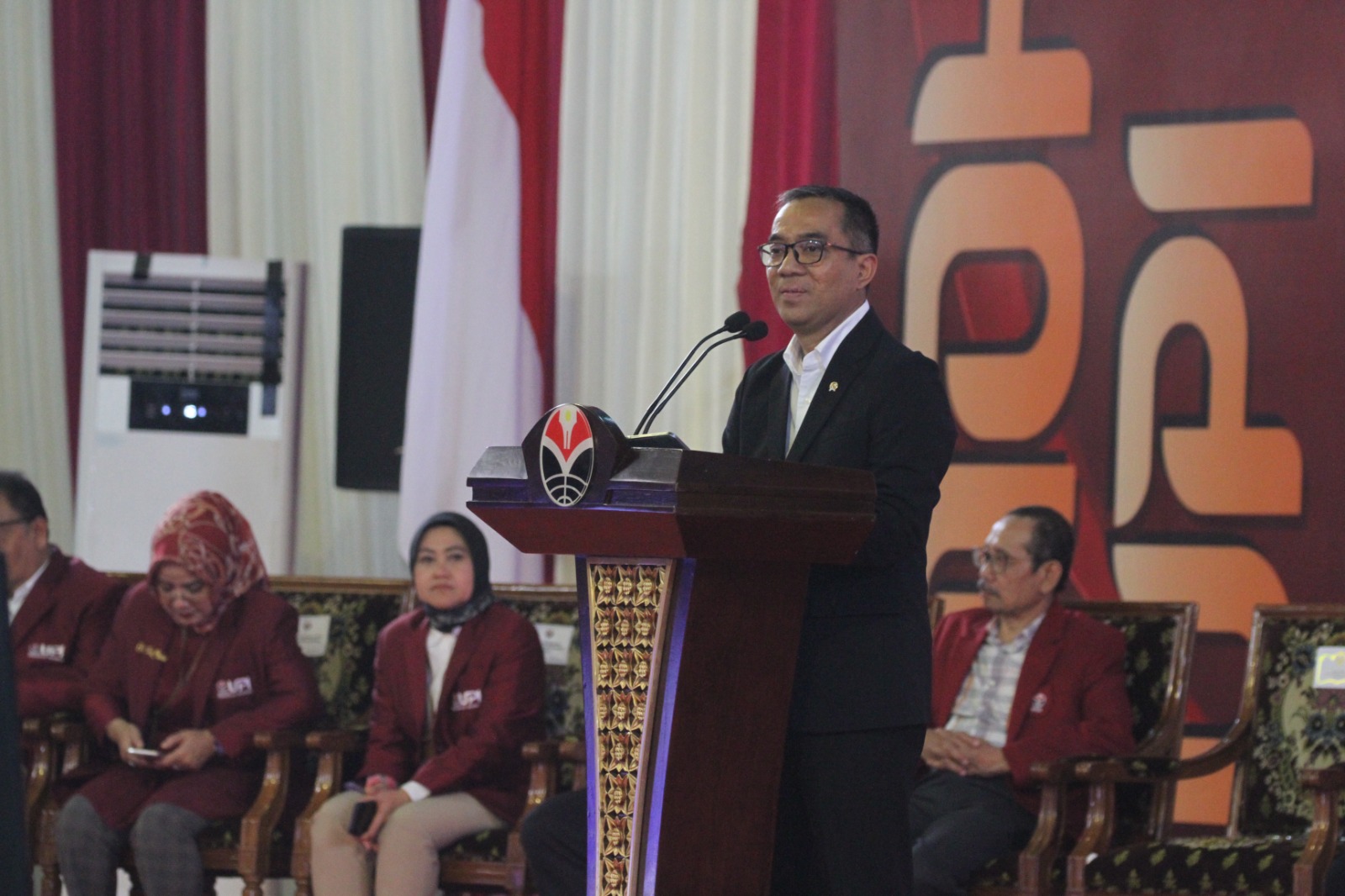
Minister of Higher Education, Science, and Technology of the Republic of Indonesia, Brian Yuliarto, has reminded new students at Universitas Pendidikan Indonesia (UPI) that success in higher education is determined not only by academic ability but also by resilience in undergoing the process. He stressed the importance of building grit, persistence, perseverance, and a humble attitude as provisions for facing both success and challenges during their studies.
The message was delivered by Brian in a public lecture at UPI’s Campus Orientation and Public Lecture (MOKAKU) 2026 at the UPI Bandung campus on Wednesday (19/8). The public lecture, themed ‘Future Ready Generation: Creating, Innovating, and Making an Impact’, was attended by 13,386 new UPI students, including international students from 15 countries.
‘The journey of becoming a student is a process that requires perseverance. Students will face various assignments, examinations, changes in environment, and challenges in developing their abilities, so character is needed to keep going and continue the process,’ he explained.
In his message to new students, Brian introduced three character traits that need to be developed during their education: grit (steadfastness towards goals), persistence (continuing to try), and perseverance (enduring the process). Grit relates to steadfastness in pursuing goals. Persistence emphasises the determination to keep trying when facing failure, while perseverance relates to the ability to endure when facing difficulties. These three traits are important because the journey of higher education does not always go according to expectations. Students need to have the ability to face failure and difficulty without losing sight of the goals they wish to achieve.
‘Be a generation that does not merely follow change, but dares to dream of that change. Then remain humble when you succeed, keep learning even when you already feel you know, feel you have mastered it,’ he asserted.
Brian acknowledged that the educational journey can present difficult conditions for students. Therefore, students are not expected to always be in easy circumstances, but need to have the ability to get through those difficulties. Feeling tired during the educational process is something that can happen. However, that condition should not make students stop pursuing their goals.
‘If it turns out your journey is hard, there are many exams, you are allowed to be tired, allowed to be exhausted, but you must not give up,’ he said.
In addition to attending the public lecture, new UPI students also carried out a campus greening movement. The 13,386 new students were asked to donate one tree each to be planted on campus grounds.
UPI Rector Didi Sukyadi said the programme is not merely a ceremonial activity. Thousands of tree seedlings collected by students will be planted to expand green spaces while improving the ecosystem in the campus environment.
‘We ask each new student to donate one tree. God willing, we will collect around 13,000 hardwood tree seedlings,’ he said.
According to Didi, greening is needed because there are still campus areas that have not been planted. The presence of trees is expected not only to make the UPI area shadier but also to provide habitat for fauna still living on campus.
‘Our campus has limited space, but there is still a lot of land that needs to be planted so the air becomes cooler and not hot. Besides being a place for students to relax, this is also our effort to provide habitat for fauna such as birds,’ he said.
Didi said student involvement is an important part of the programme. They are not only asked to donate seedlings but also to help drive the collection process. Some brought trees directly, while others used online motorcycle taxi delivery services. This year is the third year UPI has run a similar programme.
He assessed that this year’s implementation has been the most successful because preparation and socialisation were carried out in a more planned manner. The greening programme also utilises research results from UPI academics. Organic fertiliser for the plants comes from a composting process carried out by the Faculty of Sports and Health Education as well as land research in the Bumi Siliwangi and Sariwangi areas.
‘This organic fertiliser was made by our colleagues at FPOK from composting. It has been tested and the results are very good for fertilising plants. In the future, this research-based fertiliser also has the potential to be commercialised for the wider community,’ he said.
If all greening needs within the campus have been met, UPI plans to distribute the remaining seedlings to the community. Distribution can be carried out through community service activities, social work, or cooperation with the Bandung City Government and other agencies.
For UPI, the movement is a way of placing environmental issues in the student experience from the first day of entering higher education. Thousands of new students not only come to begin their studies but also leave an ecological footprint on campus.